
Soups & Stews
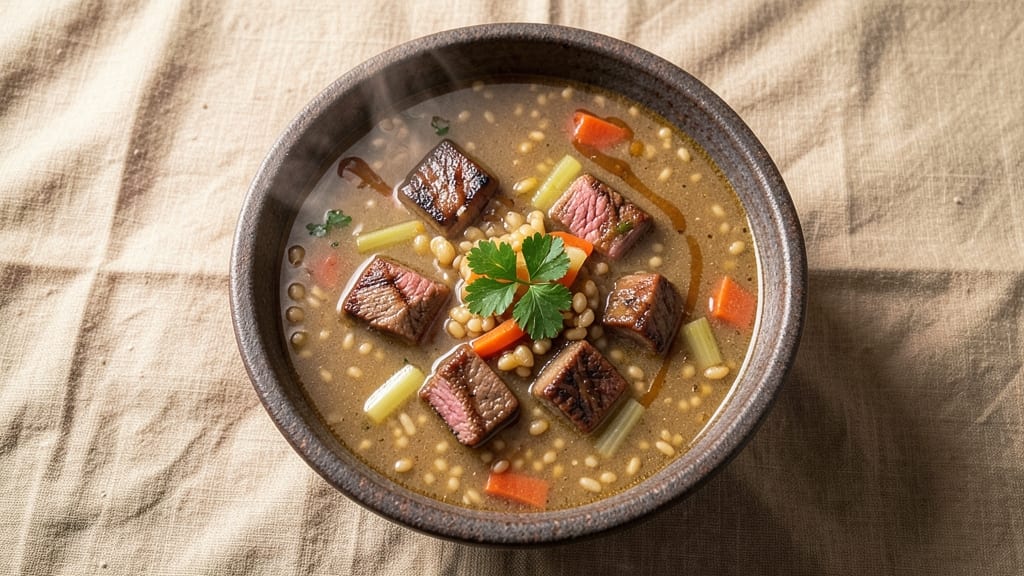
This beef barley soup recipe from Alton Brown delivers the kind of slow-simmered depth that transforms simple ingredients into a hearty, restaurant-worthy meal. The secret lies in balancing tender beef, chewy barley, and aromatic vegetables—each element working together to create a soup that’s both comforting and complex.
I’ve refined this version to capture Brown’s signature approach: precise seasoning, proper simmering times, and a texture contrast that makes every spoonful satisfying.
The beauty of this recipe is its simplicity—just a handful of ingredients, but each plays a crucial role. Beef chuck breaks down into fork-tender pieces, while pearl barley soaks up the rich broth and develops that signature chewy bite.
The slow simmer (at least 2 hours) allows flavors to meld and deepen, creating a broth that’s deeply savory without being heavy. Alton Brown’s method emphasizes patience, and it pays off in every bowl.
By the time you’re done, you’ll have a soup with layers of flavor: the earthy notes of barley, the richness of beef, and the bright acidity of tomatoes and herbs.
The aroma alone will have everyone gathering around the table, and the first taste will confirm why this is a weeknight staple. Serve it with crusty bread to soak up every last drop of that flavorful broth.
This recipe also excels as leftovers—if there are any—which makes it perfect for meal prep or feeding a crowd. The flavors only improve over time, and the barley continues to soften just enough to stay pleasant.
Whether you’re cooking for a family dinner or a cozy night in, this beef barley soup delivers the kind of warmth and satisfaction that turns a simple meal into something special.
Ingredients for beef barley soup recipe alton brown
Sixteen ingredients, slow simmer, restaurant-worthy beef barley soup that gets better with time.
| Ingredient | Amount | Notes |
|---|---|---|
| Beef Chuck Roast 🥩 | 2 lb | Cut into 1-inch cubes |
| Pearl Barley 🌾 | 1 cup | Rinsed before cooking |
| Yellow Onion 🧅 | 1 whole | Diced, medium size |
| Carrots 🥕 | 4 medium | Peeled, cut into chunks |
| Celery Stalks 🧄 | 4 whole | Diced, medium size |
| Garlic Cloves 🧄 | 4 cloves | Minced, fresh preferred |
| Tomato Paste 🍅 | ½ cup | High quality preferred |
| Beef Broth 💧 | 6 cups | Low-sodium preferred |
| Red Wine 🍷 | 1 cup | Dry, bold variety |
| Fresh Thyme 🌿 | 2 tbsp | Leaves only, chopped |
| Fresh Parsley 🌿 | ¼ cup | Chopped, for garnish |
| Bay Leaves 🌿 | 2 whole | Removed before serving |
| Salt 🧂 | 1 ½ tsp | Kosher or sea salt |
| Black Peppercorns 🌶️ | 1 tsp | Freshly ground preferred |
| Olive Oil 🫒 | 2 tbsp | For sautéing vegetables |
The beef chuck is non-negotiable here—look for well-marbled cuts at Whole Foods or your local butcher. Pre-cubed saves time, but if buying whole, ask for it to be cut into 1-inch pieces. Pearl barley should be rinsed before cooking to remove excess starch. For the vegetables, organic carrots and celery reduce dirt buildup, but conventional works fine if you scrub them well. The tomato paste? San Marzano is ideal—it has a sweeter, more concentrated flavor that stands up to the rich beef. If you can't find it, any quality paste will do, but avoid the watery kind.
No red wine? Substitute beef broth with 1 tbsp balsamic vinegar for depth. Fresh thyme is best, but dried works at one-third the amount. The carrots can be swapped for parsnips if you prefer a nuttier flavor. For a quicker version, use quick-cooking barley (reduce cooking time by 20 minutes), though traditional pearl barley develops that signature chewy texture. If your broth is high-sodium, reduce the added salt—this soup is rich enough on its own. The bay leaves are essential for that subtle earthy note, but remove them before serving as they can be bitter if overcooked.
This soup tastes even better the next day—flavors meld overnight. Store in an airtight container in the fridge for up to 5 days, or freeze for 3 months. For meal prep, double the batch and freeze portions in ziplock bags. To reheat, warm on the stove over medium heat, adding a splash of water or broth if it thickens too much. The barley will soften further, making it even more satisfying. Garnish with fresh parsley right before serving to keep it vibrant.
Why You'll Love This Recipe
- Umami Bomb: The moment the beef browns and those onions caramelize? Chef’s kiss. The barley’s nutty bite balances the rich, deep meatiness—like a hug in a bowl. (Honestly, I’ve skipped dinner just to eat the leftovers cold the next day.)
- Weeknight to Potluck: Make a double batch on Sunday, and you’ve got lunch, dinner, and a freezer meal for when life gets crazy. Bring it to a gathering—it’s hearty enough for skeptics but fancy enough to impress.
- Budget Magic: A pound of chuck roast stretches for days, and barley’s one of those pantry staples that never lets you down. I’ve fed four people for under $15, and no one complains about the price tag—or the seconds.
Step-by-step instructions for slow-simmered beef barley soup
This method delivers rich, hearty soup with tender beef and chewy barley—every element perfectly balanced.
Sear the Beef Chuck Roast for Deep Flavor
Pat the 2 lb beef chuck roast dry with paper towels and cut it into 1-inch cubes. Heat 2 tbsp olive oil in a 6-quart Dutch oven over medium-high heat until shimmering. Working in batches if needed, add the beef cubes in a single layer and sear undisturbed for 3-4 minutes until deeply browned on all sides.
This step is critical—those browned bits (fond) form the flavor foundation. Don't crowd the pan or the beef will steam instead of sear. Transfer the browned beef to a plate and set aside. You'll notice the aroma intensify as the meat releases its natural juices.
Sauté the Vegetable Base
In the same Dutch oven, add the diced yellow onion, chopped carrots, diced celery stalks, and minced garlic cloves. Cook over medium heat for 8-10 minutes, stirring occasionally, until the vegetables soften and the onion becomes translucent. You'll see the vegetables release their moisture and begin to caramelize slightly.
Here's where the soup's depth starts building. The vegetables should be tender but not mushy—this ensures they hold their texture through the long simmer. If the pan looks dry, add 1-2 tablespoons of beef broth to deglaze, scraping up any browned bits from the bottom.
Build the Flavor Foundation
Stir in the 0.5 cup tomato paste and cook for 2 minutes until it darkens slightly. Add the 1 cup red wine and scrape the bottom of the pot to incorporate all the flavorful browned bits. Let the wine simmer for 3-4 minutes until it reduces by half and the alcohol aroma dissipates.
This reduction concentrates the wine's flavor and removes any harsh alcohol notes. The tomato paste adds depth while preventing the soup from becoming too acidic. The wine's acidity also helps tenderize the beef during the long cook.
Combine and Simmer the Soup
Return the seared beef to the pot. Add the 6 cups beef broth, 1 cup rinsed pearl barley, 2 tbsp chopped fresh thyme, 2 whole bay leaves, 1.5 tsp salt, and 1 tsp freshly ground black peppercorns. Bring to a gentle boil over high heat, then immediately reduce heat to low to maintain a barely simmering state.
Cover the pot and let the soup simmer for 2.5 hours. The barley should be tender but still hold its shape—this is what gives the soup its satisfying chew. Check periodically and add hot water if the soup reduces too much. The beef should become fork-tender, falling apart easily when pierced.
Finish and Serve
Remove the 2 whole bay leaves and discard them. Stir in the 0.25 cup chopped fresh parsley and adjust seasoning if needed. The soup should be well-seasoned but not salty—taste as you go. Let the soup sit off the heat for 10 minutes before serving to allow flavors to meld.
Ladle the soup into bowls and garnish with additional parsley if desired. Each spoonful should deliver tender beef, chewy barley, and a rich broth infused with all the aromatic vegetables. The slow simmering ensures maximum flavor extraction and perfect texture in every component.
Pro Tips For Making Beef Barley Soup Recipe Alton Brown
- SEAR THE ROAST FIRST: The recipe calls for browning the beef chuck, but I’ve learned the hard way—don’t skip this. A deep, caramelized crust on the roast adds layers of flavor that simmering alone can’t match. Use a hot pan with just a little oil, and take your time. If the meat releases in one piece, it’s ready.
- SOAK THE BARLEY: Pearl barley needs a head start. Toss it in cold water for at least 30 minutes before adding to the pot—this cuts cooking time by nearly half. I used to ignore this, and the soup always ended up gummy. Drain it well before simmering, or you’ll dilute the broth.
- DON’T SKIP THE BAY LEAF: Alton’s recipe includes bay leaves, and they’re non-negotiable. Tuck one into the meat before browning—it infuses the broth with earthy depth. Remove it before serving, but leave it in during cooking. (Yes, even if you’re impatient to taste.)
- USE THE BONE BROTH: The recipe relies on the beef’s natural juices, but if you’re short on time, add 2 cups of high-quality store-bought or homemade bone broth after the initial sear. It won’t replace the richness of the roast’s rendered fat, but it’ll save you from a watery soup. Just don’t overdo it—this isn’t a broth, it’s a stew.
Troubleshooting your beef barley soup recipe alton brown
Broth Too Thin?
If your soup looks watery after simmering, it’s likely because the barley absorbed too much liquid. Reduce the broth by 1 cup next time and simmer uncovered for the last 15 minutes to thicken naturally.
For immediate fixes, stir in 1 tbsp cornstarch mixed with 2 tbsp cold water and simmer for 5 minutes until thickened. Avoid over-salting—this soup’s richness comes from the beef and wine, not salt. 💧
Barley Too Hard?
Pearl barley needs 2.5-3 hours to reach perfect chewiness. If yours is still firm, add ½ cup hot water and simmer for another 30 minutes. For quicker results, swap pearl barley for quick-cooking barley (reduces cook time by 20-30 minutes).
Never skip rinsing the barley—unrinsed grains release excess starch, making the soup gluey. 🌾
Beef Not Tender?
Undercooked beef is usually the culprit. Extend simmering to 3 hours for extra-tender results. If the beef is still tough, add ½ cup apple cider vinegar (helps break down fibers) and simmer for 30 more minutes.
For future batches, use a meat thermometer—beef should reach 203°F for perfect tenderness. 🥩
Vegetables Mushy?
Overcooked veggies lose their texture due to prolonged simmering. Add carrots and celery only in the last 30 minutes of cooking. For extra crunch, blanch them in boiling water for 2 minutes before adding to the soup.
If they’re already too soft, balance the dish with a side of fresh green salad or crusty bread to cut through the richness. 🥕
Flavor Too Mild?
Boost depth with a 1 tbsp soy sauce or 1 tsp smoked paprika during the final 10 minutes of simmering. For umami richness, stir in 1 tbsp Worcestershire sauce or add a ½ cup mushrooms (sautéed with the onions).
A splash of balsamic vinegar (1 tbsp) brightens the broth without overpowering. 🍷
Broth Too Salty?
Dilute with ½ cup hot water or broth and adjust seasoning. If using canned broth, opt for low-sodium versions and reduce added salt by ½ tsp. For future batches, taste the broth before adding all the salt—this soup’s richness comes from the beef and wine, not salt.
A pinch of sugar (½ tsp) can also balance excessive saltiness. 🧂
Nutrition facts
Frequently asked questions
Can I use a slow cooker for this beef barley soup?
For a slow cooker version, brown the beef first in a skillet, then transfer everything to the slow cooker. Cook on low for 7-8 hours or high for 4-5 hours. The long cook time ensures tender beef and perfect barley texture. Just add the fresh parsley at the end to keep it vibrant.
What's the best way to store leftovers?
Store in an airtight container in the fridge for up to 5 days. The flavors actually improve overnight! For freezing, portion into ziplock bags with room to expand. Thaw in the fridge overnight, then reheat gently on the stove with a splash of water or broth to restore moisture.
Can I make this soup vegetarian?
You can adapt it! Replace the beef with chickpeas or mushrooms (sautéed with the onions) for heartiness. Use vegetable broth instead of beef broth, and add 1 tbsp soy sauce for umami depth. The barley and vegetables will still provide satisfying texture.
Why does Alton Brown's method use red wine?
The red wine adds depth and acidity that balances the richness of the beef. It also helps tenderize the meat during the long simmer. A dry, bold variety like Cabernet Sauvignon works best—avoid sweet wines that can make the soup taste cloying. The alcohol burns off during cooking, leaving behind concentrated flavor.
How do I adjust the seasoning for a crowd?
Double the recipe and multiply seasonings accordingly. For 6 servings, use 3 tsp salt and 2 tsp black pepper. Taste before serving—this soup's richness comes from the beef and wine, not salt. If using store-bought broth, choose low-sodium to avoid over-salting. A final adjustment with fresh parsley brightens the flavor.