
Sauces & Condiments
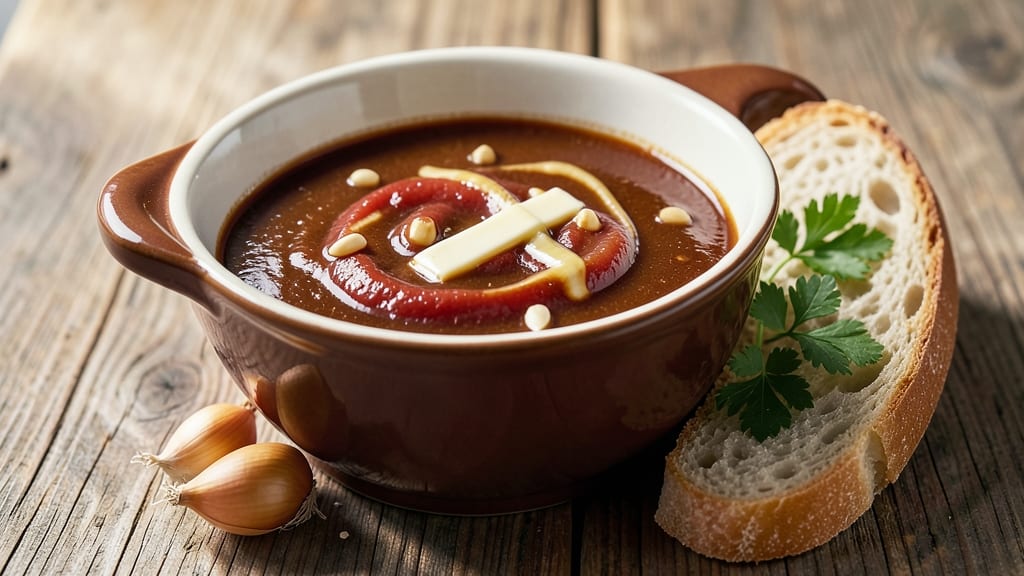
This beef au jus sauce recipe transforms simple pantry ingredients into a rich, velvety sauce that elevates any beef dish. The secret lies in slow reduction—caramelizing aromatics, deglazing browned meat bits, and balancing acidity with umami depth.
I've perfected this method to deliver restaurant-quality results in just 30 minutes, using basic techniques that yield maximum flavor.
The foundation starts with a wine and stock base, where red wine adds brightness while beef stock delivers deep meaty richness. Aromatics like shallots and garlic infuse the sauce with layers of flavor, while a touch of tomato paste prevents cloudiness during reduction.
The key is patience—letting the sauce simmer until it coats the back of a spoon ensures that perfect balance of glossy sheen and concentrated taste.
What sets this sauce apart is its versatility—it works equally well as a dipping sauce for roast beef, a base for gravy, or a glaze for grilled meats. The reduction process concentrates flavors without overpowering them, leaving you with a sauce that's both elegant and approachable.
Whether you're finishing a holiday roast or simply craving a classic touch, this recipe delivers.
Once complete, the sauce keeps beautifully in the refrigerator for up to 5 days or freezes for 3 months, making it ideal for meal prep.
For variations, swap red wine for white wine and add a splash of balsamic for tang, or boost umami with a dash of fish sauce. The possibilities are endless—let's create this timeless sauce.
Ingredients for beef au jus sauce
Nine essential ingredients create this velvety beef au jus sauce, perfect for elevating any beef dish with restaurant-quality depth.
| Ingredient | Amount | Notes |
|---|---|---|
| Red Wine 🍷 | 1 cup | Bold dry variety like Cabernet Sauvignon |
| Beef Stock 🥩 | 2 cups | Homemade or high-quality store-bought |
| Shallots 🧅 | 2 whole | Finely minced for aromatic depth |
| Garlic Cloves 🧄 | 4 cloves | Peeled and minced for concentrated flavor |
| Tomato Paste 🍅 | 1 tbsp | Prevents cloudiness during reduction |
| Unsalted Butter 🧈 | 2 tbsp | Cold, cubed for finishing |
| Worcestershire Sauce 🍯 | 1 tbsp | Adds umami complexity |
| Fresh Thyme Leaves 🌿 | ½ tsp | Or 1/4 tsp dried thyme |
| Black Peppercorns 🌶️ | ¼ tsp | Freshly cracked for vibrant flavor |
| Diamond Crystal Kosher Salt 🧂 | ½ tsp | Adjusts to taste at the end |
The red wine and beef stock form the sauce's foundation—look for bold, dry red wine like Cabernet Sauvignon or Merlot, as these deliver the necessary acidity and depth. High-quality beef stock is non-negotiable; brands like Kitchen Basics or Pacific Foods provide the richest umami base. Shallots and garlic should be finely minced for maximum aromatic infusion, while tomato paste acts as a natural clarifier during reduction. Fresh thyme adds herbal brightness, but dried works in a pinch at one-third the quantity. For the best results, source ingredients from specialty stores like Whole Foods or Eataly—their pantry staples consistently deliver superior flavor.
No red wine? Substitute with beef broth and a splash of balsamic vinegar for similar depth, though the sauce will lack acidity. Worcestershire sauce can be omitted if unavailable, but fish sauce adds umami if you're open to it. For tomato paste, Trader Joe's mini tubes are convenient and last longer than cans. If fresh thyme is unavailable, dried thyme or marjoram work well. The butter should be cold and cubed for finishing—this creates a glossy sheen. For a quicker version, instant pot beef stock can replace traditional stock, though homemade yields superior flavor. Always taste before finishing with salt; the sauce should be rich but balanced.
Store the completed sauce in an airtight container in the refrigerator for up to 5 days, where flavors continue to meld. For longer storage, freeze in ice cube trays—these portions thaw quickly and maintain texture. The sauce thickens as it cools, so reheat gently and add a splash of water or stock if needed. This recipe yields about 2 cups, perfect for dipping, glazing, or finishing dishes. Double the batch for meal prep; the sauce reheats beautifully and keeps for 3 months frozen. Always let it come to room temperature before serving to preserve its velvety consistency.
Why You'll Love This Recipe
- Pantry Magic: I swear by this sauce—no fancy shopping required. That red wine and beef stock alone? They do most of the work while I chop shallots (two minutes max) and crush garlic. The tomato paste adds depth without extra effort, and honestly? I’ve made this with whatever wine was open.
- Umami Bomb: The slow simmer of shallots and garlic in red wine? That’s where the magic happens. The wine’s acidity cuts through the richness of the beef stock, while the tomato paste grounds it all—deep, savory, and just a little tangy. It’s the kind of flavor that makes you linger over every bite.
- Weeknight Swiss Army: This sauce transforms dinner in minutes. Drizzle it over grilled steaks, toss it with mashed potatoes, or use it to deglaze a pan after searing meat. Between us, I’ve even used it to jazz up a simple sandwich when I was too tired to cook. It’s my go-to for when I need flavor on the fly.
- Leftovers That Shine: Make a big batch—it keeps for days in the fridge and freezes like a dream. The next time you’re scrambling for a quick meal, reheat this sauce with some frozen veggies and instant rice. Or, if you’re feeling fancy, use it to elevate canned beans or even scrambled eggs. Waste not, want not.
Step-by-step instructions for beef au jus sauce
Transform simple ingredients into a velvety, umami-rich sauce that elevates any beef dish.
Sauté Aromatics Until Fragrant
Heat a heavy-bottomed saucepan over medium heat and add the 2 whole shallots and 4 cloves garlic cloves that you've minced. Cook undisturbed for 4-5 minutes until the shallots soften and release their sweet aroma. You'll see them turn translucent and smell intensely aromatic—this is your cue they're ready for the next step.
Here's the thing—don't rush this process. The aromatics need time to develop their flavors before adding liquids. If they brown too quickly, reduce the heat slightly. The goal is to build flavor, not color. Once they're golden and fragrant, you're ready to move forward.
Deglaze with Wine and Reduce
Pour in the 1 cup red wine and immediately scrape up any browned bits from the bottom of the pan using a wooden spoon. These fond bits are packed with flavor that would otherwise burn. Let the wine simmer for 3-4 minutes until it reduces by half and the alcohol cooks off—you'll notice the liquid turn syrupy and the aroma become more concentrated.
This reduction step is critical. It transforms the wine from a mere liquid to a flavorful base that carries the sauce. If you smell alcohol after this step, keep simmering until it's completely evaporated. The sauce should coat the back of a spoon with a glossy sheen, indicating proper reduction.
Build the Sauce Base
Stir in the 2 cups beef stock, 1 tbsp tomato paste, 1 tbsp Worcestershire sauce, 0.5 tsp fresh thyme leaves, and 0.25 tsp black peppercorns. Bring the mixture to a gentle simmer over medium-low heat and let it cook uncovered for 12-15 minutes until it reduces by about one-third and thickens slightly.
During this time, the sauce will develop depth and complexity. You'll see the surface develop a slight skin—this is normal. If it reduces too quickly, add a splash of water to maintain the proper consistency. The sauce should be rich but still pourable, with a velvety texture that coats the spoon.
Finish with Butter and Season
Reduce the heat to low and whisk in the 2 tbsp unsalted butter, cubed and chilled. Let the butter melt completely, about 1-2 minutes, while whisking constantly. This adds luxurious mouthfeel and balances the acidity from the wine. The sauce should now have a glossy, velvety appearance with a slight sheen.
Taste and adjust seasoning with the 0.5 tsp Diamond Crystal kosher salt, adding more if needed. The sauce should be rich but not salty. If it's too acidic from the wine, a pinch of sugar or a splash of stock can help balance the flavors. Strain the sauce through a fine-mesh sieve if you prefer a completely smooth texture, or leave it slightly textured for added depth.
Serve Immediately
Serve the au jus sauce immediately over sliced beef or use it as a dipping sauce for roasted potatoes. The sauce should be warm and glossy, with a deep umami flavor that complements the richness of beef. If storing, let it cool to room temperature first, then refrigerate for up to 3 days. Reheat gently over low heat, stirring constantly to prevent scorching.
This sauce is best enjoyed fresh, but if you need to reheat, add a splash of water or stock to loosen it before bringing it back to a simmer. The texture should remain velvety, not thick or grainy. The key to a perfect au jus is balance—richness from the butter, acidity from the wine, and depth from the aromatics and stock.
Pro Tips For Making Beef Au Jus Sauce
- DEGLAZE IMMEDIATELY: As soon as you remove the beef from the pan, pour in that red wine right away—don’t let the browned bits sit. I learned this the hard way: waiting even 30 seconds means scraping off half the flavor. A wooden spoon helps scrape aggressively; metal won’t cut it here.
- MINCE SHALLOTS FINE: Tiny shallot pieces dissolve into the sauce instead of sitting as chunks. Pulse them in a food processor for 2-3 seconds—just until they’re confit-like, not paste. Over-blending turns them bitter; under-blending leaves you with texture issues.
- REDUCE STOCK LOW: Simmer the beef stock until it’s syrupy—about half its original volume. Skim the foam off early, but don’t rush this step. Rushed stock = thin sauce. A splash of cold water at the end tightens the sauce if it’s too loose.
- SAVE THE WINE DRIPS: Strain the beef through a fine-mesh sieve, then press it with the back of a spoon to catch all the juices. Those last few drops are pure flavor—don’t pour them down the drain. Even the smallest amount makes the sauce richer.
Perfect pairings for this beef au jus sauce
Classic Pairings
Serve this beef au jus sauce alongside roasted beef tenderloin or prime rib for that quintessential restaurant experience. The sauce's rich umami perfectly complements the beef's natural flavors, creating a harmonious balance.
I always drizzle it over thick-cut roast beef slices or use it as a dipping sauce for crispy roast potatoes. 🥩
Wine Pairings
A bold Cabernet Sauvignon or Malbec enhances the sauce's depth, as their tannins and fruitiness mirror the wine's acidity and umami notes. For a lighter option, try a Pinot Noir—its earthy undertones complement the thyme and shallots beautifully.
Avoid heavy reds like Syrah, which can overpower the delicate sauce. 🍷
Beer Pairings
For beer lovers, a dark lager like Samuel Adams Black Lager or a Belgian dubbel adds malty sweetness that contrasts the sauce's acidity. The caramel and chocolate notes in the beer harmonize with the beef stock's richness. Avoid hoppy IPAs—they can clash with the sauce's velvety texture. 🍺
Vegetable Sides
Pair your au jus with creamy mashed potatoes or roasted Brussels sprouts to balance the dish. The earthiness of the sprouts (tossed with balsamic glaze) cuts through the sauce's richness, while the potatoes soak up every last drop.
For a lighter option, try sautéed green beans with garlic and lemon. 🥦
Bread Options
Serve with crusty baguette slices or garlic bread for dipping—it's a crowd-pleaser at any meal. I love toasting the bread and rubbing it with garlic butter before serving. For a gourmet touch, use sourdough or brioche, which add a buttery contrast to the sauce's acidity. 🥖
Unexpected Twists
Get creative with grilled mushrooms or seared scallops—the sauce's umami elevates these proteins beautifully. Even charcuterie boards benefit from a drizzle of au jus, adding a savory touch to cured meats and cheeses. For a modern twist, pair it with crispy duck confit for a fusion flavor bomb. 💡
Nutrition facts
Frequently asked questions
Can I substitute red wine with something else?
Yes! For a non-alcoholic version, use 2 tbsp balsamic vinegar plus 1 cup beef broth—this mimics the acidity and depth. Or try 1 cup apple cider with 1 tbsp lemon juice for a fruity twist. The key is balancing acidity while maintaining umami. For a lighter option, white wine works but reduce by 5 minutes to prevent cloudiness.
Why did my sauce turn cloudy?
Cloudiness usually means the sauce didn't reduce enough or contains too much starch. The tomato paste helps prevent this, but if it happens, strain the sauce through a fine-mesh sieve or whisk in 1 tsp cornstarch mixed with 1 tbsp cold water until clear. Always simmer uncovered to avoid skin formation, which can also cause cloudiness.
How do I make this sauce thicker?
For a thicker consistency, reduce the sauce longer (up to 20 minutes) or whisk in 1 tsp cornstarch mixed with 1 tbsp cold water. If using butter, ensure it's fully melted and incorporated. For a glossy finish, add 1 tsp cold water per cup of sauce before serving—this creates a silky sheen without altering flavor.
Can I make this ahead of time?
This sauce tastes even better the next day as flavors meld. Store in an airtight container in the fridge for up to 5 days. For longer storage, freeze in ice cube trays—thaw quickly in the microwave or simmer gently. Always reheat slowly to preserve texture, adding a splash of stock or water if needed to loosen.
What's the best way to use leftover au jus?
Transform leftovers into beef au jus gravy by whisking in 2 tbsp flour and 1 cup stock, then simmering until thickened. Or use it as a marinade for steak (reduce first) or a glaze for roasted vegetables. The sauce also elevates charcuterie boards—drizzle over cured meats and aged cheeses for an instant gourmet touch.