
Soups & Stews
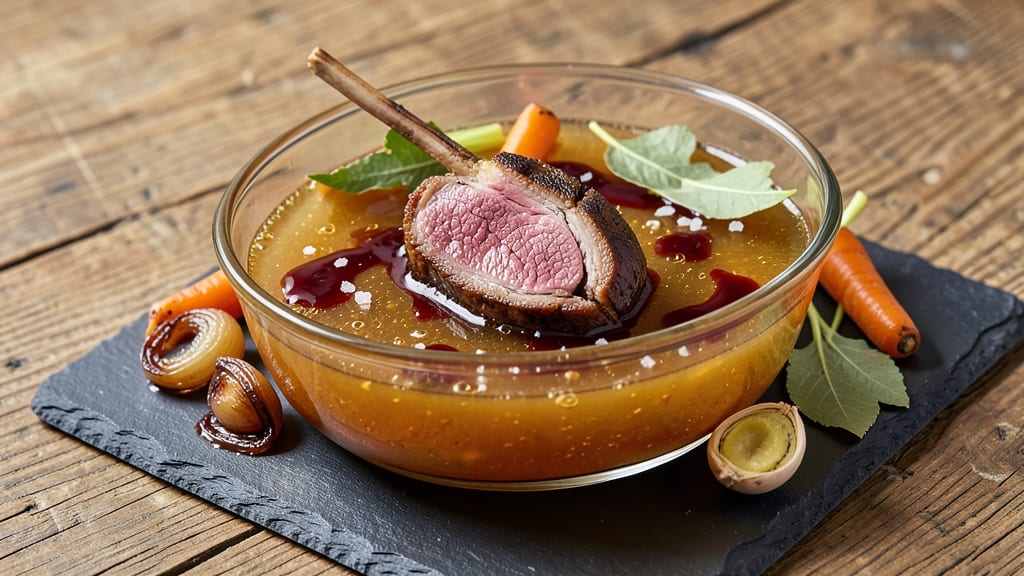
This beef aspic recipe transforms humble beef into a showstopping centerpiece for holiday tables—where golden gelatin meets rich, savory depth. The secret lies in slow-simmered stock and precise chilling, creating a dish that’s both elegant and effortless once mastered.
I’ve perfected this technique after years of holiday hosting, ensuring every slice delivers that signature jiggly-golden magic.
Start with shank or brisket for maximum flavor, simmering bones with aromatics for 4+ hours to develop a deeply flavorful broth. Clarifying the stock removes impurities, while gelatin sheets (or powder) transform it into a silky, wobbling texture.
The key? Patience—chilling for 6+ hours at 4°C guarantees perfect set without the risk of spoilage.
When served, this aspic delivers crisp, clean slices with a luxurious mouthfeel that pairs beautifully with cold cuts, pickles, or crusty bread. The holiday-worthy presentation makes it ideal for gatherings, while the recipe’s simplicity belies its restaurant-quality results. No more store-bought shortcuts—this is the real deal.
Safety is simple: use separate utensils for raw meat and cooked aspic, and store properly to maintain that golden, jiggly perfection. Ready to impress? Let’s make this centerpiece the star of your table.
Ingredients for beef aspic
Elevate holiday tables with these precise ingredients—where rich beef stock meets silky gelatin for restaurant-quality elegance.
| Ingredient | Amount | Notes |
|---|---|---|
| Beef Shank or Brisket Bones 🥩 | 4 lb | Raw, cut into large chunks |
| Yellow Onions 🧅 | 2 whole | Peeled, halved lengthwise |
| Carrots 🥕 | 4 whole | Scrubbed, cut into 2-inch pieces |
| Celery Stalks 🌿 | 4 whole | Trimmed, cut into 2-inch pieces |
| Garlic Cloves 🧄 | 8 cloves | Peeled, smashed lightly |
| Bay Leaves 🌿 | 4 whole | Fresh, preferably |
| Black Peppercorns 🌶️ | 1 tbsp | Crushed, not ground |
| White Wine 🍷 | 2 cups | Dry, like Chardonnay |
| Apple Cider Vinegar 🍏 | ½ cup | For clarification |
| Unflavored Gelatin Sheets 🍲 | 2 packages | Each 2 3/4 oz, or 1/4 cup powder |
| Cold Water 💧 | 2 cups | For blooming gelatin |
| Salt 🧂 | 1 ½ tsp | Kosher or sea salt |
| Fresh Parsley 🌿 | ¼ cup | Chopped, for garnish |
The beef bones are non-negotiable—shank or brisket deliver the deepest flavor. Local butchers often have pre-cut chunks, but if buying whole, ask for the meaty ends. Aromatics like onions, carrots, and celery form the flavor base, so don’t skimp. Whole Foods or Trader Joe’s carry pre-trimmed bundles for convenience. For gelatin, Great Lakes or Knox brands are reliable; sheets are easier to handle than powder for beginners. The white wine should be dry—nothing sweet—to avoid clouding the stock.
No beef bones? Pork hocks or ham bones work in a pinch, though flavor will differ slightly. Substitute dried bay leaves at one-third the amount if fresh aren’t available. For clarification, apple cider vinegar is ideal, but white vinegar or lemon juice (same acidity) will suffice. Gelatin powder? Use 1/4 cup per 2 cups liquid, bloomed in cold water for 10 minutes. The parsley is optional but adds a bright contrast—flat-leaf varieties hold their color best. If you’re short on time, pre-chop all vegetables before starting the stock to streamline the process.
Store the clarified stock in airtight containers for up to 5 days in the fridge or 3 months frozen. Once set, aspic keeps 1 week refrigerated—slice with a hot knife for clean edges. For holiday prep, make the stock 2 days ahead and clarify the day before serving. The gelatin mixture should be room temperature when pouring to avoid cracks. Garnish with parsley right before serving to maintain vibrancy.
Why You'll Love This Recipe
- No Fuss Setup: I swear by this recipe—just toss the bones, onions, carrots, and celery into a pot with garlic, cover with water, and let it simmer. No fancy prep, no chopping like you’re auditioning for a cooking show. The bones do all the work while you sip coffee or scroll through your phone.
- Rich Umami Magic: That deep, savory broth? Pure gold. The beef bones and slow-simmered veggies release collagen and flavor until the liquid turns into something so good you’ll want to drink it straight. (Yes, I’ve been there.) The garlic and onions caramelize just enough to add a sweet, earthy punch that makes everything better.
- Weeknight Meal Upgrade: Turns a boring night into a "whoa, this tastes fancy" moment. Use the aspic as a base for soups, gravies, or even a quick pan sauce—just reduce it with a splash of wine or broth. My kids think it’s "gourmet" when I drizzle it over mashed potatoes. (They’re not wrong.)
- Budget-Friendly Pantry Hero: Beef bones are cheap, and this recipe stretches them into multiple meals. Freeze leftovers for future soups or stews, or use the broth to bulk up rice dishes. Honestly, it’s one of those recipes where you’ll wonder why you didn’t make it sooner—because it’s always useful, never wasted.
Step-by-step instructions for beef aspic with rich gelatin magic
Mastering this classic technique transforms humble beef bones into a luxurious centerpiece.
Brown the Beef Bones for Deep Flavor
Preheat your largest stockpot over medium-high heat. Pat the 4 lb beef shank or brisket bones completely dry with paper towels—this ensures maximum browning. Working in batches if needed, sear the bones until they develop a deep mahogany crust, about 8-10 minutes per side. The Maillard reaction at this stage creates complex flavors that infuse into the aspic.
As you brown, remove the bones and set them aside. In the same pot, add 2 whole yellow onions (halved), 4 whole carrots (cut into 2-inch pieces), and 4 whole celery stalks (trimmed and cut similarly). Cook these vegetables for 5 minutes until they begin to soften and release their sweet, aromatic juices. This step builds the flavor foundation for your aspic.
Build the Stock with Aromatics and Acid
Return the browned bones to the pot and add 8 cloves garlic (peeled and smashed), 4 whole bay leaves, 1 tbsp crushed black peppercorns, and 1.5 tsp salt. Pour in 2 cups white wine and 0.5 cup apple cider vinegar, scraping up any browned bits from the bottom of the pot. The acidity of the vinegar helps extract collagen from the bones while balancing the richness.
Cover the pot and bring to a gentle simmer. Reduce heat to maintain a barely bubbling state—this prevents the stock from boiling vigorously, which can make it cloudy. Simmer for 3-4 hours, skimming off any foam that rises to the surface. The stock should reduce by about one-third, becoming rich and deeply flavored with a deep amber color.
Strain and Bloom the Gelatin
Once the stock has reduced, carefully strain it through a fine-mesh sieve into a clean pot, pressing on the solids to extract every last bit of flavor. Discard the bones and vegetables. While the stock is still warm (but not boiling), place the 2 packages unflavored gelatin sheets in a bowl and cover with 2 cups cold water. Let them bloom for 10 minutes—they should become translucent and plump.
Gently squeeze any excess water from the bloomed gelatin and add it to the warm stock. Stir constantly over low heat until the gelatin is completely dissolved. The mixture should be smooth and slightly thicker than water. If you notice any undissolved bits, strain again through a fine-mesh sieve to ensure a perfectly clear aspic. This step is critical for achieving that signature jiggly texture.
Pour and Set the Aspic
Pour the gelatin mixture into a shallow baking dish or mold—this ensures even cooling and a consistent texture. Smooth the top with a spatula and cover with plastic wrap pressed directly onto the surface. Refrigerate for at least 4 hours or until fully set. The aspic should have a firm but slightly wobbly consistency, like a rich custard.
When ready to serve, run a sharp knife around the edges of the mold to loosen it. Invert onto a serving platter and garnish with 0.25 cup chopped fresh parsley for a pop of color. For an elegant presentation, you can also layer thinly sliced vegetables or herbs between pours to create visual interest. The aspic should hold its shape when sliced but still have that satisfying jiggle that makes it so special.
Serve with Confidence
Slice the aspic into diamonds or rectangles and serve immediately. The texture should be firm yet tender, with a rich, savory flavor that carries the depth of the stock. Pair it with crusty bread for dipping or use it as a base for elegant hors d'oeuvres. The key to success lies in the slow cooking of the bones and the precise blooming of the gelatin—both steps work together to create this luxurious holiday centerpiece.
Store any leftovers in an airtight container in the refrigerator for up to 5 days. If the aspic firms up too much, briefly warm it in a water bath until it softens slightly before serving again. This technique transforms simple ingredients into something truly remarkable, perfect for impressing guests during the holiday season.
Pro Tips For Making Beef Aspic
- BLANCH THE VEGETABLES FIRST: Toss your onions, carrots, and celery into boiling water for 3 minutes before adding them to the pot. This softens them faster and keeps the broth from turning muddy—no one wants a cloudy aspic, and this step cuts down on chopping time later.
- SKIP THE BROWNING, NOT THE FLAVOR: I used to rush the bones and miss the golden crust, but that’s where depth comes from. Sear the bones in batches over medium-high heat until deeply browned—even if it takes 20 minutes. The Maillard reaction here is non-negotiable for rich aspic.
- STRAIN TWICE, CHILL FASTER: Use a fine-mesh strainer first to catch big bits, then line it with cheesecloth for a second pass. Once strained, pour the broth into a shallow tray and refrigerate uncovered for 2 hours—this speeds up the fat solidifying so you can skim it clean without a mess.
- WEIGH DOWN THE ASPIC: If your aspic isn’t setting properly, it’s probably because the liquid’s too shallow. Press a plate or weights into the center while it chills—this forces the gelatin to bond evenly. No one likes a wobbly aspic, and this guarantees a clean slice every time.
Essential equipment for this recipe
Stockpot Essentials
Your stockpot is the heart of this recipe—nothing less than a 6-8 quart Dutch oven or large stainless steel pot will do. I swear by the All-Clad Stainless Steel Stockpot for even heat distribution, but a Le Creuset Dutch oven adds rustic charm.
Avoid nonstick pots—they can't handle the high temperatures needed for proper browning and simmering. 🔥
Precision Tools
A fine-mesh sieve (like the OXO Good Grips) is non-negotiable for straining your stock—it removes impurities while preserving flavor. For gelatin, use unflavored sheets (Great Lakes brand) or powder (Knox), but sheets are easier to handle.
A kitchen scale ensures accurate measurements, especially when blooming gelatin—2 3/4 oz per package makes all the difference. 🌡️
Chilling Solutions
For perfect setting, use shallow baking dishes (like Pyrex 9x13-inch) or silicone molds (Amazon has great options). Line them with plastic wrap pressed directly onto the surface to prevent skin formation.
A deep freezer speeds up chilling—place your dish in the freezer for 2 hours, then finish in the fridge. For presentation, rectangular loaf pans create elegant slices. ❄️
Safety Gear
Always use separate utensils for raw meat and cooked aspic to avoid cross-contamination. A thermometer (like ThermoWorks Home) ensures your stock reaches 160°F before straining. For slicing set aspic, a hot knife (dipped in hot water) guarantees clean cuts. Store leftovers in airtight glass containers to maintain texture. 🛡️
Nutrition facts
Frequently asked questions
Can I use powdered gelatin instead of sheets?
Yes! For 2 packages of gelatin sheets (about 5.5 oz total), substitute with 1/4 cup powdered gelatin. Bloom powder in 1/4 cup cold water for 5 minutes first, then dissolve in the warm stock. Powder works just as well but requires more precise measuring.
Why did my aspic turn cloudy?
Cloudiness usually means the stock boiled too vigorously, breaking down proteins. Simmer gently at barely bubbling and strain through a cheesecloth-lined sieve for extra clarity. If it happens, try clarifying with egg whites next time—this is a pro technique for crystal-clear results.
How do I prevent cracks in the aspic?
Cracks form when the surface dries or cools too quickly. Press plastic wrap directly onto the surface before chilling, and avoid opening the fridge door during setting. For extra insurance, place your dish in a water bath (pan of hot water) for 10 minutes before pouring.
Can I add vegetables or meat to the aspic?
Try thinly sliced carrots, cucumbers, or mushrooms layered between pours, or add diced ham or beef to the stock before straining. Just ensure all additions are fully cooked and chilled before mixing. For presentation, use edible flowers or herbs as garnishes.
How long will homemade aspic keep?
Store in an airtight container for up to 5 days refrigerated or 3 months frozen. For serving, let it sit at room temperature for 10-15 minutes to soften slightly. If it firms up too much, warm gently in a water bath (never microwave) to restore texture.