
Soups & Stews
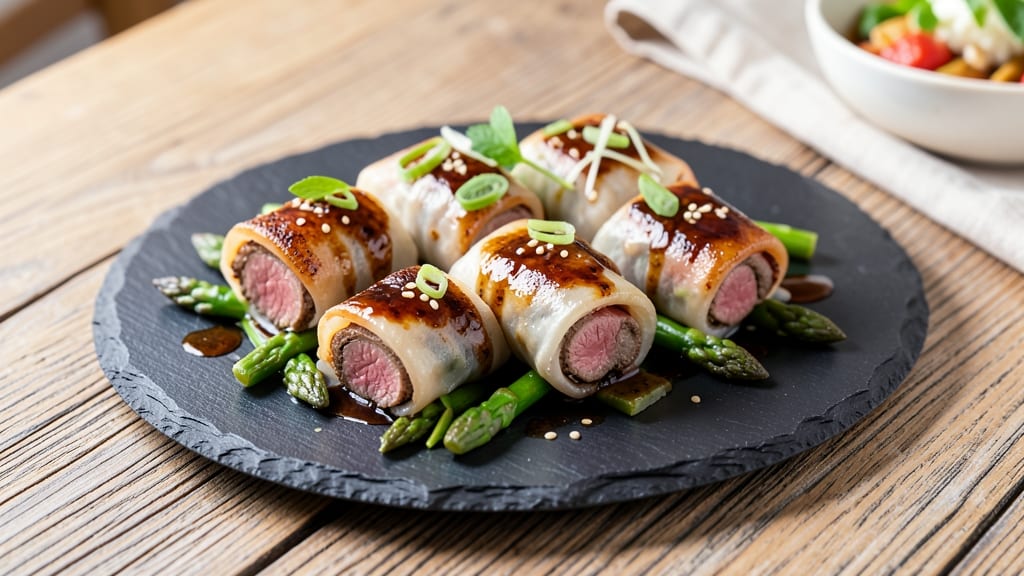
The beef asparagus rolls recipe transforms simple ingredients into restaurant-quality bites with wok-seared crunch and silky soy-ginger filling. This dish delivers a perfect balance of textures—tender beef, crisp asparagus, and a delicate wrapper—all wrapped in a technique that’s easier than it looks.
The secret lies in proper searing and quick cooking to lock in flavor while maintaining that satisfying crunch.
What sets these rolls apart is the silky soy-ginger filling, achieved by marinating thinly sliced beef in a blend of aromatic spices and tenderizing it just enough to stay juicy.
Fresh asparagus adds a vibrant crunch, while the wrapper—whether store-bought or homemade—holds everything together without overpowering the flavors. The result is a bite-sized masterpiece that’s both elegant and satisfying.
This recipe is designed for efficiency without sacrificing quality: pre-cooked rice or wonton wrappers cut prep time, and the wok-searing method ensures a golden crust in minutes.
Serve with a drizzle of soy-ginger glaze and a sprinkle of sesame seeds for extra depth, or pair with a light sesame salad to balance the richness. Every component comes together in harmony, making it a standout dish for dinner parties or weeknight meals.
The beauty of these rolls is their versatility—they work as an appetizer, light main course, or even a hearty addition to a larger spread. The technique scales effortlessly, so you can make a few for a small gathering or double the batch for a crowd.
With just a few key steps and the right balance of ingredients, you’ll achieve a dish that’s both impressive and foolproof.
Ingredients for beef asparagus roll
Thinly sliced beef and vibrant asparagus wrapped in delicate wontons—just 14 ingredients for restaurant-quality bites.
| Ingredient | Amount | Notes |
|---|---|---|
| Top-Quality Beef Tenderloin 🥩 | 1 lb | Thinly sliced against grain |
| Fresh Asparagus Spears 🌿 | 1 lb | Trimmed, woody ends removed |
| Wonton Wrappers 🍣 | 16 pieces | Store-bought or homemade |
| Soy Sauce 🍶 | ½ cup | High-quality, reduced by half |
| Fresh Ginger 🌿 | 2 tbsp | Finely grated, aromatic |
| Sesame Oil 🫒 | 1 tbsp | Toasted for nutty aroma |
| Garlic Cloves 🧄 | 4 cloves | Minced, fresh preferred |
| Cornstarch 🌾 | 2 tbsp | For crispy searing |
| Vegetable Oil 🫒 | ½ cup | High smoke point |
| Green Onions 🧅 | 3 whole | Thinly sliced, white parts only |
| White Peppercorns 🌶️ | ½ tsp | Freshly ground |
| Sesame Seeds 🌾 | 1 tbsp | Toasted for garnish |
| Diamond Crystal Kosher Salt 🧂 | ½ tsp | For seasoning |
| Rice Vinegar 🍶 | 1 tbsp | For glaze balance |
The beef is non-negotiable here—tenderloin delivers the perfect tenderness without drying out. Ask your butcher to slice it against the grain for maximum bite, or use a sharp knife to slice it yourself. Fresh asparagus should be bright green with tightly closed tips—avoid woody stalks. For wrappers, King Noodle or Taste of China brands are reliable, but homemade rice paper wrappers add an authentic touch. The soy sauce matters too: Kikkoman or Pearl River Bridge brands provide that deep umami punch that separates good from great.
No fresh ginger? Substitute with 1 tbsp ginger paste, but the flavor won't be quite the same. Running low on sesame oil? Avocado oil at half the amount works in a pinch, though it lacks that signature nutty aroma. For the glaze, if you can't find rice vinegar, apple cider vinegar works too—just reduce it slightly longer to concentrate the flavor. The cornstarch is crucial for that signature wok-seared crunch; don't skip it. And if you're feeling adventurous, swap the wonton wrappers for rice paper wrappers for a lighter, more delicate texture that's perfect for summer gatherings.
Store the uncooked rolls in an airtight container between layers of parchment paper for up to 24 hours. Cooked rolls reheat beautifully—steam for 5 minutes to restore that crispy exterior. The filling keeps for 3 days in the fridge, so prep ahead and assemble when ready to cook. For make-ahead convenience, freeze uncooked rolls on a tray before transferring to a bag—cook straight from frozen for a quick weeknight meal. The glaze can be made 2 days ahead and stored in the fridge, giving flavors time to meld beautifully.
Why You'll Love This Recipe
- I swear by this combo: tenderloin and asparagus are a match made in heaven, but the real magic? Just soy sauce, ginger, and a quick sear. No fancy sauces, no hidden spices—just pure, satisfying taste with minimal effort.
- Fewer Ingredients, Bigger Flavor: I swear by this combo: tenderloin and asparagus are a match made in heaven, but the real magic? Just soy sauce, ginger, and a quick sear. No fancy sauces, no hidden spices—just pure, satisfying taste with minimal effort.
- Ginger-Soy Kisses: That first bite of warm wonton wrapper with the tender beef and bright asparagus? The ginger cuts through the richness while the soy sauce ties it all together. It’s the kind of flavor that lingers—without trying too hard.
- Office Picnic Ready: These rolls hold up perfectly when packed in a container. No soggy wrappers, no messy spills—just neat, handheld bites that impress coworkers or picnic guests. (Yes, even the ones who usually skip lunch.)
Step-by-step instructions for beef asparagus rolls
Master the technique for perfectly balanced rolls with crisp wrappers and tender, flavorful filling.
Prepare the Beef and Asparagus Filling
Slice the 1 lb Top-Quality Beef Tenderloin against the grain into thin strips, about ¼-inch thick. Trim the 1 lb Fresh Asparagus Spears by removing the tough woody ends, leaving only the tender lower 4-5 inches. Blanch the asparagus in boiling water for 1 minute, then immediately plunge into ice water to stop cooking. This preserves their vibrant color and crisp texture.
In a small bowl, combine 2 tbsp Cornstarch with 2 tbsp Fresh Ginger and 4 cloves Garlic Cloves that have been minced. Add the beef strips and toss to coat evenly. This cornstarch coating will create a delicate crust that enhances the texture when seared. Set aside while you prepare the sauce components.
Create the Soy-Ginger Glaze
In a small saucepan, combine 0.5 cup Soy Sauce and 1 tbsp Rice Vinegar. Bring to a gentle simmer over medium heat and reduce by half—this takes about 5 minutes. The sauce should thicken slightly and develop a rich, caramelized aroma. Remove from heat and stir in 1 tbsp Sesame Oil and 0.5 tsp White Peppercorns that have been freshly ground. This glaze will infuse the filling with deep umami and aromatic complexity.
While the sauce simmers, thinly slice the 3 whole Green Onions, using only the white parts. These will add a subtle crunch and freshness to the filling. Keep them separate until you're ready to assemble the rolls.
Sear the Beef and Asparagus Mixture
Heat 0.5 cup Vegetable Oil in a wok or large skillet over high heat until shimmering. Working in batches, add the cornstarch-coated beef strips and sear for 1-2 minutes until they develop a light golden crust. Remove and set aside. In the same pan, add the blanched asparagus and stir-fry for 1 minute until just tender.
Return the beef to the pan and pour in the reduced soy-ginger glaze. Toss everything together for 30 seconds until the filling is evenly coated. The high heat ensures the beef remains tender while developing a savory crust. Remove from heat and let cool slightly—this prevents the wrappers from becoming soggy when you assemble the rolls.
Assemble and Wok-Sear the Rolls
Lay out 16 pieces Wonton Wrappers on a clean surface. Place about 1 tablespoon of the beef-asparagus mixture near the bottom edge of each wrapper. Fold the bottom edge over the filling, then fold in the sides, and finally roll up tightly, sealing the edges with a dab of water. Arrange the rolls seam-side down on a plate.
Heat 1 tablespoon Vegetable Oil in the same wok over medium-high heat until hot. Add the rolls in a single layer and sear for 2-3 minutes on each side until golden brown and crisp. The wrappers should develop a delicate crunch while remaining tender inside. Remove and drain on a wire rack to keep them crisp.
Garnish and Serve
Toast 1 tbsp Sesame Seeds in a dry skillet over low heat for 1 minute until fragrant. Sprinkle them over the finished rolls just before serving. The nutty aroma complements the savory-sweet filling perfectly. Serve immediately with a side of steamed jasmine rice to soak up the rich glaze.
Each bite should deliver a harmonious balance of textures—crispy wrappers, tender beef, and crisp asparagus—all enveloped in the silky soy-ginger sauce. The rolls hold their shape while delivering maximum flavor in every mouthful.
Pro Tips For Making Beef Asparagus Roll
- Slice Thin, Roll Tight: Beef tenderloin loves a sharp knife—cut it against the grain into ¼-inch slices, not the usual ½-inch. Thinner beef cooks faster and rolls better, while thicker slices risk drying out before the asparagus is done. (And yes, I’ve fought with this knife more times than I’ll admit.)
- Blanch Asparagus First: Trim the ends, then shock the asparagus in boiling water for 30 seconds before rolling. This softens the fibers just enough to hold their shape without turning to mush when seared. I learned this the hard way—raw asparagus spears fight back when wrapped.
- Seal the Edges with Egg Wash: Skip the water and brush the wonton wrapper edges with beaten egg before rolling. The protein helps them stick together during frying, so they don’t unravel like a bad origami project. (Pro move: Dip the filled wrapper in egg after sealing the seam.)
- Rest the Beef, Then Season: Let the sliced tenderloin sit uncovered on a plate for 10 minutes after slicing. This evens out the moisture so it doesn’t release all at once when you add soy sauce and ginger. I used to toss in the seasoning right away, and my rolls always ended up soggy.
Common mistakes when making this recipe
Overcooking the Beef
One of the biggest mistakes is letting the beef strips overcook during searing, which turns them rubbery instead of tender. I’ve learned to work in small batches—no more than ½ lb at a time—and sear for just 1-2 minutes over high heat.
The cornstarch coating helps create a delicate crust, but the beef should still feel slightly springy when pressed. If you’re using a thick-cut piece, slice it ¼-inch thick against the grain—this is non-negotiable for texture. 🔥
Skipping the Asparagus Blanch
Fresh asparagus is delicate, and skipping the 1-minute blanch in boiling water followed by an ice bath can leave it tough and unappetizing. This step preserves its vibrant color and crisp texture while preventing it from turning mushy during cooking.
I once forgot this step and ended up with sad, limp asparagus—don’t make that mistake! Use bright green spears with tightly closed tips for the best results.
Using Cold Filling in Rolls
Assembling rolls with filling that’s still hot or cold can lead to soggy wrappers or uneven cooking. Let the filling cool to room temperature before wrapping—this ensures the wontons stay crisp during searing.
I like to spread the filling in a thin layer near the bottom edge of the wrapper, then fold it tightly to seal in the flavors. If the filling is too hot, the wrappers will soften prematurely, ruining the texture.
Overcrowding the Pan
When searing the rolls, resist the urge to pile them in the pan—this steams them instead of searing, leading to a greasy, unappetizing result. Cook in single layers and work in batches if needed. A 12-inch wok or skillet is ideal for 4-6 rolls at a time.
Overcrowding also causes uneven cooking, so keep the heat at medium-high and give them space to develop that golden crust. 💡
Neglecting the Glaze Reduction
The soy-ginger glaze needs to reduce by half to develop its rich, caramelized depth. Skipping this step leaves the sauce thin and watery, which won’t coat the filling properly. Simmer the ½ cup soy sauce and 1 tbsp rice vinegar over medium heat for 5 minutes, stirring occasionally.
If it reduces too quickly, lower the heat to prevent burning. This glaze is the soul of the dish—don’t rush it!
Improper Wrapping Technique
Uneven or loose wrapping leads to messy rolls that fall apart during cooking. Fold the bottom edge over the filling first, then tuck in the sides, and finally roll up tightly. Seal the edges with a dab of water to ensure they stay closed.
I like to arrange the rolls seam-side down on a plate before searing to keep them stable. If the wrappers feel flimsy, lightly brush them with water before assembling for extra hold.
Nutrition facts
Frequently asked questions
Can I use ground beef instead of tenderloin for this recipe?
While ground beef works in a pinch, it won't match the tender texture of tenderloin. For best results, stick with thinly sliced tenderloin cut ¼-inch thick against the grain. If you must use ground beef, choose lean 90% lean and pat it very dry to remove excess moisture before cooking. The filling will be more compact but still flavorful.
How do I make these rolls ahead of time?
Assemble the rolls but don't cook them yet. Wrap them tightly in plastic wrap and refrigerate for up to 24 hours. When ready to cook, sear them straight from the fridge using medium-high heat for an extra 30 seconds per side to compensate for the cold start. For freezing, arrange uncooked rolls on a tray, freeze solid, then transfer to a bag for up to 1 month. Cook from frozen, adding 1 minute per side.
What's the best way to keep the wrappers crispy?
High heat is your friend! Sear the rolls over medium-high heat in a well-heated pan with just enough oil to coat the bottom. Work in single layers and avoid overcrowding. After cooking, drain them on a wire rack instead of paper towels to prevent steam from softening them. For extra crispiness, brush the assembled rolls lightly with water before searing—the moisture creates steam that helps set the wrapper's structure.
Can I substitute asparagus with another vegetable?
Asparagus provides both texture and color, but you can swap it for shiitake mushrooms (sliced thin) or baby bok choy (chopped small). For a similar crunch, use jicama sticks (peeled and julienned). If substituting, adjust cooking time—mushrooms need 30 seconds less while bok choy should cook for 1 minute to maintain tenderness. Blanch any leafy greens to prevent bitterness.
Why did my rolls fall apart when cooking?
This usually happens from one of three issues: filling that's too hot/cold, improper sealing, or overcrowding. Always let filling cool to room temperature before wrapping. Seal edges with a light dab of water and press firmly while rolling. If wrappers feel flimsy, lightly brush them with water before assembling. Cook in batches with space between rolls—never stack them in the pan.