
Sauces & Condiments
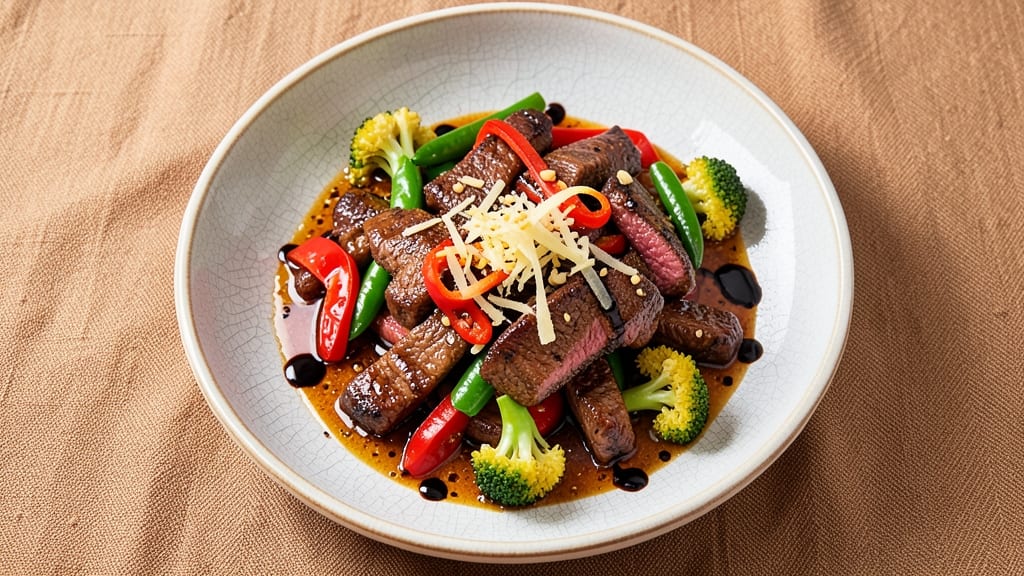
This beef and veggie stir fry sauce recipe transforms ordinary stir-fries into restaurant-quality dishes with just a few simple ingredients and a bold umami-soy ginger gloss.
The secret lies in balancing salty, sweet, and aromatic elements—soy sauce for depth, ginger for warmth, and garlic for sharpness—all blended into a silky, clinging sauce that coats every bite perfectly.
I developed this sauce after years of testing stir-fry recipes, and it never fails to elevate even the simplest wok meal.
The foundation of this sauce is a simple yet powerful combination: soy sauce, honey, garlic, and fresh ginger, all simmered together until fragrant and slightly thickened. The addition of a splash of rice vinegar brightens the flavors, while sesame oil adds a nutty finish that ties everything together.
Unlike store-bought sauces, this one delivers authentic, restaurant-worthy taste without artificial additives—just pure, vibrant flavor.
What makes this sauce truly special is its versatility and staying power. It clings beautifully to beef, vegetables, and noodles, creating a glossy, flavorful coating that enhances rather than overpowers.
The sauce also keeps well in the fridge for up to a week, making it perfect for meal prep or spontaneous stir-fry nights. Whether you're cooking for one or feeding a crowd, this sauce is your secret weapon for wok-perfect results every time.
Ready to elevate your stir-fry game? This sauce is quick to make, easy to store, and guaranteed to turn your weeknight dinners into flavorful masterpieces. Let’s get started—your taste buds will thank you.
Ingredients for beef and veggie stir fry sauce
Nine simple ingredients crafting restaurant-quality stir-fry sauce with umami depth and vibrant cling.
| Ingredient | Amount | Notes |
|---|---|---|
| Low-Sodium Soy Sauce 🍶 | ½ cup | Kikkoman preferred for depth |
| Honey 🍯 | ¼ cup | Wildflower for floral notes |
| Fresh Ginger 🌿 | ¼ cup | Finely grated, not minced |
| Garlic Cloves 🧄 | 6 cloves | Peeled, smashed for aroma |
| Rice Vinegar 🍶 | 2 tbsp | Seasoned variety for balance |
| Sesame Oil 🫒 | 2 tbsp | Toasted, not flavored |
| Cornstarch 🌾 | 1 tbsp | For silky thickening |
| Water 💧 | ¼ cup | Room temperature preferred |
| Red Pepper Flakes 🌶️ | ½ tsp | Adjust for heat preference |
| Sesame Seeds 🥜 | 1 tbsp | Toasted for garnish |
The soy sauce is non-negotiable here—Kikkoman delivers that perfect balance of saltiness and complexity, but Lee Kum Kee works too if you prefer a slightly sweeter profile. Fresh ginger is a game-changer; organic ginger from the produce section has more punch than pre-grated bags. For garlic, smash the cloves with the flat side of your knife before adding to the pan—this releases more flavor. If you're using a jarred ginger-garlic mix, reduce it by half since those are already pre-minced and less aromatic. The honey should be wildflower or clover for floral undertones that complement the soy perfectly.
No honey? Maple syrup works beautifully—just use the same amount. Running out of rice vinegar? Apple cider vinegar or white wine vinegar both work, but reduce to 1.5 tbsp since they're more acidic. Sesame oil is where the magic happens—use toasted, not flavored. If you can't find it, lightly toast regular sesame oil in a dry pan for 30 seconds before using. The cornstarch is crucial for that glossy finish; arrowroot powder works too but requires less water. For extra umami, add 1 tsp fish sauce if you're not avoiding it, or mushroom powder at half a teaspoon for a vegetarian option.
This sauce keeps beautifully—up to 1 week in the fridge sealed in a jar. For longer storage, freeze in ice cube trays and transfer to a bag. Thaw overnight in the fridge or microwave for 20 seconds. The sauce thickens as it cools, so add a splash of water if it gets too stiff after refrigeration. I always make double batches—one for immediate use, one to freeze. The sesame seeds? Toast them fresh before each use—they add crunch and aroma that makes all the difference when garnishing.
Why You'll Love This Recipe
- Five-Ingredient Magic: I swear by this combo—just soy sauce, honey, ginger, garlic, and vinegar. No fancy pantry trips, no measuring cups that never end. Honestly, I keep this bottle in my fridge because it’s that foolproof.
- Umami Honey Glow: That honey-soy balance? It’s like a secret handshake for flavor. The ginger and garlic add a little kick, but the vinegar keeps it bright—no heavy, overpowering aftertaste. (Yes, even on a Tuesday night.)
- Meal Prep MVP: Double the sauce, halve the stress. I make a big batch on Sundays, toss it with prepped veggies and beef, and reheat for lunches all week. No soggy stir-fry here—just reheat and serve.
- Budget-Friendly Flex: Uses pantry staples you already own, and a little goes a long way. Between us, this sauce costs me pennies per serving, but it tastes like a restaurant dish. My daughter picks out the mushrooms, but still asks for seconds.
Step-by-step instructions for beef and veggie stir fry sauce
This sauce delivers that perfect balance of sweet, tangy, and umami—exactly what your stir fry needs.
Prepare the Ginger and Garlic Base
Peel the 6 cloves garlic and smash them lightly with the flat side of a knife to release their aroma without mincing. Then, finely grate the 0.25 cup fresh ginger using a microplane or the fine holes of a box grater—this ensures a smooth texture that won't clump. Set both aside in separate bowls for now.
Here's the thing—freshly grated ginger and smashed garlic pack the most flavor. If you use pre-minced garlic or jarred ginger, you'll miss that fragrant burst that makes this sauce truly special. I like to let them sit at room temperature for 5 minutes before cooking so their oils fully awaken.
Bloom the Aromatics in Sesame Oil
Heat a small saucepan over medium-low heat and add the 2 tablespoons toasted sesame oil. Once the oil shimmers but isn't smoking, add the smashed garlic and grated ginger. Cook for 1-2 minutes until the garlic turns golden around the edges and the mixture is fragrant—this step builds the sauce's aromatic foundation.
Don't rush this part. The garlic should sizzle gently, not burn. If it starts to darken too quickly, reduce the heat immediately. The goal is to develop flavor without bitterness. Once the aromatics are perfumed and just beginning to color, remove the pan from heat and let it cool for 1 minute—this prevents a sudden temperature shock when you add the other ingredients.
Combine Wet Ingredients for Balance
Return the pan to medium heat and add the 0.5 cup low-sodium soy sauce, 0.25 cup honey, and 2 tablespoons rice vinegar. Stir constantly for 3-4 minutes until the mixture begins to simmer and slightly reduce. You'll notice the sauce thicken slightly as the honey starts to caramelize—this is when the flavors begin to meld beautifully.
Taste at this stage, and you'll already detect the harmony of sweet, salty, and tangy. If the sauce tastes too sharp, add a touch more honey. If it's too sweet, a splash of rice vinegar balances it out. This is your chance to adjust before committing to the thickening step. The sauce should coat the back of a spoon but still be pourable.
Thicken and Finish with Spice
In a small bowl, whisk together the 1 tablespoon cornstarch and 0.25 cup water to create a smooth slurry. Slowly pour this into the simmering sauce while stirring constantly. Bring the mixture to a gentle boil and cook for 1-2 minutes until it thickens to a glossy, coatable consistency—it should leave a slight trail on the back of a spoon when you lift it.
Stir in the 0.5 teaspoon red pepper flakes and remove the pan from heat. Let the sauce sit for 2 minutes to allow the heat to fully infuse. If you prefer a smoother texture, strain it through a fine-mesh sieve to remove any lingering ginger fibers. The sauce should now be vibrant, aromatic, and perfectly balanced—ready to elevate any stir fry.
Toast Sesame Seeds for Garnish
While the sauce rests, dry-toast the 1 tablespoon sesame seeds in a small skillet over medium heat for 1-2 minutes until they turn a rich golden brown and release their nutty aroma. Transfer them immediately to a small bowl to cool—this prevents them from burning and ensures maximum crunch.
Here's where it gets fun: sprinkle the toasted sesame seeds over the finished sauce just before serving. They add a delightful textural contrast and a final aromatic punch. Store any leftover sauce in an airtight container in the refrigerator for up to 5 days, or freeze for 3 months. When reheating, warm gently over low heat and stir in a splash of water if it thickens too much.
Pro Tips For Making Beef And Veggie Stir Fry Sauce
- MINCE GINGER FINELY: I learned this the hard way—chunky ginger in stir-fry sauce just sits there like a stubborn guest. Use a microplane or the finest grater, then press the pulp through a sieve to remove fibers. This isn’t about pretty garnishes; it’s about that smooth, bright punch of ginger that actually integrates into every bite.
- SALT THE SOY SAUCE: Low-sodium soy sauce is a gift, but it’s also a ghost of flavor if you don’t coax it. Add a pinch of salt (about ¼ teaspoon per 2 tablespoons soy) and let it sit while you prep the rest—this jumpstarts the umami before it even hits the pan. Trust me, your taste buds will notice the difference.
- COOK GARLIC LOW AND SLOW: I used to blast garlic in hot oil like it owed me money, and it always burned into bitter ashes. For this sauce, add minced garlic to the pan after the ginger’s fragrant but not browned, then reduce the heat to medium-low. Stir constantly—yes, even if you’re impatient like me—and pull it out just as it turns golden. That’s the line between magic and regret.
- BALANCE HONEY WITH VINEGAR: Dump honey in first, and your sauce turns into sticky syrup. Instead, whisk in the rice vinegar before the honey, then let the mixture simmer for 30 seconds—this cuts the sweetness’s sharp edge and lets the acid brighten the soy. Sounds weird, but it works: the sauce tastes complex, not one-note.
Essential equipment for perfect results
Wok Essentials
The heart of any stir-fry sauce is your wok—carbon steel or cast iron are my top picks for their heat retention and even cooking. A 14-inch wok works perfectly for most home kitchens, giving you enough space to toss beef and veggies without overcrowding.
If you're just starting, a well-seasoned Lodge cast iron wok is a budget-friendly option that delivers professional results. For high heat control, I love the Mauviel M'Cook M300, though it’s pricier. 🔥
Sauce Thickening Tools
A fine-mesh strainer and whisk are non-negotiable for this sauce. The strainer removes any lingering ginger fibers for a silky texture, while the whisk ensures your cornstarch slurry blends smoothly. I use a Norpro 1-cup whisk for its sturdy build, but any quality whisk will work.
For the slurry, a small mixing bowl with a spoon is ideal—just whisk until fully dissolved to avoid lumps. A digital kitchen scale helps measure the cornstarch and water precisely, though measuring spoons work in a pinch.
Heat Control Must-Haves
Stir-fry sauce relies on precise heat management, so a high-quality thermometer is worth the investment. The ThermoWorks Thermapen One gives instant readings, helping you monitor the sauce’s simmer without guessing. For the wok, a long-handled spatula (I use Victorinox 12-inch) keeps you safe from splatters while tossing ingredients.
A heat-resistant spatula also works for stirring the sauce on the stove—just avoid metal if your pan isn’t seasoned.
Garnish and Storage Gear
Toasted sesame seeds need a small skillet or nonstick pan to avoid burning. I prefer a nonstick 8-inch pan for quick toasting—just keep an eye on them! For storage, amber glass jars preserve the sauce’s freshness and block light, which can degrade flavors over time.
If you’re freezing, silicone ice cube trays make portioning easy—just pop a cube into your stir-fry for instant flavor. A fine-mesh sieve (like OXO Good Grips) is perfect for straining if you want ultra-smooth sauce. ✨
Budget-Friendly Swaps
No fancy tools? No problem. A wooden spoon works for stirring, and a cheese grater can replace a microplane for ginger. For heat control, a timer helps track the 1-2 minutes of garlic blooming. A small saucepan with high sides prevents spills when thickening.
Even a spoon and bowl suffice for the cornstarch slurry—just whisk vigorously. The key is focus, not equipment. Most home kitchens already have what you need! 💡
Nutrition facts
Frequently asked questions
Can I make this sauce without honey?
Replace the 0.25 cup honey with an equal amount of maple syrup or brown sugar dissolved in 2 tablespoons water. For a lower-sugar option, use 1 tablespoon molasses plus 1 tablespoon water—it adds depth without overpowering. The sauce will still achieve that perfect balance of sweet and umami.
How do I adjust the heat level?
The 0.5 teaspoon red pepper flakes provide mild heat. For more kick, increase to 1 teaspoon or add 0.5 teaspoon cayenne pepper. For a smoky flavor, swap 1 teaspoon smoked paprika instead. Always taste as you go—you can reduce heat by omitting the pepper flakes entirely if preferred.
Why did my sauce turn out too thick?
This usually happens if the sauce simmers too long or if you didn't use enough water in the cornstarch slurry. To fix it, whisk in 1 tablespoon warm water at a time until you reach the desired consistency. For next time, reduce simmering time to 1 minute instead of 2 minutes when thickening. The sauce should coat the back of a spoon but still be pourable.
Can I use this sauce for other proteins?
This versatile sauce works beautifully with chicken, shrimp, tofu, or pork. For seafood, reduce the soy sauce to 0.375 cup to avoid overpowering delicate flavors. With tofu, add 1 teaspoon cornstarch to the sauce to help it cling better. The ginger-garlic base makes it perfect for any stir-fry—just adjust seasoning to match your protein's natural taste.
How can I make this sauce gluten-free?
Swap the soy sauce for 0.5 cup gluten-free tamari or coconut aminos. For extra umami, add 1 teaspoon gluten-free fish sauce or 1 teaspoon mushroom powder. The remaining ingredients stay the same, and the sauce will maintain its rich, clinging texture. Always check labels to ensure all ingredients are certified gluten-free.