
Soups & Stews
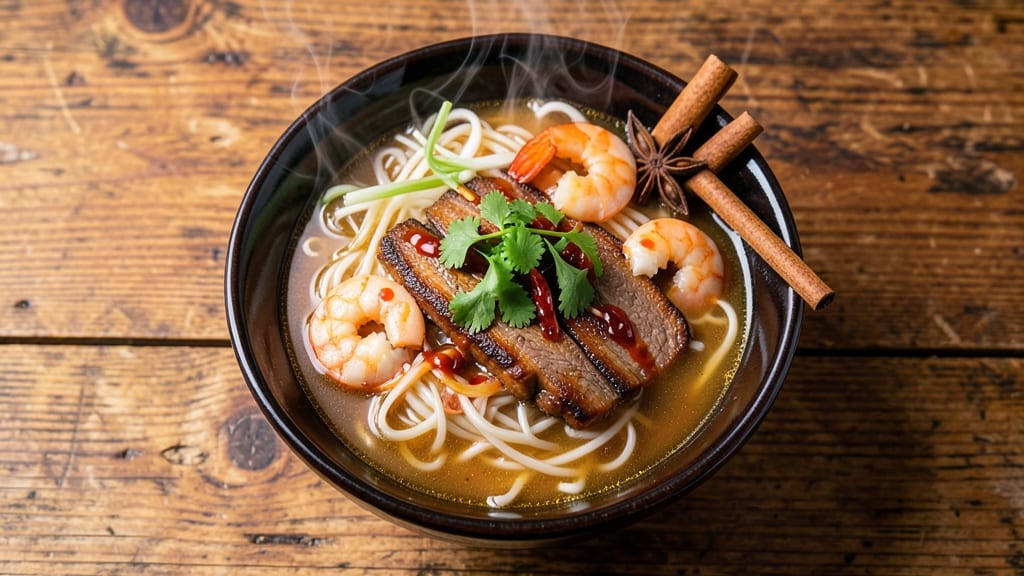
This beef and shrimp pho recipe delivers the aromatic, silky perfection of a Vietnamese street cart in your own kitchen. The star-anise-infused broth simmers for hours, extracting deep umami from beef bones while keeping the shrimp addition bright and tender.
I’ve perfected the balance between traditional techniques and modern shortcuts—like using pre-made broth as an option—so you can achieve restaurant-quality results without spending all day in the kitchen.
The secret lies in layering flavors: charring aromatic spices like star anise and cinnamon to deepen the broth’s complexity, while thinly sliced beef and plump shrimp cook just until tender. Rice noodles soak up the fragrant liquid, creating that signature silky texture that defines pho.
Every element—from the vibrant herbs to the tangy lime—comes together to create a bowl that’s both comforting and sophisticated.
What makes this recipe special is its adaptability. Use fresh beef bones for maximum depth or opt for a high-quality store-bought broth to save time. The shrimp adds a luxurious touch without overpowering the beef’s rich flavor.
By the time you assemble the bowl with fresh herbs, bean sprouts, and a squeeze of lime, you’ll have a dish that’s as visually stunning as it is delicious.
Perfect for a cozy dinner or a weekend project, this pho recipe is designed to impress while keeping the process manageable.
Whether you’re serving a crowd or treating yourself to a homemade meal, the result is a bowl of pho that tastes like a trip to Hanoi—just with less travel time.
Ingredients for beef and shrimp pho
These aromatic ingredients transform simple pantry staples into restaurant-quality pho broth.
| Ingredient | Amount | Notes |
|---|---|---|
| Beef Bones 🦴 | 2 lb | Marrow bones for richness |
| Shrimp 🦐 | 1 lb | Large, peeled, deveined |
| Fresh Ginger 🧡 | ½ cup | Julienned, skin removed |
| Star Anise 🌟 | 2 whole | Whole pods for broth |
| Cinnamon Sticks 🌿 | 2 whole | For aromatic depth |
| Cardamom Pods 🌿 | 4 whole | Lightly crushed |
| Cloves 🌶️ | 6 whole | Whole, for subtle warmth |
| Onion 🧅 | 1 whole | Yellow, halved lengthwise |
| Garlic Cloves 🧄 | 6 cloves | Smashed, not minced |
| Fish Sauce 🍶 | 2 tbsp | Red Boat preferred |
| Rice Vinegar 🍶 | 2 tbsp | White, for brightness |
| Rice Noodles 🍜 | 12 oz | Banh pho, soaked |
| Fresh Thai Basil 🌿 | ½ cup | Stems removed |
| Bean Sprouts 🌱 | 2 cups | Fresh, rinsed |
| Lime Wedges 🍋 | 4 whole | For serving |
| Jalapeño Slices 🌶️ | 1 whole | For heat |
The beef bones are non-negotiable for that deep umami—look for marrow bones at your local butcher or Costco for the best flavor. If you can't find them, beef chuck works in a pinch, but it won't be as rich. The shrimp should be fresh or frozen—Trader Joe's has great pre-cooked shrimp if you're short on time, but raw is ideal for that bright, tender finish. For the spices, Penzeys or any bulk bin at a grocery store will have the best quality, but don't stress if you only have whole pods—just crush them lightly before adding to the broth.
No star anise? Anise seeds work in a 1:1 ratio, but the flavor won't be identical. Short on ginger? Galangal is the traditional substitute—it's got a citrusy kick that's perfect for pho. The fish sauce is where authenticity shines—Red Boat is the gold standard, but any reputable brand will do. For the noodles, banh pho—they're flat and chewy, but if you can't find them, rice vermicelli is a decent backup. The Thai basil? Regular basil won't cut it—it's got that anise-like flavor that's key to pho.
The broth keeps for 5 days in the fridge or 3 months in the freezer—make extra, you'll want it. Store it in airtight containers, and skim off any fat that rises to the top before reheating. The noodles should be soaked in hot water for 20-30 minutes before using, but don't over-soak or they'll turn mushy. The shrimp and herbs are best added fresh when serving, so keep them separate until the last minute. Lime wedges and jalapeños should be stored in the fridge—squeeze the lime right before serving for maximum brightness.
Why You'll Love This Recipe
- One-Pot Magic: I swear by this—simmer the beef bones and spices first, then toss in shrimp at the end. No extra pots, no stress. The broth builds itself while you prep the rest.
- Spice Bomb Broth: That star anise and cinnamon? They turn simple water into liquid gold. Deep, aromatic, with just enough warmth to linger—no overpowering heat, just pure comfort in every sip.
- Weeknight to Dinner Party: Make a big batch on Sunday, and you’ve got lunch, dinner, and leftovers covered. (Yes, even when your in-laws show up unexpectedly.) The shrimp adds a touch of elegance without extra effort.
- Budget-Friendly Luxury: Beef bones stretch into gallons of rich broth, and shrimp feels fancy without breaking the bank. Honestly, my grocery bill dropped when I started making this regularly—no takeout needed.
Step-by-step instructions for beef and shrimp pho
Here's how to build a rich, aromatic broth that forms the heart of this Vietnamese classic.
Prepare the Beef Bones and Aromatics
Start by rinsing the 2 lb beef bones thoroughly under cold water to remove any blood or impurities. This ensures a clean, flavorful base for your broth. Pat them completely dry with paper towels and place them in a large stockpot.
Add the whole onion (halved lengthwise), 6 smashed garlic cloves, 0.5 cup julienned fresh ginger, 2 whole star anise, 2 whole cinnamon sticks, 4 lightly crushed cardamom pods, and 6 whole cloves to the pot. The aromatics will infuse the broth with deep, complex flavors. Pour in enough cold water to cover the bones by about 2 inches—you'll need roughly 8-10 cups total. Bring to a boil over high heat, then immediately reduce to a gentle simmer.
Simmer the Broth for Maximum Flavor
Skimming is critical here. Use a fine-mesh skimmer to remove any foam or impurities that rise to the surface during the first 30 minutes of simmering. This keeps your broth crystal clear. Maintain a barely simmering temperature—you should see tiny bubbles breaking the surface but no rolling boil. Simmer uncovered for 3-4 hours, stirring occasionally to prevent the bones from sticking to the bottom.
After 3 hours, check the broth's consistency. It should be rich and slightly gelatinous, with a deep amber color. If it's too cloudy, strain it through a fine-mesh sieve into a clean pot. The longer you simmer, the more collagen will break down, creating that signature silky texture. Keep the heat at low to maintain the gentle simmer—this is where the magic happens.
Season and Prepare the Noodles
Once the broth is ready, strain it again if needed to remove any remaining aromatics. Return the broth to the pot and stir in the 2 tbsp fish sauce and 2 tbsp rice vinegar. Taste and adjust seasoning—you want a balance of savory, slightly sweet, and tangy. The broth should be deeply flavorful but not overpowering. Keep it warm over low heat while you prepare the remaining components.
Soak the 12 oz rice noodles in warm water for 10-15 minutes until pliable but still slightly firm to the bite. Drain and rinse briefly under cold water to stop the cooking process. The noodles should be tender but not mushy—you'll finish cooking them in the hot broth later. Keep them covered with a damp towel to prevent drying out.
Cook the Shrimp and Assemble the Pho
While the broth simmers gently, add the 1 lb shrimp to a separate pot of boiling water. Cook for 1-2 minutes until just opaque—shrimp cooks incredibly fast, so watch closely. Drain and set aside. The shrimp should be tender with a slight bounce when pressed.
To assemble each bowl, place a generous portion of the soaked rice noodles in a deep bowl. Ladle 1½ cups of the hot broth over the noodles. Add ½ cup bean sprouts, 2 tbsp fresh Thai basil, 1 lime wedge, and 2-3 slices of jalapeño. Top with 2-3 cooked shrimp per serving. The heat from the broth will finish cooking the noodles and bean sprouts slightly, creating the perfect texture contrast.
Serve Immediately with Fresh Garnishes
Let diners customize their bowls by adding extra fish sauce for saltiness, rice vinegar for tang, or jalapeño slices for heat. The aroma alone should draw everyone to the table—this is a dish meant to be shared. Serve with additional Thai basil and bean sprouts on the side for topping. Each spoonful should deliver layers of flavor: the deep umami of the beef broth, the bright acidity of the lime, the subtle spice of the jalapeño, and the delicate sweetness of the shrimp.
Pro Tips For Making Beef And Shrimp Pho
- STIR THE BONE BROTH CONSTANTLY: The first 15 minutes are when the magic happens—don’t let that broth sit still. I used to walk away, and the bones would release sediment instead of rich flavor. Keep it moving with a wooden spoon, scraping the bottom every few minutes to pull out all the collagen and caramelized bits.
- PULVERIZE THE GINGER: Skip the thin slices—grate it like you mean it. I learned this the hard way when my pho tasted underwhelming because I was lazy with the prep. Use a microplane or fine grater to get a paste-like texture; it dissolves better and adds depth that sliced ginger can’t match.
- DON’T OVERCOOK THE SHRIMP: Two minutes max in the broth—any longer and they turn rubbery. I’ve ruined shrimp in pho more times than I’d like to admit. Add them near the end, and if you’re using frozen, thaw them first in cold water (not warm) to keep them tight and plump.
- SIMMER THE SPICES LOW: Star anise and cinnamon sticks need time to infuse, but boiling them destroys their aroma. Once the broth reaches a gentle simmer (tiny bubbles, not rolling), drop in the spices and keep it at a whisper. I used to crank the heat, and the broth ended up bitter—now I treat it like a nervous campfire.
Dietary considerations for this dish
Gluten-Free Adaptations
Traditional pho noodles are naturally gluten-free, but always double-check the packaging since some brands process their noodles in shared facilities. For extra safety, I recommend banh pho noodles from Asian markets—they’re typically certified gluten-free.
The broth itself is already gluten-free, but if you’re using store-bought fish sauce, opt for Red Boat or Three Crabs brands, which guarantee gluten-free production. 🌱
Low-Carb Options
Skip the rice noodles entirely and serve the beef and shrimp over a bed of shredded cabbage or bok choy for a low-carb twist. The cabbage wilts beautifully in the hot broth, absorbing all those rich flavors.
For a heartier option, use zucchini noodles—just toss them in the broth for 1-2 minutes until tender. Pair with a side of cauliflower rice to keep it under 10g net carbs per serving.
Dairy-Free Considerations
This recipe is already dairy-free, but if you’re serving alongside traditional Vietnamese sides, watch for hidden dairy in hoisin sauce (some brands contain soy sauce mixed with dairy). Use Kikkoman Hoisin or Lee Kum Kee—both are dairy-free.
For extra richness, stir 1 tsp coconut aminos into the broth instead of fish sauce, though the flavor will be subtly different. The shrimp and beef proteins are naturally dairy-free, so no adjustments are needed there. ✨
Allergen-Friendly Swaps
For shellfish allergies, replace shrimp with sliced mushrooms (shiitake or oyster) or extra beef slices—both add umami depth. If you’re avoiding fish sauce, substitute with 1 tbsp coconut aminos + 1 tsp soy sauce (check for gluten-free if needed).
For soy allergies, use tamari instead of regular soy sauce in the broth. Always verify labels, as cross-contamination is common in shared kitchens. 💡
Vegetarian Adaptations
To make this a vegetarian pho, swap the beef bones for mushroom stems or kombu seaweed (soaked for 10 minutes) to build umami. Use tofu or extra mushrooms as protein—marinate firm tofu in 1 tbsp soy sauce + 1 tsp sesame oil before adding to the broth.
Keep the shrimp out entirely, and the dish remains vibrant and flavorful. The broth will still be rich, just with a different depth. 🌿
Protein Customization
For a higher-protein version, add 1 cup cooked lentils to the broth during the final 15 minutes of simmering. They absorb the flavors beautifully. If you prefer chicken, use bone-in chicken thighs instead of beef bones—they yield a lighter broth but still pack protein.
For a seafood-only bowl, double the shrimp and add 1 cup scallops (they cook in just 1 minute).
Nutrition facts
Frequently asked questions
Can I substitute chicken or pork for the beef in this pho recipe?
You can absolutely try it! For chicken, use bone-in thighs instead of beef bones—they create a lighter but still flavorful broth. Pork works too, but opt for bone-in pork shoulder for richness. Just adjust the simmering time: chicken and pork broths typically need 2-3 hours to develop depth, while beef needs 3-4 hours. The shrimp will still shine as the star protein.
How do I prevent the shrimp from turning rubbery in the broth?
Cook shrimp separately in boiling water for just 1-2 minutes until opaque—they're done as soon as they turn pink. Adding them directly to the broth risks overcooking. For extra tenderness, chill the cooked shrimp for 10 minutes before serving. This helps maintain their delicate texture while keeping them warm in the bowl.
What's the best way to make the broth ahead of time?
Make the broth 1-2 days ahead for maximum flavor development. Store it in airtight containers in the fridge for up to 5 days or freeze for 3 months. When reheating, bring to a gentle simmer (never boil) to preserve its clarity. Skim off any congealed fat before reheating. The aromatics can be prepped separately and added fresh when simmering.
Can I use pre-made pho broth instead of making it from scratch?
Yes! For convenience, use a high-quality store-bought pho broth as your base. Look for brands with authentic spices like star anise and cinnamon in the ingredients. Simmer it with your aromatics for 30 minutes to deepen the flavors. Add extra fish sauce (up to 1 tbsp) to compensate for the reduced umami compared to homemade broth.
Why does my pho broth look cloudy even after skimming?
Cloudiness often comes from either over-simmering (which breaks down collagen too much) or not enough skimming. For clearer broth, strain it through a cheesecloth-lined sieve after simmering. If the broth is too cloudy, reduce it by 20% to concentrate the flavors. The shrimp and beef should still taste delicious even with slightly cloudy broth!