
Soups & Stews
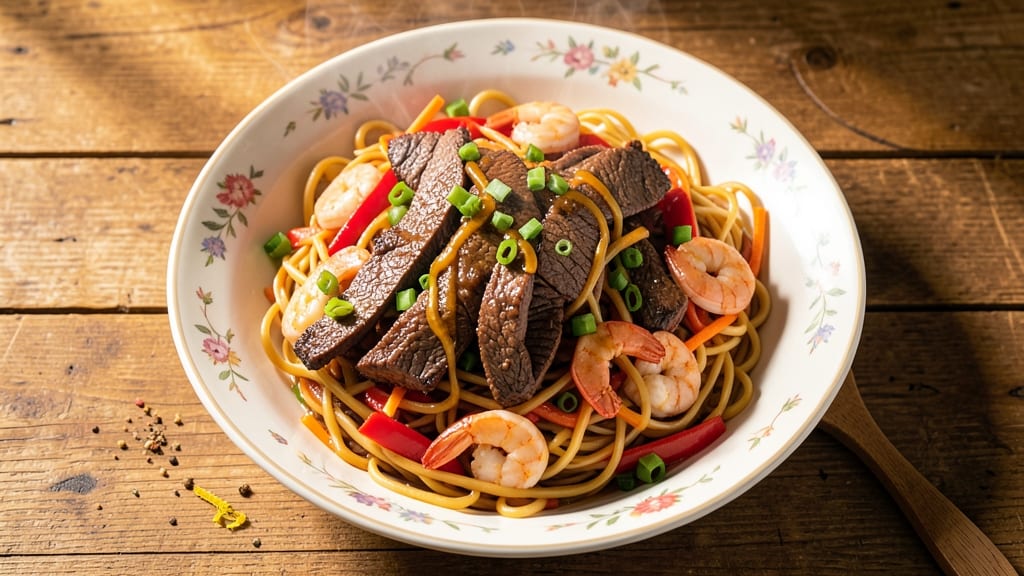
This beef and shrimp lo mein recipe delivers restaurant-quality wok-fired noodles with a perfect balance of chewy noodles, tender beef, plump shrimp, and crisp vegetables—all coated in a rich, aromatic soy-ginger sauce.
The secret lies in high-heat stir-frying and proper sauce reduction, which transforms simple ingredients into a dish that’s both comforting and sophisticated. I’ve refined this recipe over years of testing, ensuring the textures—crisp, tender, and silky—come together every time.
The foundation starts with a homemade sauce that marries sweet soy, tangy ginger, and umami garlic, creating depth without overpowering the delicate shrimp or beef.
Fresh wok hei (breath of the wok) is achieved by cooking over high heat, which caramelizes the edges of the proteins and vegetables while keeping the noodles silky.
This isn’t just a stir-fry—it’s a symphony of textures and flavors that comes together in under 30 minutes, making it ideal for weeknight dinners or weekend gatherings.
What sets this lo mein apart is the attention to detail: searing the beef and shrimp separately to lock in juiciness, stir-frying the vegetables just until crisp-tender, and tossing everything together in the wok at the last moment.
The result is a dish where every bite delivers a harmonious blend of savory, slightly sweet, and aromatic notes. Serve it steaming hot with a sprinkle of green onions and sesame seeds for that final touch of freshness.
Whether you’re cooking for a family or hosting a dinner party, this lo mein recipe scales beautifully while maintaining its balance of flavors and textures. The best part? It’s adaptable—swap in gluten-free noodles or adjust the heat level to suit your taste. Let’s get cooking!
Ingredients for beef and shrimp lo mein
Restaurant-quality wok-fired noodles start with these 15 precision ingredients—each playing a crucial role in texture and flavor harmony.
| Ingredient | Amount | Notes |
|---|---|---|
| Flat Egg Noodles 🍜 | 12 oz | Fresh or dried, wide variety |
| Flank Steak 🥩 | 1 lb | Thinly sliced against grain |
| Large Shrimp 🦐 | 1 lb | Peeled, deveined, tails off |
| Carrots 🥕 | 2 medium | Julienned into matchsticks |
| Bell Peppers 🧅 | 2 whole | Red/yellow, sliced into strips |
| Green Onions 🧅 | 4 whole | White and green parts separated |
| Garlic Cloves 🧄 | 6 cloves | Minced for sauce |
| Fresh Ginger 🌿 | 1 inch | Peeled, grated finely |
| Soy Sauce 🥄 | ½ cup | Dark soy preferred |
| Oyster Sauce 🍜 | ¼ cup | Kikkoman brand recommended |
| Sesame Oil 🫒 | 1 tbsp | Toasted, for aroma |
| Cornstarch 🌾 | 2 tbsp | For velveting shrimp |
| Vegetable Oil 🫒 | ½ cup | High smoke point |
| Sesame Seeds 🌰 | 1 tbsp | Toasted for garnish |
| Salt 🧂 | 1 ½ tsp | Diamond Crystal kosher |
The flank steak must be sliced paper-thin against the grain—Costco's pre-sliced Asian beef saves time, but if cutting yourself, freeze it 30 minutes first for easier slicing. Shrimp should be large (16/20 count)—Trader Joe's frozen wild-caught is my go-to for consistent quality. Fresh ginger loses potency fast, so buy it pre-peeled at Whole Foods if you're short on time. The dark soy sauce is non-negotiable for that signature wok hei color—La Choy is widely available and reliable. For the noodles, fresh egg noodles (like Martini brand) yield the best chewy texture, though dried works in a pinch.
No flank steak? Sirloin or ribeye sliced thin will work, though texture differs slightly. Shrimp substitutes? Scallops or extra-firm tofu (pressed and cubed) mimic the protein structure. The bell peppers can be swapped for broccoli or snap peas—just adjust cooking time to maintain crispness. Fresh ginger is ideal, but powdered at half the amount suffices. For the sauce, hoisin sauce can replace oyster sauce in a 1:1 ratio if needed. The cornstarch is critical for velveting the shrimp—don't skip it unless using a different protein. For gluten-free needs, ensure your soy sauce is tamari-based and check noodle packaging.
Store prepped ingredients strategically: raw proteins in sealed containers at the bottom of the fridge for 2 days max, while vegetables keep 5 days wrapped in damp paper towels. The sauce components (soy, oyster, sesame oil) stay fresh 6 months unopened, but after opening, refrigerate for 3 months. For meal prep, cook the noodles and proteins separately, then reheat everything together in the wok over high heat—30 seconds per side restores that crucial wok hei aroma. Garnishes like sesame seeds and green onions can be prepped ahead but add them fresh at serving for maximum brightness.
Why You'll Love This Recipe
- One-Pan Magic: I swear by this—just toss everything in one skillet, stir, and walk away. The flank steak slices itself into tender ribbons while the shrimp cooks in minutes, no fancy techniques needed.
- Umami Bomb: That combo of seared beef, juicy shrimp, and crisp-tender bell peppers? It’s the kind of flavor that makes you pause mid-bite. The egg noodles soak up the savory sauce like a dream.
- Lunchbox Hero: Between us, this is my secret weapon for packing leftovers. The noodles stay al dente, the veggies hold their crunch, and it reheats like it was just made—no sad, mushy takeout here.
- Budget Flex: Flank steak stretches for miles, shrimp adds luxury without breaking the bank, and carrots/peppers bulk it up. I feed four for under $20, and everyone leaves happy (even my picky teen).
Step-by-step instructions for beef and shrimp lo mein
Master the wok technique and you'll achieve perfect texture contrast—crisp-tender vegetables, silky noodles, and tender proteins.
Prepare the Protein Components
Begin with the shrimp: In a bowl, toss the peeled and deveined shrimp with the 2 tablespoons cornstarch and 1.5 teaspoons salt. Let this marinade sit for 10 minutes—this creates the signature velvet texture that distinguishes professional lo mein. For the flank steak, slice it thinly against the grain into ¼-inch strips. This ensures each bite delivers maximum tenderness.
While the shrimp marinates, separate the 4 whole green onions into white and green parts. The whites will sauté into the sauce while the greens will garnish at the end. Keep everything prepped and within arm's reach—this dish moves quickly once you hit the wok.
Build the Flavorful Sauce Base
Heat 0.5 cup vegetable oil in a wok over high heat until shimmering. Add the 6 cloves minced garlic and 1 inch finely grated ginger, stirring constantly for 30 seconds until fragrant but not browned. Immediately add the 2 medium julienned carrots and 2 sliced bell peppers, stirring for 2 minutes until they begin to soften but retain their color.
Pour in the 0.5 cup soy sauce and 0.25 cup oyster sauce, scraping up any browned bits from the bottom of the wok. These bits, called fond, contain concentrated flavor that transforms a good sauce into an exceptional one. Let the sauce simmer for 1 minute until it thickens slightly and coats the vegetables.
Cook the Proteins to Perfection
Push the vegetables to one side of the wok and add the marinated shrimp in a single layer. Cook undisturbed for 1 minute until the bottoms turn opaque. Flip the shrimp and add the flank steak strips. Stir-fry for 2-3 minutes until the steak reaches 145°F internally and the shrimp turn pink throughout.
Here's the thing—don't overcrowd the wok. If you need to work in batches, set the cooked proteins aside and keep them warm. The high heat is what creates that signature wok-fired texture, so maintaining proper spacing is crucial for achieving that crisp-tender contrast.
Combine and Finish with Noodles
Add the 12 oz flat egg noodles to the wok and toss everything together for 2-3 minutes until the noodles are heated through and coated with the sauce. The noodles should be tender but still have a slight bite—this is what gives lo mein its satisfying texture. If the sauce appears too thick, add 1-2 tablespoons hot water to loosen it.
Turn off the heat and immediately stir in the 1 tablespoon toasted sesame oil and the white parts of the green onions. This final step infuses the dish with nutty aroma and brightens the flavors. Taste and adjust seasoning if needed—you might need a touch more soy sauce for balance.
Plate and Garnish for Presentation
Transfer the lo mein to serving plates and garnish each portion with the reserved green onion tops and 1 tablespoon toasted sesame seeds. The contrast of textures and colors makes this dish visually appealing while the aromatics add another layer of complexity. Serve immediately while the noodles are hot and the flavors are at their peak.
For the best experience, serve with a side of steamed bok choy or a simple cucumber salad. The cooling elements balance the richness of the lo mein, creating a complete meal. Each bite should deliver a perfect harmony of textures—crisp vegetables, tender proteins, and silky noodles—all coated in that irresistible soy-ginger sauce.
Pro Tips For Making Beef And Shrimp Lo Mein
- Slice Steak Against the Grain: I learned this the hard way—flank steak for lo mein should be cut thin (about ¼-inch) and sliced against the grain right before tossing into the wok. Thicker slices chew like boot leather, and waiting too long means they’ll curl up instead of melting into the sauce. Do this last-minute, or they’ll dry out faster than your patience.
- Peel and Shock Shrimp: Skip the sad, rubbery shrimp by peeling them first, then giving them an ice bath for 10 minutes before cooking. The cold water firms up the flesh and stops them from turning mushy when they hit the boiling sauce. (Yes, even if you’re impatient like me—trust the process.)
- Prep Veggies Small and Even: Cut carrots and bell peppers into matchstick-thin batons (about 1/8-inch wide) and blanch them for 30 seconds before stir-frying. Uneven sizes mean some veggies turn to mush while others stay crunchy, and raw chunks in lo mein are a crime. Blanch them first, drain well, and they’ll absorb flavor without falling apart.
- Cook Noodles Al Dente, Toss Cold: Flat egg noodles should be firm to the bite when cooked—about 1 minute less than the package says. Drain, rinse with cold water, and toss with a tiny drizzle of oil to stop them from sticking. Overcooked noodles turn to glue, and no one wants a lo mein that’s basically a soup with noodles.
Regional styles of beef and shrimp lo mein
Northern Chinese Style
This version focuses on bold soy flavors and hearty textures, using dried egg noodles instead of fresh for a chewier bite. I like to add wood ear mushrooms and bok choy for extra umami and crunch.
The sauce gets a deeper color from dark soy sauce and a touch of hoisin, creating that signature Northern Chinese richness. Serve with a side of pickled vegetables to cut through the intensity. 🥢
Southern Chinese Fusion
Southern lo mein often incorporates rice noodles for a lighter texture, and I swap out beef for char siu pork or tofu to keep it vegetarian-friendly.
The sauce here leans sweeter with honey or brown sugar added to the soy mixture, balancing the heat from Sichuan peppercorns or chili oil. Garnish with crispy fried shallots for an extra crunch that’s a Southern specialty. 🌶️
Hong Kong Street Food
For a true Hong Kong experience, I use wide rice noodles and load up on char siu pork, shrimp, and glass noodles for that signature street-food texture.
The sauce is lighter—just light soy sauce, oyster sauce, and a splash of Shaoxing wine—with a finish of lime juice and fresh cilantro.
Vendors often serve it with chili sauce on the side, so I recommend keeping a small bowl of sambal oelek handy for heat lovers. 🔥
Taiwanese Home-Style
Taiwanese lo mein often includes dried shrimp and preserved vegetables for a funky, savory depth. I like to add bitter melon for a unique texture and a touch of black vinegar to the sauce for tang.
The noodles are typically egg noodles, and the dish is finished with crushed peanuts and scallions. This version is heartier and more complex than its Northern or Southern counterparts. 🥜
Modern American Adaptation
For a Western-friendly twist, I replace traditional soy sauce with tamari for gluten-free options and add bell peppers, snap peas, and mushrooms for extra veggies. The sauce gets a honey glaze touch and a sprinkle of sesame seeds for aroma.
Serve with a side of steamed jasmine rice to soak up the sauce—this version is perfect for picky eaters who want familiar flavors. 🍽️
Spicy Sichuan Variation
This fiery version swaps in doubanjiang (fermented chili bean paste) and Sichuan peppercorns for a numbing-spicy kick. I add bamboo shoots and water chestnuts for texture, and the sauce gets a chili oil finish.
The noodles are tossed with crushed dried chilies and pickled mustard greens for extra tang. Trust me, this one’s for those who love heat! 🌶️🔥
Nutrition facts
Frequently asked questions
Can I make this lo mein without a wok?
A large skillet or deep frying pan works perfectly—just make sure it has high sides to prevent splatter. For best results, use a pan with a flat bottom so the noodles can spread evenly. The key is maintaining high heat to achieve that signature wok-fired texture. If your pan isn't wide enough, cook in batches and keep everything warm between additions.
How do I adjust the recipe for gluten-free noodles?
Use gluten-free tamari instead of soy sauce and opt for certified gluten-free noodles like rice noodles or gluten-free egg noodles. Check labels carefully—some brands process noodles in shared facilities with gluten. The recipe remains otherwise the same, but taste as you go since gluten-free tamari has a slightly different umami profile. Add an extra ½ teaspoon of salt if needed to compensate for the reduced sodium in tamari.
Why did my shrimp turn rubbery instead of tender?
Overcooking is the most common cause—shrimp cooks in just 1-2 minutes per side. The cornstarch marinade also needs time to work: don't skip the 10-minute rest before cooking. Another tip: use room-temperature shrimp (thaw in the fridge overnight if frozen) to ensure even cooking. If using larger shrimp, reduce cooking time slightly to avoid toughness.
Can I prep this ahead of time for meal prep?
Yes! Cook the proteins and vegetables separately, then store them in airtight containers in the fridge for up to 2 days. Reheat everything together in the wok over high heat for just 3-4 minutes—this restores the wok hei aroma. For the noodles, cook them fresh or parboil them, then finish in the wok at serving time to maintain texture. The sauce can be pre-mixed and stored separately for up to 5 days.
What's the best way to reheat leftovers?
Never microwave—it kills the wok hei flavor! Instead, reheat in a clean wok or skillet over medium-high heat with 1 tablespoon oil and 2 tablespoons water. Toss everything together for 3-4 minutes until piping hot. If the sauce seems too thick, add a splash of water or broth. For extra flavor, finish with a drizzle of sesame oil and fresh green onions.