
Soups & Stews
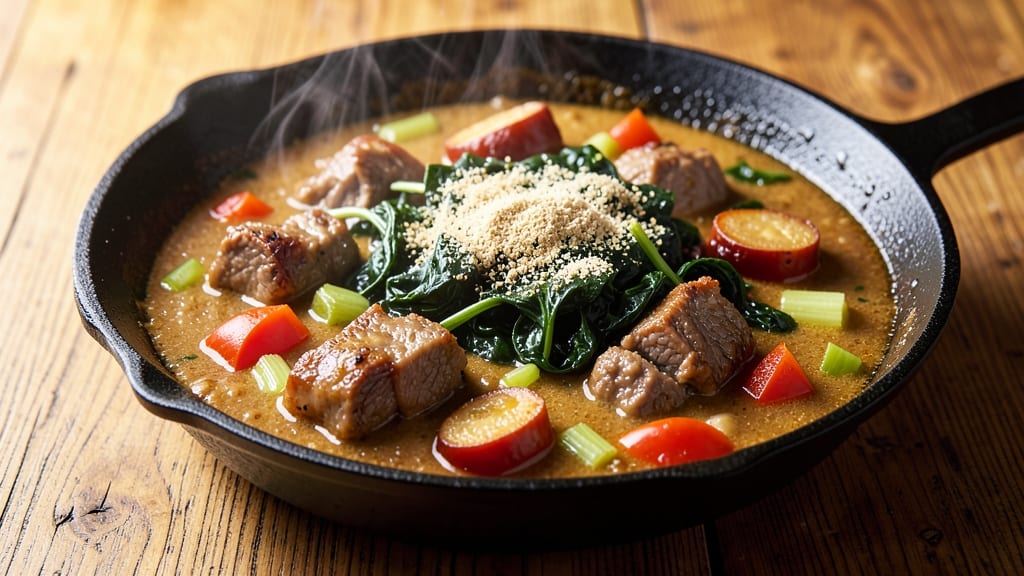
This beef and sausage gumbo recipe delivers the rich, smoky depth of Cajun cooking with a perfect balance of tender beef, spicy andouille sausage, and a velvety roux that forms the heart of every great gumbo. The secret lies in patience—letting the roux develop its signature dark mahogany color while controlling the heat to avoid burning. I've perfected this recipe over years of testing, and it's become my go-to for feeding a crowd or enjoying a hearty meal on a chilly evening.
The foundation of any great gumbo is that roux, made with equal parts fat and flour cooked until it reaches a deep brown color. This takes time, but it's worth every minute—the roux adds body and a rich, nutty flavor that transforms simple ingredients into something extraordinary.
Once you've built your roux, you'll layer in the holy trinity of onions, celery, and bell peppers, then add the beef and sausage to brown before letting everything simmer in a flavorful stock until the meat is fork-tender.
What you'll end up with is a thick, aromatic gumbo where every spoonful delivers layers of flavor—smoky from the roux, spicy from the Cajun seasoning, and rich from the slow-cooked beef and sausage.
The vegetables stay crisp-tender, and the broth is thickened just enough to coat the back of a spoon. This is the kind of gumbo that makes people linger at the table, asking for seconds and thirds.
Serve it with hot buttered rice and crusty bread to soak up every last drop of that flavorful broth. The recipe scales beautifully, so you can make it for a family dinner or a gathering of friends.
Let's get started on creating this classic Cajun masterpiece that brings a taste of Louisiana to your kitchen.
Ingredients for beef and sausage gumbo
Six servings of smoky, rich gumbo start with these core ingredients—each chosen to build bold Cajun flavor.
| Ingredient | Amount | Notes |
|---|---|---|
| Vegetable Oil 🫒 | ½ cup | For roux foundation (smoke point matters) |
| All-Purpose Flour 🌾 | ½ cup | White or whole wheat (white preferred) |
| Yellow Onion 🧅 | 1 whole | Medium size, diced (about 1.5 cups) |
| Green Bell Pepper 🍅 | 1 whole | Medium size, diced (about 1 cup) |
| Celery Stalks 🥬 | 3 whole | Medium size, diced (about 1 cup) |
| Chuck Roast 🥩 | 2 lb | Cut into 1-inch cubes (not pre-cubed) |
| Andouille Sausage 🌭 | 1 lb | Smoked, sliced into half-moons (not pre-sliced) |
| Chicken Stock 💧 | 4 cups | Low-sodium preferred (homemade or high-quality) |
| Cajun Seasoning 🌶️ | 2 tbsp | Homemade or Tony Chachere's (not pre-mixed gumbo seasoning) |
| Garlic Cloves 🧄 | 4 cloves | Minced (about 1 tbsp) |
| Green Onions 🧅 | ¼ cup | Sliced, for garnish (white and green parts) |
| Fresh Parsley 🌿 | ¼ cup | Chopped, for garnish (optional) |
| Salt 🧂 | 1 ½ tsp | Adjust to taste (kosher preferred) |
| Black Pepper 🌶️ | ½ tsp | Freshly ground (not pre-ground) |
| Filé Powder 🍃 | 2 tbsp | For thickening (optional, add at end) |
The roux is everything here. Vegetable oil with a high smoke point (like Crisco or Mazola) is non-negotiable—it needs to brown deeply without burning. All-purpose flour works best for that classic mahogany color, though whole wheat adds earthiness if you're feeling adventurous. Grab a yellow onion with vibrant color (no wilted tops!) and a green bell pepper that's firm to the touch. Celery should be crisp—three stalks gives you that perfect holy trinity balance. For the meat, chuck roast from the butcher counter (not pre-cubed) stays juicier, and andouille sausage from Zatarain's or Johnsonville delivers authentic smokiness. If you're short on time, Trader Joe's sells pre-sliced andouille that works in a pinch.
No Cajun seasoning? Mix smoked paprika, garlic powder, onion powder, cayenne, and thyme—that's what's in most store-bought blends. Chicken stock can be swapped for beef stock (more richness) or even vegetable stock (for vegetarian). The garlic? Four cloves is plenty—too much can overpower. For the holy trinity, diced uniformly (small cubes for even cooking). Pre-sliced onions/peppers from the grocery store are fine, but chopping fresh gives you better flavor. Filé powder (made from ground sassafras leaves) is traditional—Penzeys sells it, or check the Cajun aisle. Skip it if you're sensitive to sassafras, but it adds that signature gumbo texture.
This gumbo tastes even better the next day—double batch and freeze half in portion-sized containers. The roux can be made ahead (store in an airtight container for up to 3 days), but don't refrigerate it too long or it'll lose flavor. Fresh parsley and green onions should be added right before serving. If thickening with filé, whisk it into cold gumbo (never hot or it'll clump). Leftovers keep 4-5 days in the fridge or 3 months frozen. Buttered rice is non-negotiable for serving—make extra, it disappears fast.
Why You'll Love This Recipe
- Holy Trinity Hack: I swear by that onion, bell pepper, celery combo—it’s the secret to gumbo magic. Once you brown them in oil with the sausage, your whole kitchen smells like a Louisiana roadside shack. (Yes, even on a Tuesday night.)
- One-Pot Powerhouse: Between us, this is the kind of dish where you dump everything in one pot and walk away. The roux handles itself, the beef melts in your mouth, and the flour thickens it all without extra fuss. My lazy Sundays just got a whole lot better.
- Leftovers That Win: The second day is almost as good as the first—if that’s not a flex, I don’t know what is. The flavors deepen, the roux softens, and suddenly you’ve got a freezer-friendly meal for when you’re too tired to cook.
- Budget-Friendly Feast: You’re getting beef, sausage, and a full meal’s worth of veggies for pennies. That flour and oil roux stretch like crazy, and the holy trinity stretches even more. Honestly, it’s the kind of recipe that makes me feel like I’m feeding a crowd without breaking the bank.
Step-by-step instructions for beef and sausage gumbo
Let's build this rich gumbo from the ground up—starting with that essential roux that carries all the flavor.
Build the Smoky Roux Foundation
Heat the 0.5 cup vegetable oil in a large Dutch oven over medium-low heat. Add the 0.5 cup all-purpose flour and whisk constantly with a wooden spoon or silicone spatula. This isn't the time to walk away—the roux needs your full attention.
Watch closely as the mixture changes color from pale yellow to golden brown, then to a deep chocolate brown. This transformation takes about 20-25 minutes—don't rush it. If it starts to smell burnt, you've gone too far. The perfect roux should smell nutty and rich, not acrid. Once it reaches a deep brown color, remove the pot from heat immediately.
Sauté the Holy Trinity Vegetables
Return the Dutch oven to medium heat and add the diced yellow onion, green bell pepper, and celery stalks. Cook for 8-10 minutes, stirring occasionally, until the vegetables soften and their edges begin to brown. This is your gumbo's flavor backbone—don't skip this step.
Add the 2 tablespoons Cajun seasoning, 1.5 teaspoons salt, and 0.5 teaspoon black pepper, stirring to coat the vegetables evenly. Let everything cook together for another 2 minutes so the spices can bloom and infuse the vegetables with their bold flavors.
Brown the Meat and Sausage
Push the vegetables to one side of the Dutch oven and add the 2 pounds chuck roast and 1 pound andouille sausage to the empty space. Cook for 5-7 minutes, stirring occasionally, until the meat develops a deep brown crust. This browning step is crucial for developing deep, meaty flavors in your gumbo.
Once the meat is well-browned, stir everything together and add the 4 cups chicken stock and 4 minced garlic cloves. Bring to a gentle boil, then reduce heat to low and cover. Let it simmer for 1.5-2 hours, stirring occasionally, until the beef is fork-tender and falling apart.
Finish and Thicken the Gumbo
Remove the gumbo from heat and let it rest for 10 minutes. This resting period allows the flavors to meld together. Stir in the 2 tablespoons filé powder (if using) and simmer for another 5 minutes—this will thicken the gumbo beautifully. If you prefer a thinner consistency, skip the filé powder.
Taste and adjust seasoning with additional salt or pepper if needed. Ladle the gumbo into bowls and garnish each serving with 0.25 cup sliced green onions and 0.25 cup chopped fresh parsley. Serve immediately with hot rice to soak up every last drop of that rich, smoky gumbo.
Pro Tips For Making Beef And Sausage Gumbo
- Cook the Holy Trinity Slow: Dump your onions, bell pepper, and celery into the pot all at once? Bad move. Sauté the onions first until they’re soft and translucent—about 5 minutes—then add the celery and pepper. This keeps the flavors from turning bitter and ensures that base actually develops. (Yes, I know you’re eager, but trust me on this.)
- Use a Heavy Pot: If your pot’s too light, you’ll burn the roux before it gets dark enough. Cast iron or a thick stainless steel pot handles the heat better—no sticking, no scorching. I learned this the hard way after my first gumbo tasted like charred flour. (And no, a nonstick skillet won’t cut it.)
- Don’t Overcrowd the Meat: Tossing in all the beef and sausage at once steams it instead of browning. Work in batches—pat the meat dry first, then sear it in the pot until it’s golden on all sides. This builds flavor that just won’t happen if you’re cramming everything in. (Your gumbo’s depth depends on this step.)
- Deglaze with Liquid: After browning the meat, don’t just add water or broth right away. Pour in a splash of beer or hot sauce first—it scrapes up all the browned bits (fond) that make gumbo taste rich. Then add the liquid. (This is the thing that actually changes the outcome.)
Essential equipment for this dish
Dutch Oven
A heavy-bottomed Dutch oven is non-negotiable for gumbo—it distributes heat evenly and prevents burning. I swear by the Le Creuset 5.5-quart for its durability and even cooking, but All-Clad or Lodge cast iron are excellent budget-friendly alternatives.
The deep sides prevent splatter when building the roux, and its tight lid traps steam for perfect simmering. 🔥
Wooden Spoon
Your wooden spoon becomes your best friend during roux-making. A 6-inch maple or hickory spoon (like Oxo Good Grips) is ideal—it won’t scratch your Dutch oven and can handle the constant whisking needed to prevent burning.
Avoid metal spoons at this stage; they conduct heat too aggressively and can scorch the roux.
Immersion Thermometer
For precision roux control, an immersion thermometer (like Thermoworks Thermapen) lets you monitor fat temperature. The perfect gumbo roux hits 350-375°F—below 350°F and it won’t brown properly; above 375°F and it risks burning. I keep mine nearby to bail out if the oil starts smoking excessively. ⚡
Sharp Chef’s Knife
A sharp 8-inch chef’s knife (I use Wüsthof) is essential for dicing the holy trinity (onion, bell pepper, celery) uniformly. Small, even cubes cook faster and release flavors more consistently. If your knife is dull, you’ll end up with uneven pieces that burn before softening—trust me, this ruins gumbo.
Slotted Spoon
Use a long-handled slotted spoon (like OXO Good Grips) to remove meat and sausage from the pot for tasting or plating. The slots let broth drip back into the pot, keeping your gumbo rich and flavorful.
I also use it to skim any foam that rises during the simmering phase—it keeps the broth clear.
Lid with Vent
Your Dutch oven’s lid should have a small vent to allow steam to escape during simmering. This prevents pressure buildup that can make the gumbo watery. If your lid doesn’t vent, prop it open slightly with a wooden spoon.
A tight seal is only needed during the initial boil—after that, let it breathe for even cooking. 💫
Nutrition facts
Frequently asked questions
Can I substitute andouille sausage with another type?
While andouille adds authentic smokiness, you can swap it for kielbasa, smoked brisket, or even Italian sausage for a different flavor profile. For a vegetarian option, use smoked tofu or mushrooms instead. Just adjust cooking time—sausage typically needs 5-7 minutes to brown properly.
How do I prevent the roux from burning?
Keep the heat at medium-low and stir constantly with a wooden spoon—never walk away! If the roux starts smoking excessively, remove the pot from heat immediately. For extra control, use an immersion thermometer to monitor fat temperature (350-375°F). A properly made roux should smell nutty, not burnt.
What if my gumbo is too thin?
If the gumbo lacks thickness, stir in 2 tablespoons filé powder (whisked into cold gumbo) or a slurry of 1 tablespoon cornstarch + 1 tablespoon water. Simmer for 5 minutes to thicken. For a richer texture, reduce the broth by simmering uncovered for 10-15 minutes—just be mindful of burning.
Can I make this gumbo in a slow cooker?
Yes, but with adjustments! Brown the meat and sausage in a skillet first, then transfer everything (including the roux) to the slow cooker. Add stock and simmer on low for 6-8 hours or high for 3-4 hours. The slow cooker won’t develop the roux as deeply, so taste and adjust seasoning afterward—you may need extra Cajun seasoning.
Why does my gumbo taste bland?
Bland gumbo usually means insufficient seasoning or underdeveloped roux. Boost flavor by adding 1 extra tablespoon Cajun seasoning or a pinch of smoked paprika. For depth, simmer in an uncovered pot for 10 minutes to reduce the broth and concentrate flavors. A splash of hot sauce or Worcestershire sauce can also help!