
Soups & Stews
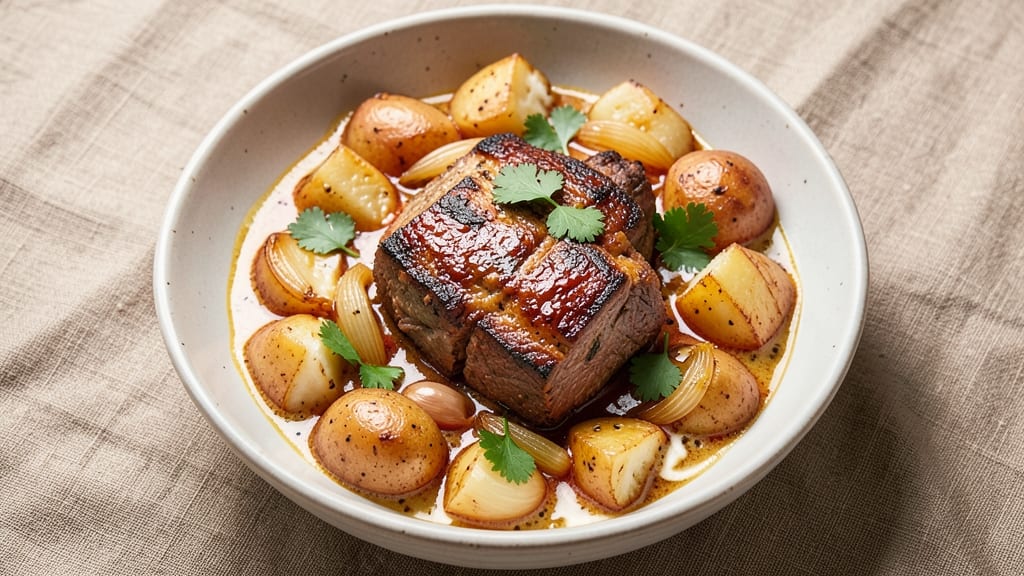
This beef and potato curry recipe delivers the kind of deep, aromatic flavors that turn weeknight dinners into restaurant-quality experiences. The secret lies in slow-simmering beef until fork-tender while developing a rich, spiced sauce that clings to every bite—all topped with crispy, caramelized potatoes that add satisfying texture.
I've perfected this dish over years of testing, balancing heat, sweetness, and umami for a curry that's approachable yet sophisticated.
The process starts with browning the beef in batches to build deep flavor, then layering whole spices that bloom into fragrant complexity. Potatoes cook directly in the pot, absorbing the sauce while developing a golden, crispy crust on top—a technique that transforms starchy sides into the star of the dish.
This isn't just another curry; it's a foolproof method that delivers restaurant-quality results without requiring specialty ingredients or hours of prep time.
What you'll end up with is a steaming bowl of tender beef swimming in a velvety, spiced sauce, topped with those irresistible crispy potatoes that add both visual appeal and satisfying crunch.
The aroma alone will have everyone gathering at the table, and the first bite delivers that perfect balance of heat, sweetness, and rich umami that defines great curry. Each component works together to create a dish that's hearty enough for a family dinner but elegant enough for company.
Perfect for feeding a crowd or meal prepping for the week, this curry scales beautifully while maintaining its depth of flavor. The potatoes can be prepped ahead and added during the final simmer, making this a truly one-pot solution that minimizes cleanup.
Let's get cooking—your taste buds (and dinner guests) will thank you.
Ingredients for beef and potato curry
Fifteen ingredients that transform into restaurant-quality curry with crispy potato tops.
| Ingredient | Amount | Notes |
|---|---|---|
| Chuck Roast 🥩 | 2 lb | Well-marbled for tenderness |
| Russet Potatoes 🥔 | 2 ½ lb | Cut into 1-inch chunks |
| Yellow Onion 🧅 | 1 whole | Diced into small pieces |
| Garlic Cloves 🧄 | 6 cloves | Minced for aromatic base |
| Coconut Milk 🥥 | 1 can | 13.5 oz full-fat preferred |
| Tomato Paste 🍅 | ½ cup | Smooth texture preferred |
| Ground Cumin 🌿 | 1 tbsp | Toasted for deeper flavor |
| Ground Coriander 🌶️ | 1 tbsp | Freshly ground preferred |
| Turmeric Powder 🌶️ | 1 tsp | Bright yellow color |
| Garam Masala 🌶️ | 1 tbsp | Store-bought blend works |
| Salt 🧂 | 1 ½ tsp | Diamond Crystal preferred |
| Black Peppercorns 🌶️ | ½ tsp | Freshly cracked preferred |
| Olive Oil 🫒 | ½ cup | Extra-virgin for richness |
| Fresh Ginger 🌿 | 1 inch | Peeled and grated finely |
| Honey 🍯 | 1 tbsp | For balancing heat |
The chuck roast is non-negotiable here—its marbling ensures fork-tender beef after slow simmering. Costco or Whole Foods carry well-marbled cuts, but any grocery store's chuck roast works if it has visible fat streaks. Russet potatoes are ideal for crispy tops, but Yukon Golds work too (just expect slightly softer texture). Fresh ginger and garlic are worth hunting down at Trader Joe's—their frozen concentrated ginger paste is a game-changer when fresh isn't available. The coconut milk should be full-fat for that velvety sauce, and Thai Kitchen cans are a reliable pantry staple.
No fresh ginger? Substitute 1 tsp ground ginger, but it won't have the same depth. Out of garam masala? Mix 1/4 tsp each of cinnamon, cardamom, and cloves for a DIY blend. The tomato paste can be skipped entirely if you prefer a lighter sauce, though it adds that essential umami base. For extra richness, stir in 1 tbsp peanut butter at the end—trust me, it works. And if your potatoes aren't browning enough, broil them for 2-3 minutes at the end to get that perfect crisp.
Prep the potatoes first—they'll soak up moisture while you brown the beef. Store leftovers in airtight containers for 4-5 days, or freeze portions for up to 3 months. The sauce actually improves overnight as flavors meld. For meal prep, portion the curry without the crispy tops—they're best served fresh. Reheat gently on low to preserve that crispy texture, adding a splash of water or coconut milk if needed.
Why You'll Love This Recipe
- One-Pot Magic: I swear by this recipe because it’s actually one-pan—no chopping boards overflowing, no pots to wash separately. Just brown the chuck roast, toss in the diced potatoes and onions, and let the spices and coconut milk work their magic while you sip tea.
- Rich Without Effort: Between us, the slow-cooked chuck roast turns tender enough to fall apart, while the potatoes soak up that creamy coconut milk like a dream. That deep, garlicky, slightly spicy aroma? It’s the kind of smell that makes your whole kitchen feel like a hug.
- Leftovers That Don’t Suck: Honestly, this curry tastes better the next day—if that’s even possible. I make a double batch on Sundays, and by Wednesday, it’s still my go-to for lunch. Freeze half if you’re feeling extra, because reheating it is just as good as the first bite.
- Budget Feast for Crowds: A chuck roast and a few potatoes stretch to feed four (or five, if someone’s hungry). The onion and garlic add layers of flavor without costing a fortune, and coconut milk makes it feel fancy without breaking the bank. My college friends still ask for this one.
Step-by-step instructions for slow-simmered beef and potato curry
Follow this method for a rich, aromatic curry with tender beef and crispy-topped potatoes that deliver on every bite.
Sear the Chuck Roast for Deep Flavor
Heat a heavy Dutch oven over medium-high heat and add 0.25 cup of the olive oil. Once shimmering, add the 2 lb chuck roast and sear on all sides until deeply browned, about 8-10 minutes. This step develops the Maillard reaction, creating complex flavors that will infuse the entire dish.
Remove the beef and set it aside. In the same pot, add the remaining 0.25 cup olive oil and 1 whole yellow onion diced into small pieces. Cook until softened and golden, about 5 minutes. Add the 6 cloves garlic and 1 inch fresh ginger (peeled and grated finely) and cook for 1 minute until fragrant. This aromatic base forms the flavor foundation of your curry.
Build the Spice Base and Simmer the Beef
Reduce heat to medium and stir in the 0.5 cup tomato paste, 1 tbsp ground cumin, 1 tbsp ground coriander, 1 tsp turmeric powder, 1.5 tsp salt, and 0.5 tsp black peppercorns (freshly cracked). Cook for 2 minutes until the spices are toasted and fragrant, stirring constantly to prevent burning.
Return the seared beef to the pot, add 1 can coconut milk, and bring to a gentle simmer. Cover and cook for 1.5 hours on low heat, stirring occasionally. The beef should become fork-tender and the sauce rich and velvety. Here's where patience pays off—don't rush this slow cooking process.
Prepare and Add the Potatoes
While the beef simmers, cut the 2.5 lb russet potatoes into 1-inch chunks. Toss them in a bowl with 1 tbsp olive oil and 1 tbsp garam masala until evenly coated. This step ensures the potatoes develop a crispy exterior while remaining tender inside.
After the beef has cooked for 1.5 hours, add the seasoned potatoes to the curry. Stir gently to combine, then increase heat to medium-low and simmer uncovered for 20-25 minutes until the potatoes are tender but still hold their shape. The top layer should begin to brown and crisp—this is what you're aiming for. If the sauce becomes too thick, add ¼ cup water to maintain the right consistency.
Finish with Honey and Adjust Seasoning
Once the potatoes are nearly tender, stir in the 1 tbsp honey. This balances the heat of the spices and adds a subtle sweetness that complements the rich flavors. Simmer for another 5 minutes to let the honey meld into the sauce. Taste and adjust seasoning if needed—you may need a touch more salt or a pinch of garam masala to enhance the flavors.
Remove from heat and let the curry rest for 5 minutes. This allows the flavors to fully develop and the potatoes to finish cooking slightly. Serve immediately with steamed basmati rice or warm naan bread. The result is a hearty, flavorful curry with perfectly crispy-topped potatoes that will impress even the most discerning curry lovers.
Pro Tips For Making Beef And Potato Curry
- Sear the Chuck Roast: Hit that roast with a hot pan—no oil needed, just the beef’s own fat. After 3-4 minutes per side, you’ll get a deep, caramelized crust that holds up through the long simmer, even if you’re impatient like me and want to rush ahead.
- Cut Potatoes Uniformly: Russets break unevenly, so chop them into 1.5-inch chunks before parboiling. Smaller pieces soften faster, but if you leave them too big, they’ll turn mushy while the beef stays tough—trust me, I’ve learned this the hard way.
- Don’t Skip the Parboil: Toss the potatoes in boiling water for 5 minutes first, then drain. This guarantees they’ll finish tender without turning to glue, even if you forget to adjust the simmer time later (we’ve all been there).
- Use Full-Fat Coconut Milk: The creamy richness is non-negotiable—light coconut milk will make your curry taste watered down. If you’re in a pinch, mix equal parts full-fat and light, but don’t skip the fat entirely. Your sauce will thank you.
Pro cooking tips for great beef and potato curry
Batch Browning Secret
Never crowd the pan when searing the beef—this is where most home cooks go wrong. I sear the 2 lb chuck roast in batches, using 2 minutes per side in a 12-inch cast-iron skillet over medium-high heat.
This ensures a deep, golden crust that builds maximum flavor. If you're short on time, use a meat thermometer to confirm internal temp reaches 145°F before removing. 🔥
Spice Toasting Technique
The difference between good curry and extraordinary curry lies in properly toasting your spices. After adding the tomato paste and dry spices, stir constantly over medium heat for exactly 2 minutes—no longer or they'll burn.
I use a wooden spoon to scrape up any browned bits from the bottom of the pot. These toasted spices release their essential oils, creating that professional-level aroma. 🌶️
Potato Prep Timing
While the beef simmers, I recommend cutting the potatoes 10 minutes before adding them to the curry. This gives them time to release excess starch, which prevents the sauce from becoming too thin.
Toss the potato chunks with 1 tbsp olive oil and 1 tbsp garam masala—this coating is what creates those irresistible crispy tops. Pro tip: Use a sharp chef's knife for even 1-inch cubes. 🥔
Sauce Consistency Control
If your sauce starts looking too thick during the final simmer, add ¼ cup water or coconut milk in 2 tablespoon increments. I prefer coconut milk because it maintains the dish's richness.
The sauce should coat the back of a spoon but still be pourable. For extra silkiness, whisk in 1 tbsp heavy cream at the very end—trust me, it makes all the difference. 💫
Honey Integration
Adding the 1 tbsp honey in the last 5 minutes serves two purposes: it balances the heat and creates a slight caramelization that enhances the potatoes' crispiness. Stir gently to distribute evenly, then taste immediately—this is when you can adjust seasoning.
I often add a pinch more salt or a dash of fish sauce (just ½ teaspoon) for umami depth. 🍯
Resting for Perfection
That 5-minute rest after cooking is non-negotiable. It allows the potatoes to finish cooking slightly and the flavors to meld completely. During this time, I cover the pot loosely with a lid to retain heat.
This resting period transforms the dish from good to restaurant-quality—don't skip it! Serve immediately with steamed basmati rice or warm naan. ✨
Nutrition facts
Frequently asked questions
Can I substitute chuck roast with another beef cut?
Yes, but choose cuts with good marbling for tenderness. Chuck roast is ideal, but stew beef or brisket work well too. Avoid lean cuts like sirloin—they'll dry out during the long simmer. If using a different cut, adjust cooking time slightly (chuck needs 1.5 hours, brisket may take 2 hours).
How do I make this curry less spicy?
Reduce the coriander and cumin to ½ tbsp each, and omit the black peppercorns. For extra mildness, add 1 tsp sugar or ½ tsp cinnamon to balance heat. The honey already helps, but these adjustments create a gentler flavor profile while keeping the dish aromatic.
Can I make this curry in an Instant Pot?
Sear the beef first in a regular pan, then transfer to your Instant Pot with all ingredients except potatoes. Cook on high pressure for 30 minutes, then add potatoes and pressure cook for 5 more minutes. Release pressure naturally, then finish with honey and crisp the potatoes under a broiler for 3-4 minutes.
Why are my potatoes mushy instead of crispy?
This usually happens from overcooking or not enough oil on the potatoes. Toss them with 2 tbsp oil (not just 1 tbsp) and cook uncovered on medium-low for 20-25 minutes max. For extra crispiness, broil for 2-3 minutes at the very end. Russet potatoes are best—Yukon Golds work but need closer monitoring.
What's the best way to reheat leftovers?
Reheat gently in a saucepan with 2 tbsp water or coconut milk over low heat for 5-7 minutes. Avoid microwaving—it makes the potatoes soggy. For crispy tops, broil for 3 minutes after reheating. Leftovers keep 4-5 days in airtight containers or 3 months frozen (without the crispy tops).