
Main Courses
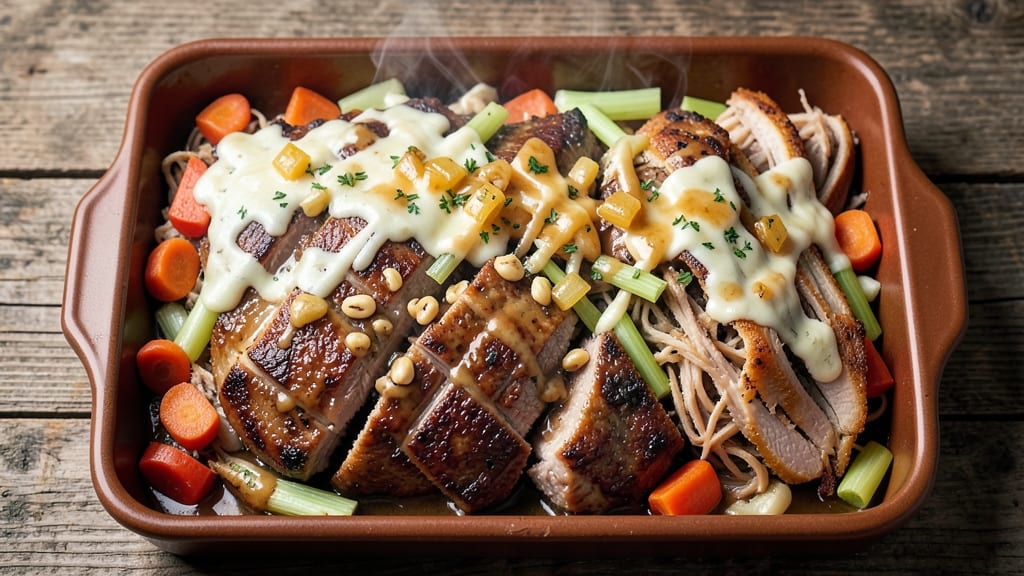
This beef and pork casserole transforms tough cuts into melt-in-your-mouth tenderness through slow-cooked magic. 🔥 As someone who's spent years perfecting large-batch pork dishes at The Smoky Pig, I know how to coax rich, caramelized flavors from humble ingredients—a technique that works just as well in your kitchen as it does in a professional one.
The secret lies in building layers of flavor through proper browning and slow cooking, creating a dish that's both comforting and impressive.
The recipe combines beef chuck and pork shoulder with aromatic vegetables and a deep, savory broth to create a harmonious blend of textures and flavors.
What sets this apart is the caramelized fond at the bottom of the Dutch oven—those precious browned bits that dissolve into the sauce during cooking, adding depth that store-bought gravies can't match.
This method delivers restaurant-quality results with minimal effort, perfect for feeding a crowd or meal prepping for the week.
By the time it emerges from the oven, you'll have a casserole with perfectly tender meat that practically falls apart, vegetables softened just enough to absorb the rich sauce, and a caramelized crust that adds both texture and flavor.
The aroma alone will have everyone gathering at your table, and each bite delivers that satisfying combination of savory, sweet, and umami notes that defines great comfort food.
This dish works beautifully as a centerpiece for family dinners, holiday gatherings, or when you need to feed a hungry crew after a long day. The recipe scales effortlessly, and leftovers reheat just as well as the first serving.
Let's create something truly special that your guests will remember long after the meal is over.
Ingredients for beef and pork casserole
Eight hearty ingredients transform tough cuts into restaurant-worthy casserole magic.
| Ingredient | Amount | Notes |
|---|---|---|
| Beef Chuck Roast 🥩 | 2 lb | Cut into 1-inch cubes |
| Pork Shoulder 🐷 | 2 lb | Cut into 1-inch cubes |
| Yellow Onion 🧅 | 2 whole | Large, sliced into half-moons |
| Carrots 🥕 | 4 whole | Medium, peeled and sliced |
| Celery Stalks 🌿 | 4 whole | Trimmed and chopped |
| Garlic Cloves 🧄 | 6 cloves | Minced for deep flavor |
| All-Purpose Flour 🌾 | ½ cup | For thickening sauce |
| Beef Broth 💧 | 3 cups | Low-sodium preferred |
| Red Wine 🍷 | 1 cup | Bold dry variety |
| Tomato Paste 🍅 | 2 tbsp | High-quality for richness |
| Dried Thyme 🌿 | 1 tbsp | Or 1 tbsp fresh thyme |
| Bay Leaves 🍃 | 2 whole | Remove before serving |
| Black Peppercorns 🌶️ | 1 tsp | Freshly cracked |
| Salt 🧂 | 1 ½ tsp | Adjust to taste |
| Olive Oil 🫒 | 2 tbsp | For browning meat |
The beef chuck and pork shoulder are the stars here—look for well-marbled cuts at your butcher or grocery store's meat counter. Costco or Whole Foods usually have pre-cut chuck roast, but if you're buying a whole roast, ask for the chuck section. Pork shoulder should have visible fat marbling for juiciness. For the vegetables, fresh is best, but frozen carrots and celery work in a pinch. The key is to slice everything evenly—about 1-inch pieces for the meat and 1/4-inch for the vegetables. This ensures even cooking and maximum flavor absorption.
No red wine? Dry sherry or beef broth with a splash of balsamic works just as well. Fresh thyme is ideal, but dried at one-third the amount is fine. For tomato paste, Trader Joe's squeeze tubes are perfect—they're convenient and last forever. If you're using frozen vegetables, thaw and pat them dry before adding to the casserole to avoid excess moisture. The flour is for thickening, but if you're gluten-free, cornstarch works too. Just whisk it with a little cold water first to avoid lumps.
This casserole tastes even better the next day as flavors meld. Store leftovers in an airtight container in the fridge for up to 5 days, or freeze portions for 3 months. I like to portion it into individual containers for easy lunches—just reheat in the microwave for 2-3 minutes. The caramelized fond at the bottom? Don't skip it. Those browned bits are pure flavor gold. If you're short on time, brown the meat in batches—just keep it warm in a separate pot while you finish.
Why You'll Love This Recipe
- One-Pot Magic: I swear by this recipe when I’m too tired to juggle multiple pans. The beef chuck and pork shoulder go in raw—no pre-cooking needed—along with the onions, carrots, and celery, and the slow cooker does the rest. Chop once, dump everything in, and walk away.
- Deep, Rich Layers: Between us, the combo of beef and pork creates a texture I can’t get anywhere else—tender, juicy chunks with that perfect crispy edge. The onions caramelize just enough to make every bite taste like a hug, and the carrots and celery add a sweetness that balances it out.
- Weeknight to Potluck: This is my go-to for busy nights, but it also shows up at holiday dinners because it always impresses. Serve it with crusty bread for a casual meal or dress it up with a sprinkle of parsley for a crowd. Honestly, it’s the kind of dish that makes you look like a hero.
- Budget-Friendly Leftovers: I make this in a big batch because it’s cheap—beef chuck and pork shoulder stretch forever—and the flavor only gets better the next day. Reheat slices for sandwiches, toss into salads, or just grab a fork and eat it straight from the pot. (Yes, even on a Tuesday night.)
Step-by-step instructions for beef and pork casserole
Here's how to build a deeply flavorful casserole where caramelized meat meets aromatic vegetables in a rich, wine-infused sauce.
🔥 Step 1: Brown the Meat in Batches
Heat the 2 tablespoons olive oil in a large Dutch oven over medium-high heat. Working in batches to avoid crowding, add the 2 lb beef chuck roast and 2 lb pork shoulder (cut into 1-inch cubes). Let them brown undisturbed for 3-4 minutes until deeply golden on all sides.
This browning step creates the caramelized fond that forms the flavor foundation. Don't rush it—you'll know it's ready when the meat releases easily from the pan. Transfer the browned meat to a plate and set aside. Here's the thing—if your pan gets too crowded, the meat will steam instead of sear, and you'll lose that crucial crust.
👨🍳 Step 2: Sauté the Vegetables and Aromatics
In the same Dutch oven, add the sliced 2 whole yellow onion, 4 whole carrots, and 4 whole celery stalks (all chopped). Cook for 5-6 minutes until the onions soften and the vegetables begin to caramelize slightly. Add the 6 cloves minced garlic and cook for another 30 seconds until fragrant.
You're looking for that sweet, jammy texture in the onions—that's when you know they're ready. If your vegetables start sticking, add a splash of red wine to deglaze. This layer of flavor builds complexity that will shine through after slow cooking.
🥘 Step 3: Deglaze and Build the Sauce Base
Pour in the 1 cup red wine and scrape up all the browned bits from the bottom of the pan with a wooden spoon. Let it simmer for 2-3 minutes until reduced by half. Stir in the 2 tablespoons tomato paste, 1 tablespoon dried thyme, 2 whole bay leaves, 1 teaspoon black peppercorns, and 1.5 teaspoons salt.
This is where the magic happens—the wine reduces to concentrate its flavors, while the tomato paste adds depth. Don't skip the scraping step; those browned bits are pure flavor. The aromatics will infuse the entire dish, creating that restaurant-quality depth that makes home cooking shine.
🍳 Step 4: Combine and Slow Cook
Return the browned meat to the Dutch oven. Sprinkle the 0.5 cup all-purpose flour over everything and stir gently to coat. Pour in the 3 cups beef broth and bring to a gentle simmer. Cover and transfer to a 325°F oven for 2.5-3 hours, until the meat is fork-tender and the sauce has thickened.
The flour will help thicken the sauce as it cooks, but don't worry if it looks too thick now—it'll adjust as it simmers. I like to check the meat after 2 hours to make sure it's not falling apart. If the sauce reduces too much, you can add a splash of broth or water later to reach your preferred consistency.
⏰ Step 5: Rest and Serve
Remove the bay leaves and let the casserole rest for 10-15 minutes before serving. This resting time allows the flavors to meld completely and the juices to redistribute throughout the meat. Taste and adjust seasoning if needed—sometimes the wine can make the dish taste slightly acidic, so a pinch more salt or a squeeze of lemon can balance it.
Serve with crusty bread or over mashed potatoes to soak up that rich, caramelized sauce. The contrast of textures and temperatures makes this dish truly special. I promise, the first bite will be worth every minute of the slow cook.
Pro Tips For Making Beef And Pork Casserole
- Sear the Meat Separately: I learned this the hard way—crowding the pan turns your casserole into a sad, gray stew. Brown the beef chuck and pork shoulder in batches over high heat before combining them. The crust on those cuts makes all the difference when they slow-cook later.
- Cut Carrots and Celery Uniformly: Big chunks stay tough, small ones turn to mush. Aim for ½-inch slices on carrots and ¼-inch dice on celery—consistent size ensures even cooking. (Yes, it takes 10 minutes extra, but you’ll notice.)
- Deglaze with Red Wine First: Skip the broth at first. After searing the meat, add a splash of red wine (½ cup) and scrape up those browned bits—this builds deeper flavor than just dumping liquid. Let it reduce by half before adding onions, then proceed with broth.
- Rest Meat Before Slicing: I used to slice the pork and beef right after pulling them from the oven, and they’d dry out. Let them sit 5-10 minutes under foil before cutting—juices redistribute, and every slice stays moist. (Your future self will thank you.)
Perfect pairings for this recipe
Crusty Bread Pairings
Nothing complements this rich casserole like a warm, crusty loaf to soak up every last drop of that caramelized sauce. I swear by a sourdough baguette from my local bakery—its open crumb and slightly tangy flavor cut through the meaty richness beautifully.
For a Southern twist, try cornbread with a touch of honey and cinnamon. The sweetness balances the savory depth of the casserole. 🍞
Classic Potato Sides
Creamy mashed potatoes are a match made in heaven with this dish. I make mine with Yukon Gold potatoes, a splash of whole milk, and a generous pat of European-style butter.
For extra richness, fold in grated Parmesan cheese and a touch of sour cream. If you prefer something lighter, roasted garlic potatoes with rosemary add a fragrant contrast.
Fresh Green Salads
A crisp salad refreshes the palate between rich bites. I love a simple arugula salad with shaved fennel, toasted walnuts, and a lemon-Dijon vinaigrette. The peppery bite of arugula and the crunch of fennel provide a perfect counterpoint to the tender meat.
For a heartier option, try a spinach salad with cherry tomatoes, crumbled feta, and balsamic glaze.
Wine and Beer Complements
This casserole's wine-infused sauce pairs beautifully with a bold red wine like a Cabernet Sauvignon or Malbec. The tannins in the wine complement the dish's richness. For beer lovers, a dark lager or amber ale with caramel and malt notes works wonders.
If you prefer something lighter, a dry Riesling offers a refreshing contrast to the hearty flavors. 🍷
Cheesy Grits or Polenta
For a Southern-inspired twist, serve this casserole with creamy cheese grits or creamy polenta. I make mine with sharp cheddar cheese and a splash of heavy cream for extra decadence. The smooth texture of the grits or polenta makes each bite of casserole even more satisfying.
This pairing is especially popular in the Southeast, where it's a staple at family gatherings. 🧀
Pickled Vegetables
Add a bright, tangy element to your meal with pickled vegetables. I love pickled red onions or quick-pickled cucumbers with dill and garlic. The acidity cuts through the richness of the casserole, balancing the flavors perfectly.
You can find these at local markets or make your own in just 15 minutes with vinegar, sugar, and salt. 🥒
Nutrition facts
Frequently asked questions
Can I substitute pork shoulder with another cut?
If you can't find pork shoulder, use pork butt or pork loin cut into 1-inch cubes. For extra richness, try pork belly—just trim off any thick fat layers first. The key is to choose a cut with good marbling to keep the meat tender during slow cooking.
How do I make this casserole in a slow cooker?
Transfer the browned meat, vegetables, and sauce to your slow cooker after Step 3. Cook on low for 7-8 hours or high for 4-5 hours until the meat is fork-tender. The sauce may need a splash of broth if it reduces too much. The slow cooker gives the same tender results without monitoring the oven.
Why does my casserole look dry?
Dry casserole usually means the sauce reduced too much. If this happens, stir in 2-3 tablespoons of beef broth or water while reheating. To prevent this, cover the dish loosely with foil after the first hour of cooking to trap steam while allowing some evaporation.
Can I prep this ahead of time?
Yes! This casserole actually tastes better the next day. Brown the meat and sauté the vegetables up to Step 3, then refrigerate in an airtight container. When ready to cook, add the flour, broth, and return to the oven. For make-ahead convenience, I often prep everything the night before and bake in the morning.
What's the best way to reheat leftovers?
Reheat covered in a 350°F oven for 20-30 minutes until warmed through. For quick meals, microwave portions covered for 2-3 minutes, stirring halfway. Avoid reheating in the microwave too long, as it can make the sauce watery. The oven method preserves the best texture and flavor.