
Soups & Stews
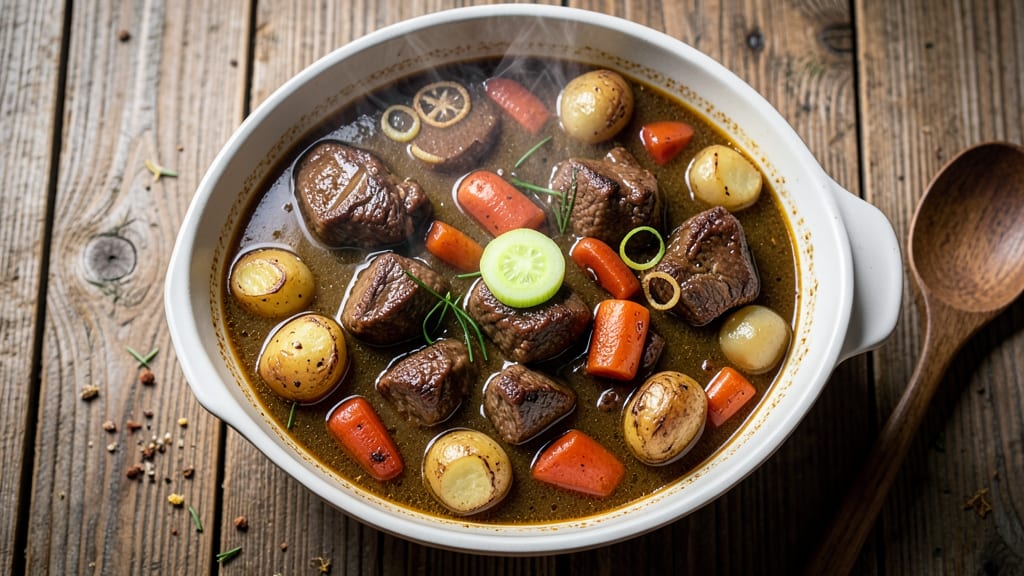
This beef and horseradish stew delivers a bold, velvety depth that transforms tough cuts into melt-in-your-mouth perfection. 🔥 The secret lies in slow-cooking the beef until fork-tender while balancing sharp horseradish with rich, aromatic spices.
I developed this recipe after years of perfecting the art of building layers of flavor—where the horseradish’s fiery kick meets the stew’s comforting warmth in every spoonful.
What sets this recipe apart is the technique: browning the beef first creates a deep, caramelized foundation, while simmering low and slow extracts maximum flavor from every ingredient.
Carrots, onions, and potatoes round out the dish with natural sweetness, while fresh horseradish adds that signature tang that lingers on the palate. The result is a stew that’s hearty enough for winter dinners but bright enough to stand out on any table.
The beauty of this recipe is its versatility—it’s rich enough for a special occasion yet simple enough for a weeknight meal. Serve it with crusty bread to soak up every last drop of that velvety broth, or garnish with fresh parsley for a pop of color.
The flavors only deepen as it sits, making it perfect for meal prep or leftovers that taste even better the next day.
Whether you're a seasoned cook or new to slow-cooked dishes, this beef and horseradish stew delivers restaurant-quality results with minimal effort. The key is patience—allowing the beef to break down completely while the horseradish’s sharpness mellows into a harmonious balance. Let’s get cooking!
Ingredients for beef and horseradish stew
Bold flavors and simple ingredients transform tough beef into velvety perfection in one pot.
| Ingredient | Amount | Notes |
|---|---|---|
| Chuck Roast 🥩 | 2 lb | Pre-cut into 1.5-inch cubes |
| Yellow Onions 🧅 | 1 whole | Chopped into 1/2-inch pieces |
| Carrots 🥕 | 4 whole | Cut into 1-inch chunks |
| Russet Potatoes 🥔 | 2 lb | Cut into 1-inch cubes |
| Fresh Horseradish Root 🌿 | ½ cup | Grated, for sharpness |
| Beef Broth 💧 | 4 cups | Low-sodium preferred |
| Red Wine 🍷 | 1 cup | Bold dry variety like Cabernet |
| Tomato Paste 🍅 | 2 tbsp | For depth of flavor |
| Garlic Cloves 🧄 | 4 cloves | Minced for aromatic base |
| Fresh Thyme 🌿 | 2 tbsp | Chopped leaves only |
| Bay Leaves 🍃 | 2 whole | For subtle earthy flavor |
| Black Peppercorns 🌶️ | 1 tsp | Freshly cracked for heat |
| Kosher Salt 🧂 | 1 ½ tsp | Adjust to taste |
| Olive Oil 🫒 | 2 tbsp | For searing beef |
| Fresh Parsley 🌿 | ¼ cup | Chopped for garnish |
The chuck roast is non-negotiable here—its marbling ensures tender results. Costco or Walmart typically carry it pre-cubed, saving prep time. Look for pieces with visible fat marbling; this renders down during cooking, keeping the meat moist. Fresh horseradish is a game-changer, but Trader Joe's sells pre-grated in the refrigerated section if you're short on time. For the vegetables, organic carrots and potatoes hold up better during long cooking, though conventional will work fine. The key is even sizing—cutting everything to roughly 1-inch chunks ensures uniform cooking.
No red wine? Substitute beef broth with 1 tbsp balsamic vinegar for depth. Fresh horseradish too intense? Mix half with grated apple to mellow the heat. Prefer dried thyme? Use one-third the amount of fresh. The tomato paste can be swapped for 1/4 cup crushed tomatoes if you're avoiding it. For a richer base, add 1 tbsp soy sauce—it enhances the umami without overpowering. The beef broth should be low-sodium; if using regular, reduce the added salt accordingly. For the wine, any bold dry red works—Cabernet, Merlot, or even a Pinot Noir in a pinch.
This stew tastes even better the next day as flavors meld. Store in an airtight container in the fridge for up to 5 days, or freeze for 3 months in portion-sized containers. To reheat, warm on the stove over medium-low heat, adding a splash of broth if needed. The parsley garnish is optional but adds a bright finish—toss it in at the end. For meal prep, double the recipe and freeze half; the extra effort pays off with minimal cleanup later. The horseradish's sharpness mellows slightly over time, making leftovers even more balanced.
Why You'll Love This Recipe
- Horseradish Magic: That fresh horseradish root? It’s the star. Grated thin and simmered just enough to mellow its bite, it adds a bright, peppery kick that cuts through the richness of the beef—like a wake-up call in every bite.
- Leftovers That Beg: Between us, this tastes better the next day. The flavors meld, the potatoes get even creamier, and I’ve never had a single person turn down seconds. (Yes, even my picky teenager.)
- Budget Meal, Big Payoff: A single chuck roast feeds six for under $20. The onions and carrots stretch across multiple meals, and that horseradish root lasts forever—no wasted ingredients here.
Step-by-step instructions for beef and horseradish stew
Here's the method for a stew that balances bold horseradish heat with rich, velvety beef.
🔥 Step 1: Sear the Chuck Roast for Deep Flavor
Heat the 2 tablespoons olive oil in a heavy Dutch oven over medium-high heat until shimmering. Pat the 2 lb chuck roast dry with paper towels and add it to the pot, working in batches if needed. Sear on all sides for 4-5 minutes total until deeply browned—this creates the flavor foundation.
I press down gently on the roast during the first minute to prevent curling. The meat should release easily when ready to flip. Remove the roast and set it aside on a plate, leaving all the browned bits in the pot—these will form the stew's rich base.
🍳 Step 2: Build the Aromatic Base
In the same Dutch oven, add the 1 whole yellow onions and 4 whole carrots cut into chunks. Cook for 5-6 minutes until softened and beginning to caramelize. Add the 4 cloves garlic cloves and 2 tablespoons fresh thyme, stirring for 30 seconds until fragrant.
Here's where the depth comes in: Stir in the 2 tablespoons tomato paste and cook for 1 minute to toast its flavors. This step develops the stew's complex umami profile that balances the horseradish's sharpness.
🥘 Step 3: Deglaze and Simmer the Base
Pour in the 1 cup red wine and scrape up all the browned bits from the bottom of the pot. Let it simmer for 3-4 minutes until reduced by half. Add the 4 cups beef broth, 1.5 teaspoons kosher salt, 1 teaspoon cracked black peppercorns, and 2 whole bay leaves.
Bring to a gentle boil, then return the roast to the pot. Add the 2 lb russet potatoes cut into cubes. The stew should bubble gently—if it boils too vigorously, reduce the heat slightly. This initial simmer helps tenderize the meat before the long cook.
⏰ Step 4: Cook Until Tender with Horseradish Infusion
Cover the pot and simmer on low heat for 1.5 hours, stirring occasionally. After 1 hour, add the 0.5 cup grated fresh horseradish root—this is when the sharpness begins to meld with the other flavors. The potatoes should be tender when pierced with a fork.
Here's the thing about horseradish: it loses potency when cooked too long. Adding it late preserves its sharp kick while allowing it to integrate smoothly. The stew should have a rich, slightly thickened consistency by this point.
🍽️ Step 5: Finish and Serve with Fresh Parsley
Remove the roast and shred it with two forks, discarding the bay leaves. Return the meat to the pot and simmer uncovered for 10-15 minutes until the sauce thickens slightly. Taste and adjust seasoning with more salt or pepper if needed.
Ladle the stew into bowls and garnish with 0.25 cup chopped fresh parsley. The horseradish's sharpness should contrast beautifully with the tender beef and creamy potatoes. Serve immediately with crusty bread to soak up every last bit of that velvety sauce.
Pro Tips For Making Beef And Horseradish Stew
- SEAR THE ROAST FIRST: I learned this the hard way—skipping the sear means bland, gray beef. Get that Dutch oven screaming hot, pat the chuck dry, and let it brown 4-5 minutes per side before anything else. The crust locks in flavor and keeps the meat from turning mushy later.
- GRATE HORSERADISH FRESH—NO SUBSTITUTE: Yes, even if you’re impatient like me. Store-bought paste lacks the sharp, bright kick this stew needs. Use a box grater or food processor on the root (peeled), then mix it with a splash of vinegar to mellow the raw bite. Trust me, the difference is night and day.
- ADD POTATOES LAST: I used to toss them in early, and they’d turn to mush. Instead, slice the russets into even 1-inch chunks and add them just 30 minutes before the stew finishes. They’ll soak up flavor without falling apart—no one wants gluey potatoes in their stew.
- DEGLAZE WITH BEER OR BROTH: That browned beef isn’t just for looks—it’s flavor gold. After searing, splash in ½ cup of dark beer (like a stout) or beef broth to scrape up every bit. Let it simmer 2 minutes before adding liquids. It’s the thing that makes the stew taste homemade, not canned.
Pro cooking tips for this dish
Sear Like a Pro
Don't skip the searing step—this is where the magic happens! Use a heavy Dutch oven (I love my All-Clad) and heat the olive oil until it's hot enough to sizzle when you add the beef. Pat the meat completely dry with paper towels first—this ensures maximum browning.
Work in batches if needed, but never overcrowd the pan. The goal is deep golden-brown crust on all sides, which adds Maillard reaction depth that no other step can replace. 🔥
Wine Reduction Matters
After searing, let the wine simmer uncovered until it reduces by half—this concentrates the flavors and removes excess alcohol. I like to use a bold Cabernet for its tannins, which help balance the horseradish's sharpness.
If you're using a lighter wine like Pinot Noir, add an extra ½ teaspoon of black pepper to compensate. Scrape up every last bit of browned fond from the pot—these bits are flavor gold! 🍷
Horseradish Timing
Add the fresh horseradish root only after 1 hour of simmering—this is critical! Cooking it too long mellows its kick completely. I grate it finely (about ½ cup) and stir it in just as the potatoes begin to soften.
The heat should still be noticeable but integrated, not overwhelming. For a milder version, mix the horseradish with 1 tablespoon of apple cider vinegar before adding it to the stew. 🌶️
Low and Slow Wins
Resist the urge to rush this stew! Simmering on low heat for 1.5 hours breaks down the beef's connective tissue into gelatin, creating that silky texture. I set my stove to 250°F (or the lowest setting) and let it bubble gently.
If the liquid reduces too much, add ¼ cup beef broth to maintain the right consistency. The longer it cooks, the more the flavors meld together—this is where the magic happens. ⏰
Potato Perfection
Use Russet potatoes for their fluffy texture, and cut them into even 1-inch cubes so they cook uniformly. Add them to the stew after the meat has simmered for 1 hour—this ensures they absorb all the rich flavors without turning mushy.
If you prefer creamier potatoes, add ½ cup heavy cream during the final 15 minutes of cooking. For extra richness, I sometimes add 1 small parsnip with the carrots—it adds natural sweetness. 🥔
Final Thickeners
For a velvety finish, let the stew simmer uncovered for the last 10-15 minutes—this reduces the sauce naturally. If it's too thin, mix 1 tablespoon cornstarch with 2 tablespoons cold water and stir it in.
I also like to finish with a splash of red wine vinegar (just 1 teaspoon) to brighten the flavors. Garnish with fresh parsley right before serving to add a pop of color and freshness. 💫
Nutrition facts
Frequently asked questions
Can I substitute fresh horseradish with prepared horseradish sauce?
Yes, but use it sparingly! Prepared horseradish is much stronger than fresh. Start with 1 tablespoon instead of ½ cup grated fresh horseradish and adjust to taste. Mix it with 1 teaspoon apple cider vinegar before adding to mellow the heat. The flavor will be more concentrated, so taste as you go.
What's the best cut of beef for this stew?
Chuck roast is ideal—it's affordable, flavorful, and becomes fork-tender when slow-cooked. Other good options include stew beef or brisket. Avoid lean cuts like sirloin; they won't develop the same rich texture. For extra tenderness, consider 1-inch cubes rather than larger chunks.
How do I make this stew less spicy?
Reduce the horseradish by half or swap it for ½ cup grated apple mixed with 1 tablespoon vinegar. For a milder kick, add 1 extra potato or ½ cup heavy cream during the final 15 minutes of cooking. The cream will mellow the flavors while adding richness. Taste as you go!
Can I make this in an Instant Pot or slow cooker?
For an Instant Pot, sear the beef first, then cook on high pressure for 45 minutes with all ingredients except horseradish. Add horseradish in the last 10 minutes of natural release. For a slow cooker, brown the beef first, then cook on low for 6-7 hours or high for 3-4 hours. The timing is longer because these methods don't build the same depth of flavor as stovetop.
Why did my stew turn out too thin?
This usually happens if the liquid wasn't reduced enough. Simmer uncovered for an extra 10-15 minutes to thicken naturally. For a quicker fix, mix 1 tablespoon cornstarch with 2 tablespoons cold water and stir it in. If the issue persists, reduce the broth by ½ cup next time. The stew should coat the back of a spoon by the end.