
Soups & Stews
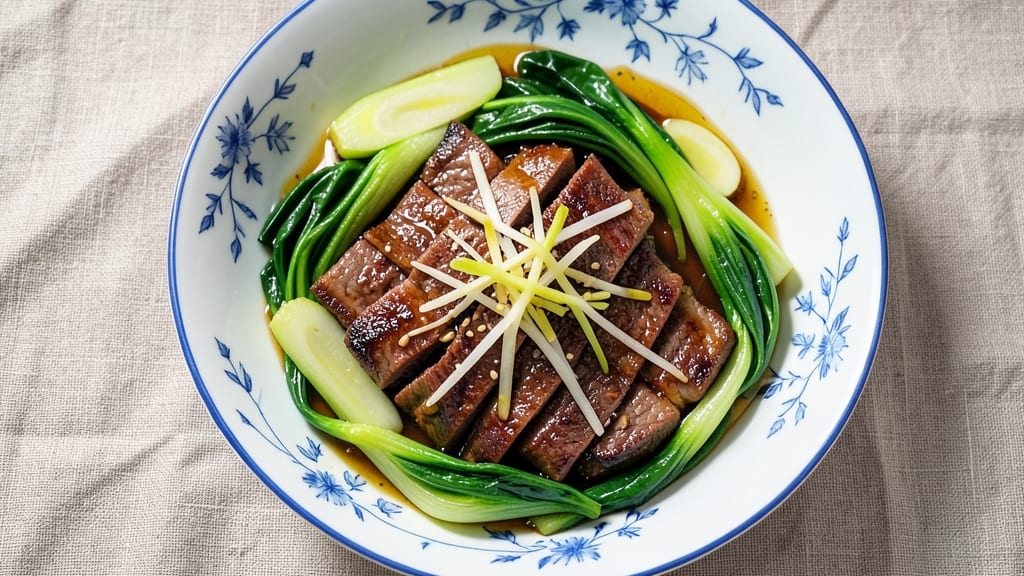
This beef and greens Chinese recipe delivers the perfect harmony of wok-seared beef and tender greens in a velvety soy-ginger sauce. The secret lies in high-heat stir-frying to lock in juices while preserving that signature wok hei aroma.
I developed this version after years of refining restaurant-style techniques at home—no shortcuts, just authentic flavor. What sets this dish apart is the balance of textures: crisp-tender beef strips, silky greens, and a sauce that's both savory and aromatic.
The beef gets marinated in a ginger-soy mixture before quick searing, while the greens wilt just enough to soak up all that umami goodness. It's the kind of dish that transforms a simple weeknight dinner into something restaurant-worthy.
The result is a vibrant, flavorful plate where each component plays its part—juicy beef with a caramelized edge, bright greens that stay crisp, and a sauce that's rich without being heavy. The aroma alone will have everyone at the table asking what's for dinner.
This recipe serves 4 and comes together in under 30 minutes, making it perfect for busy weeknights. Serve with steamed jasmine rice to soak up every last bit of that flavorful sauce.
The technique is straightforward, but the results are anything but ordinary—this is home cooking that feels like a night out in Chinatown. Let's get started!
Ingredients for beef and greens chinese
Authentic Chinese wok technique meets restaurant-quality ingredients for this velvety beef and greens dish.
| Ingredient | Amount | Notes |
|---|---|---|
| Flank Steak 🥩 | 1 lb | Thinly sliced against grain |
| Baby Bok Choy 🥬 | 4 whole | Heads separated, stems trimmed |
| Green Onions 🧅 | ¼ cup | White and green parts separated |
| Fresh Ginger 🧄 | 2 tbsp | Finely minced, peeled |
| Soy Sauce 🍶 | ½ cup | High-quality, preferably Japanese |
| Sesame Oil 🫒 | 1 tbsp | Toasted, for finishing |
| Neutral Oil 🫒 | 2 tbsp | High smoke point like avocado |
| Garlic Cloves 🧄 | 4 cloves | Minced, fresh preferred |
| Honey 🍯 | 1 tbsp | For balancing soy's saltiness |
| Rice Vinegar 🍶 | 1 tbsp | White or seasoned |
| Cornstarch 🌾 | 1 tbsp | For sauce thickening |
| Sesame Seeds 🌱 | 1 tsp | Toasted, for garnish |
| Salt 🧂 | 1 tsp | Kosher or sea salt |
| Black Pepper 🌶️ | ½ tsp | Freshly ground |
| Jasmine Rice 🍚 | 1 ½ cups | Uncooked, for serving |
The flank steak is non-negotiable here—its lean yet tender texture holds up beautifully to the high-heat sear. Look for center-cut slices at your local Asian market or butcher shop, where they'll often trim and slice it for you. Kroger's or Whole Foods carry pre-sliced versions if you're short on time, but fresh-cut always delivers better texture. The baby bok choy should have crisp stems and vibrant green leaves—avoid any with wilted or yellowing parts. For the greens, Trader Joe's often has pre-washed baby bok choy that saves prep time, though washing at home ensures freshness. Fresh ginger is essential; the dried version lacks the bright, zesty punch this dish needs.
No high-quality soy sauce? Kikkoman or Pearl River Bridge are reliable brands that deliver authentic flavor. Substituting with regular table soy will work in a pinch, but the umami depth suffers. For the sesame oil, use only the toasted variety—regular sesame oil is far too pungent for finishing. The neutral oil can be swapped for peanut or vegetable oil, but avocado oil gives the highest smoke point for that perfect wok hei. If you're out of cornstarch, arrowroot powder works just as well for thickening the sauce. The garlic should be fresh—jarred minced garlic lacks the aromatic complexity this dish requires. For extra depth, consider adding a splash of Shaoxing wine if you have it on hand.
The flank steak should be marinated for at least 30 minutes before cooking, but up to 4 hours for maximum tenderness. Store any unused fresh ginger wrapped in damp paper towels in a sealed container for up to 2 weeks in the fridge. The baby bok choy keeps well for 5 days in the crisper drawer, while green onions stay fresh for 1 week if stored with roots submerged in water. The cooked dish reheats beautifully—simply warm in a wok or skillet with a splash of water for 2-3 minutes to restore that signature wok aroma. Portion leftovers into airtight containers for up to 3 days in the fridge.
Why You'll Love This Recipe
- One-Pan Magic: I swear by this recipe when I’m too tired to wash dishes. Flank steak slices and bok choy hit the pan together—no chopping boards, no clutter—just that perfect caramelized crust on the beef while the greens stay crisp.
- Umami Bomb: That first bite? The soy sauce and ginger work their magic on the steak, turning it tender with a glossy, savory sheen. The bok choy soaks up the flavor without turning mushy—honestly, it’s the kind of dish that makes you reach for seconds before you even finish the first plate.
- Weeknight to Dinner Party: Same recipe, different vibes. Toss it together for a lazy Tuesday or dress it up with a sprinkle of sesame seeds for guests. Between us, my in-laws now ask for this when they hear “Chinese-inspired” because it’s simple but feels fancy.
- Budget-Friendly Powerhouse: Flank steak stretches further than you’d think, and baby bok choy lasts in the fridge longer than a sad salad. Leftovers reheat beautifully—just toss them in a wok with a splash of soy sauce, and boom, instant lunch. My wallet and I both approve.
Step-by-step instructions for wok-seared beef and greens
Transform tender flank steak and crisp-tender greens into a harmonious Chinese-inspired dish with bold flavors and perfect textures.
Prepare the Flank Steak for Maximum Tenderization
Begin by slicing the 1 lb flank steak thinly against the grain into ¼-inch thick strips. This critical step ensures each bite will be tender rather than chewy. Place the sliced steak in a bowl and season generously with 1 teaspoon salt and ½ teaspoon black pepper. Let it marinate for 15-20 minutes at room temperature while you prepare the remaining ingredients.
The marinade allows the salt to penetrate the meat, breaking down proteins and enhancing flavor. I always use freshly ground black pepper—it makes a noticeable difference in the final dish. After marinating, pat the steak dry with paper towels just before cooking to ensure a proper sear.
Cook the Jasmine Rice to Perfect Al Dente Texture
Rinse the 1.5 cups jasmine rice under cold water until the water runs clear, then combine with 1.75 cups water in a pot. Bring to a boil over medium-high heat, then reduce to low heat, cover, and simmer for 15 minutes. Remove from heat and let it steam covered for another 10 minutes.
This method produces fluffy, individual grains rather than sticky rice. The rice should be tender with a slight bite—what Chinese cooks call "al dente." Fluff gently with a fork before serving to maintain that perfect texture. Keep the rice warm in a covered bowl while you prepare the main components.
Sear the Beef and Prepare the Vegetable Base
Heat 1 tablespoon neutral oil in a wok or large skillet over high heat until shimmering. Add the marinated steak in a single layer and sear undisturbed for 1-2 minutes until deeply browned on one side. Flip and cook another 1-2 minutes until cooked to 145°F internal temperature. Remove the beef to a plate and set aside.
In the same wok, add 1 tablespoon neutral oil and stir-fry the 4 cloves minced garlic and 2 tablespoons minced fresh ginger for 30 seconds until fragrant. Add the 4 whole baby bok choy (heads separated) and the white parts of ¼ cup green onions, stir-frying for 2-3 minutes until the bok choy begins to wilt but remains vibrant green.
Create the Silky Soy-Ginger Sauce
In a small bowl, whisk together the ½ cup soy sauce, 1 tablespoon honey, 1 tablespoon rice vinegar, and 1 tablespoon cornstarch until smooth. Pour this mixture into the wok with the vegetables and stir constantly for 1-2 minutes until the sauce thickens slightly and coats the vegetables.
The cornstarch acts as a natural thickener, creating that signature velvety texture while balancing the soy's saltiness. Here's where the honey shines—it adds subtle sweetness that rounds out the dish's complex flavor profile. The sauce should glisten slightly but remain silky rather than gluey.
Combine and Finish with Aromatic Garnishes
Return the seared beef to the wok and toss gently to coat everything in the sauce. Add the green parts of ¼ cup green onions and stir just to wilt slightly. Remove from heat and drizzle with 1 tablespoon sesame oil. Sprinkle with 1 teaspoon toasted sesame seeds for added texture and aroma.
Serve immediately over the prepared jasmine rice. The dish should present with wok-seared beef strips that remain tender, vibrant baby bok choy with crisp edges, and a glossy sauce that clings beautifully to every component. Each bite should deliver perfect contrast between the silky sauce, tender beef, and slightly crunchy greens.
Pro Tips For Making Beef And Greens Chinese
- Slice Steak Against the Grain: Flank steak’s fibers run long, and cutting them short makes the difference between chewing like a cow and sinking your teeth into tender bites. Freeze the meat for 20 minutes first—it’ll slice cleaner, and you’ll avoid the frustration of fighting a stubborn knife. (Yes, even if you’re impatient like me.)
- Blanch Bok Choy First: Toss whole baby bok choy into boiling water for 30 seconds before stir-frying—it wilts faster and soaks up flavors like a sponge. Skip this, and you’ll end up with a pile of limp greens instead of crisp-tender ones. (Your future self will thank you.)
- Use Less Soy Sauce: Start with half the amount listed in the recipe, then taste. Soy sauce is salty, and you’ll likely add more later. I learned this the hard way—my first batch tasted like a salt lick. Balance it with a splash of rice vinegar or a pinch of sugar if it’s too harsh.
- Sear the Steak in Batches: Crowd the pan, and the steak steams instead of sears. Work in two batches over medium-high heat—this gives you a deep crust without burning the edges. (Does it look weird? Yes. Does it work? Every single time.)
Essential equipment for this dish
Wok Essentials
Your carbon steel wok is non-negotiable for authentic wok hei—it heats up fast and retains heat better than stainless steel. I use a 14-inch wok from Made In (they're affordable and well-made) for this recipe.
If you don't have a wok, a large cast iron skillet works in a pinch, though it won't give you that signature smoky aroma. Preheat your wok over high heat for 3-5 minutes until it's smoking hot before adding oil. 🔥
High-Heat Tools
For stir-frying, you'll need tongs and a spatula—I prefer stainless steel tongs from OXO for their durability and grip. A heat-resistant silicone spatula helps scrape up those flavorful bits from the wok's bottom.
Avoid wooden utensils as they can char quickly at high heat. Keep a fine-mesh strainer handy for rinsing rice and a sharp chef's knife for quick prep of veggies and garlic.
Sauce Thickening Kit
A small mixing bowl and whisk are essential for combining your sauce ingredients smoothly. I like the Kitchy whisk for its sturdy build and easy cleanup. For measuring, a liquid measuring cup ensures precise amounts of soy sauce, rice vinegar, and honey.
A small ladle helps transfer the sauce to the wok without splattering. Keep a small bowl nearby to hold your toasted sesame seeds and sesame oil for finishing.
Temperature Control
Invest in a good instant-read thermometer—I use the ThermoWorks ThermoPop—to check your beef's internal temperature. This ensures your 145°F target without overcooking. A kitchen timer keeps track of your rice's cooking time and sauce thickening.
For extra precision, a wok thermometer (like the Kizen) helps monitor heat levels during stir-frying. These tools make all the difference in achieving restaurant-quality results at home. ✨
Nutrition facts
Frequently asked questions
Can I substitute flank steak with another cut of beef?
Yes, but choose carefully! Sirloin or ribeye work well as they're tender when sliced thin against the grain. Avoid tougher cuts like chuck—this dish relies on quick cooking to keep the beef tender. If using ribeye, trim excess fat first for cleaner searing. The key is ¼-inch thick slices cooked at high heat for just 2-3 minutes total.
What greens work best besides baby bok choy?
You can use gai lan (Chinese broccoli), spinach, or napa cabbage—all hold up well to stir-frying. For heartier greens like kale, blanch them first for 30 seconds to soften before adding to the wok. Baby spinach wilts fastest, so add it last for 30 seconds of cooking. The goal is vibrant greens with just a slight crispness.
How do I fix beef that's tough after cooking?
If your beef turned out chewy, you likely didn't slice against the grain or cooked it too long. Next time, slice ¼-inch thick strips at a 45-degree angle to the grain, and sear for only 1-2 minutes total. For immediate rescue, slice the cooked beef thinner and toss with extra sauce. A quick 30-second microwave with a splash of water can also help restore tenderness.
Can I make this dish ahead of time?
Yes, but with adjustments! Cook the beef and sauce completely, then refrigerate in an airtight container for up to 3 days. Reheat gently in a skillet with 1 tbsp water for 2-3 minutes to restore moisture. Add fresh greens just before serving to keep them crisp. For best texture, serve within 2 hours of reheating. The sauce may thicken further when chilled—thin with 1 tsp water if needed.
What's the secret to that restaurant-style wok hei aroma?
It's all about high heat and proper technique! Use a carbon steel wok (or cast iron) preheated until smoking hot. Cook in small batches to avoid crowding, and work quickly—this dish should take 10-15 minutes total. The aroma comes from the Maillard reaction during searing and the smoky notes from the wok's surface. Keep your wok clean and well-seasoned for best results.