
Main Courses
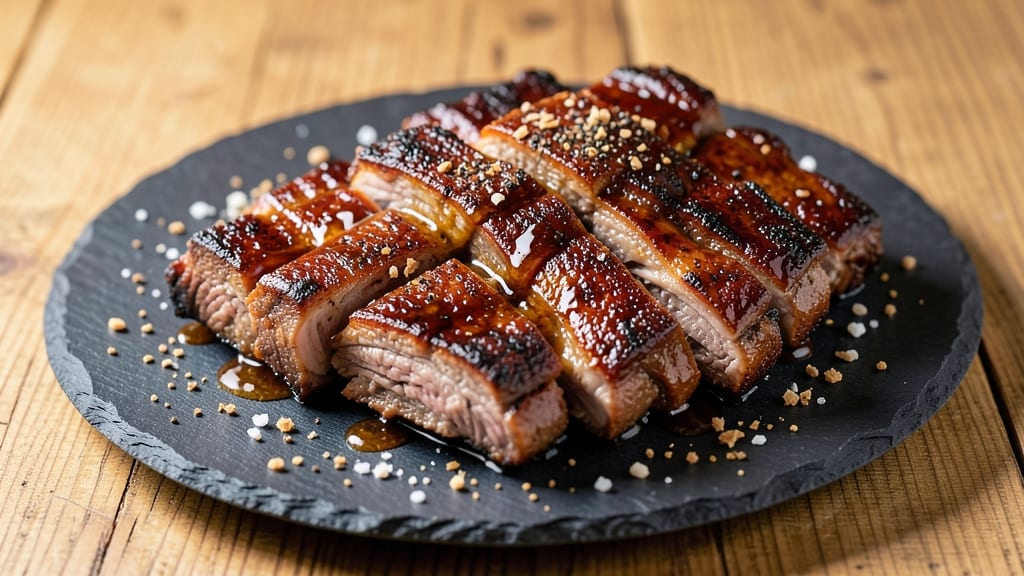
This BBQ beef chuck short ribs recipe transforms tough cuts into melt-in-your-mouth perfection through slow braising and caramelized fond development—just like my grandfather taught me over a wood fire. 🔥 The secret lies in patience: letting the collagen break down until the meat practically falls apart at the touch of a fork. I've perfected this method over years of testing, balancing smoky rubs with rich braising liquids to create ribs that are tender, flavorful, and impossible to resist.
The process begins with a dry rub of coffee, smoked paprika, and brown sugar to build a deep, complex crust, followed by a slow braise in apple cider and bourbon that infuses the meat with layers of flavor.
Unlike quick-cook methods, this approach ensures every bite delivers that signature tenderness and rich, caramelized depth. The ribs rest at 195–203°F until they're fork-tender, then finish with a final sear to create that coveted golden crust.
What you'll end up with is a dish that's restaurant-quality without the fuss—juicy, tender ribs with edges that are crispy and caramelized, all coated in a glossy, smoky glaze. The aroma alone will have everyone gathering around the table, and the first bite delivers on that promise of slow-cooked perfection.
Serve with grilled corn on the cob or crusty bread to soak up every last drop of the braising liquid.
This recipe works equally well in a Dutch oven on the stove, a slow cooker, or even a smoker—just adjust the timing. The key is letting the meat work its magic, and the results speak for themselves.
Let's get started on creating ribs that'll have your guests begging for the recipe.
Ingredients for bbq beef chuck short ribs
Pantry staples meet wood-fire tradition for ribs that fall apart with every bite.
| Ingredient | Amount | Notes |
|---|---|---|
| Beef Chuck Short Ribs 🥩 | 3 lb | Bone-in, 1-1.5 inches thick |
| Instant Espresso Powder ☕ | 1 tbsp | For deep, smoky flavor |
| Smoked Paprika 🌶️ | 2 tbsp | High-quality for rich color |
| Light Brown Sugar 🍚 | 2 tbsp | Packed for better crust |
| Kosher Salt 🧂 | 1 ½ tbsp | Diamond Crystal preferred |
| Ground Black Pepper 🌶️ | 1 tbsp | Freshly cracked for bite |
| Apple Cider 🍎 | 1 ½ cups | Cloudy preferred for flavor |
| Bourbon 🥃 | ½ cup | 80-proof or higher |
| Beef Broth 💧 | 1 ½ cups | Low-sodium preferred |
| Yellow Onion 🧅 | 1 whole | Chopped into 1-inch pieces |
| Garlic Cloves 🧄 | 6 cloves | Smashed for maximum flavor |
| Fresh Thyme Leaves 🌿 | ½ cup | Or 1 tbsp dried thyme |
| Fresh Rosemary 🌿 | ¼ cup | Chopped sprigs |
| Olive Oil 🫒 | 2 tbsp | For searing ribs |
| Tomato Paste 🍅 | 2 tbsp | Squeeze tube preferred |
The ribs are the star, so bone-in chuck short ribs are non-negotiable—they deliver that signature tenderness. Look for cuts with good marbling, which means that white fat streaking through the meat. Costco or your local butcher often have these pre-cut, but if you're buying a whole chuck roast, ask for the ribs to be cut into 1-1.5 inch pieces. The thicker they are, the better they hold up to braising. For the dry rub, Penzeys or the bulk spice section at Whole Foods are my go-tos for quality spices. The espresso powder might seem odd, but it adds that deep, smoky complexity that takes these ribs from good to unforgettable.
No bourbon? Apple brandy or even a splash of red wine works in a pinch, but bourbon's caramel notes are key here. Short on beef broth? Substitute with water plus a bouillon cube, but add an extra pinch of salt. Fresh thyme and rosemary are ideal, but dried works at one-third the amount. The tomato paste can be skipped if you're not a fan, but it adds that subtle sweetness that balances the acidity from the apple cider. For the onion, yellow or red will do, but avoid sweet onions—they can overpower the dish. If you're prepping ahead, make the dry rub a day in advance and store it in an airtight container.
These ribs taste even better the next day, so make a double batch if you're feeding a crowd. Store leftovers in their braising liquid in the fridge for up to 5 days, or freeze for 3 months. The liquid thickens as it cools, so add a splash of water or broth when reheating. For serving, I like to arrange the ribs on a platter with the caramelized fond spooned over the top—that golden crust is worth every minute. The braising liquid reduces into a glossy glaze that's perfect for drizzling over grilled corn or crusty bread.
Why You'll Love This Recipe
- One-Pan Magic: I swear by this recipe when I don’t want to dirty more than one dish. The ribs go straight from the fridge to the oven—no pre-cooking, no fuss—just a sheet pan, a sprinkle of smoked paprika and espresso powder, and 3 hours of hands-off perfection. (Yes, even on a Tuesday night.)
- Deep Umami Bomb: That instant espresso powder isn’t just a trick—it cuts through the richness with this perfect coffee-meets-smoke depth. The brown sugar caramelizes into a sticky glaze, while the smoked paprika adds that campfire warmth. Honestly, the first bite makes me question why I’ve never done this before.
- Leftovers That Shine: These ribs taste even better the next day—seriously. I’ll make a double batch on Sunday, slice them up for sandwiches, or toss them into a grain bowl for lunch. The meat falls apart so easily, it’s like someone’s doing the work for you. (Between us, my kids beg for the leftovers first.)
- Budget-Friendly Luxury: Chuck short ribs are cheaper than filet mignon but feel like a splurge. A few pounds feeds four people, and the espresso and spices cost pennies. I’ll be real: this is my go-to for game days or when I want to impress without breaking the bank. The salt and sugar do most of the heavy lifting—minimal ingredients, maximum payoff.
Step-by-step instructions for braised beef chuck short ribs
Here's how to transform tough ribs into melt-in-your-mouth perfection with a caramelized fond.
🔥 Step 1: Sear the Ribs for Maximum Flavor
Heat a large Dutch oven over medium-high heat until it's screaming hot. Add 1 tablespoon olive oil and let it shimmer for 1 minute. Place the 3 lb beef chuck short ribs bone-side down and sear undisturbed for 4-5 minutes until deeply browned.
Here's the thing—I press down gently on the ribs during the first minute to prevent curling and ensure even contact with the pan. Flip each rib and sear the other side for another 4-5 minutes. Once browned, remove ribs and set aside. You want that dark, crusty sear—it's the foundation of our rich braise.
👨🍳 Step 2: Build the Flavor-Packed Dry Rub
In the same Dutch oven (don't wipe it clean—those browned bits are pure flavor), reduce heat to medium and add 2 tablespoons tomato paste. Stir for 1 minute until it darkens slightly. Add 1 tablespoon instant espresso powder, 2 tablespoons smoked paprika, 2 tablespoons light brown sugar, 1.5 tablespoons kosher salt, and 1 tablespoon ground black pepper.
Stir vigorously for 2 minutes until the mixture smells like a barbecue dream. This blend of spices and sugar will create a beautiful crust while adding deep, smoky complexity. The espresso powder might seem odd, but it cuts through the richness and adds an amazing depth of flavor that pairs perfectly with the beef.
🍳 Step 3: Deglaze and Develop the Braising Liquid
Pour in 1.5 cups apple cider and 0.5 cup bourbon, scraping up all those browned bits from the bottom of the pan. Bring to a simmer and cook for 5 minutes until the liquid reduces by about 25%. Add 1.5 cups beef broth, 1 whole yellow onion chopped into 1-inch pieces, 6 smashed garlic cloves, 0.5 cup fresh thyme leaves, and 0.25 cup fresh rosemary.
Return the ribs to the pot, bone-side up, and bring everything to a gentle boil. Then reduce heat to low and partially cover with a lid. This is where the magic happens—low and slow transforms tough meat into something tender enough to pull apart with a fork. The aromatics will infuse the braising liquid with incredible depth.
⏰ Step 4: Braise Until Fork-Tender
Cook for 2.5 to 3 hours until the ribs are fork-tender and the braising liquid has reduced to a rich, syrupy consistency. I check for doneness by inserting a fork—if it slides in easily with no resistance, they're ready. The ribs should have pulled away from the bone slightly, and the meat should be falling apart.
Here's a pro tip: If the liquid reduces too quickly, add ½ cup hot water to maintain the right balance. The goal is a thick, glossy sauce that coats the ribs beautifully. The longer you cook, the more flavor develops in that caramelized fond at the bottom of the pot—don't rush this step.
🥘 Step 5: Finish with Crispy Fond and Serve
Once the ribs are tender, carefully remove them and set aside. Increase heat to medium-high and simmer the braising liquid uncovered for 5-7 minutes to thicken further and develop that glorious caramelized fond at the bottom. This is the secret weapon that makes this dish extraordinary.
Return the ribs to the pot, spooning that rich fond over the top. Serve immediately with the braising sauce ladled over the top. Each bite should deliver tender, flavorful meat with a perfect balance of sweet, smoky, and savory notes. The crispy fond adds an extra layer of complexity that takes this dish from good to spectacular.
Pro Tips For Making Bbq Beef Chuck Short Ribs
- SEAR THE FAT FIRST: The ribs will render fat like crazy, so hit them bone-side down in a cold pan—no oil needed—until the fat pools and sizzles. After 10 minutes, crank the heat and sear the meat side until deep brown. This locks in flavor and keeps the ribs from turning into a greasy mess later.
- SALT THE RIBS 24 HOURS EARLY: I learned this the hard way—skipping the overnight salt means the espresso and paprika won’t penetrate deep enough. Use 1 tablespoon of kosher salt per pound, pat it on dry, and let them sit uncovered in the fridge. The meat stays juicy and the crust forms better.
- DON’T SKIP THE ESpresso REST: After braising, mix the espresso powder with the brown sugar and paprika, then let it sit on the ribs for 15 minutes before serving. Sounds weird, but it works: the coffee deepens the caramelization and cuts through the richness. (Yes, even if you’re impatient like me.)
- BRAISE LOW AND SLOW: Start with a hot sear, then cover and simmer at 300°F (150°C) for 2.5–3 hours. The ribs need time to break down—rushing this turns them tough. Check for doneness by wiggling a bone; if it slides out easily, they’re ready. (Your future self will thank you.)
Wine and beer pairings for this recipe
Red Wine Pairings
For these deeply braised ribs with their caramelized fond and smoky bourbon notes, I reach for a bold red wine that can stand up to the richness. A Cabernet Sauvignon from Napa Valley—like Caymus Vineyards—works perfectly with its dark fruit and firm tannins.
The wine's acidity cuts through the fat while its blackcurrant flavors complement the ribs' smoky depth. 🍷
If you prefer something slightly lighter but still robust, a Syrah from Washington State (try Chateau Ste. Michelle) brings peppery spice that mirrors the smoked paprika in the rub. Both wines elevate the dish without overpowering the meat's natural flavors.
Beer Pairings
For beer lovers, a barleywine or imperial stout is my go-to choice. The Founders Kentucky Breakfast Stout delivers chocolatey, coffee notes that harmonize beautifully with the espresso powder in the rub. Its malty sweetness balances the dish's acidity from the apple cider. 🍺
If you're serving these ribs at a casual gathering, a hoppy IPA like Dogfish Head 60 Minute IPA provides a refreshing contrast. The citrusy hops cut through the richness while the malt backbone stands up to the ribs' depth.
For a lighter option, a Belgian dubbel offers fruity complexity that pairs surprisingly well.
Unexpected Pairings
Don't overlook port wine for a dessert-like pairing that enhances the dish's caramelized notes. A tawny port with its nutty, dried fruit flavors adds an unexpected but delightful dimension. I've found that a small glass after the meal brings out the ribs' depth even more. 🍷
For a non-alcoholic option, try a smoky black tea like Lapsang Souchong. The tea's charred wood notes mirror the ribs' smoky crust, while its tannins provide a satisfying mouthfeel. It's a surprising but excellent match that works particularly well with the bourbon-braised version.
Nutrition facts
Frequently asked questions
Can I substitute beef chuck short ribs with another cut?
While chuck short ribs are ideal for their marbling and tenderness, you can use beef short ribs (from the plate section) or even pork ribs (like St. Louis-style) if needed. For pork, reduce cooking time by about 30 minutes since they cook faster. The key is to keep the bone-in for maximum flavor infusion.
What's the secret to getting that perfect caramelized fond?
The fond develops naturally as the braising liquid reduces. To maximize it, cook the ribs uncovered for the last 5-7 minutes at medium-high heat and don't stir—let it brown deeply. The sugar in the brown sugar and apple cider helps create this rich, glossy crust that's packed with flavor.
How do I know when the ribs are fully tender?
Use the fork test: Insert a fork into the thickest part of a rib. If it slides in easily with no resistance and the meat falls apart, they're ready. The internal temperature should read 195-203°F. The ribs should also pull away from the bone slightly when gently lifted.
Can I make these ribs in a slow cooker?
Sear the ribs first as directed, then transfer them to your slow cooker with all the braising ingredients. Cook on low for 7-8 hours or high for 4-5 hours. The ribs will be even more tender, though the fond won't develop as intensely. Finish by searing the ribs in a hot pan for a minute per side to recreate that crust.
What's the best way to reheat leftover ribs?
Reheat gently in the oven at 300°F for 15-20 minutes with a splash of beef broth to keep them moist. For stovetop reheating, place ribs in a skillet with a little braising liquid and warm over low heat for 5 minutes. Never microwave—it makes the meat rubbery.