
Main Courses
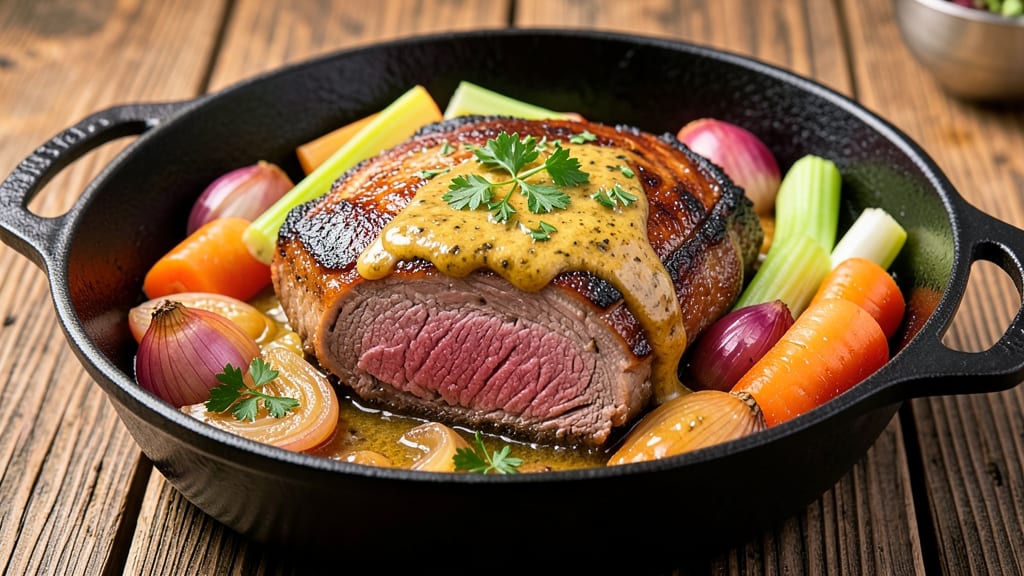
This Bavarian beef recipe brings the heart of German cuisine to your table with its deep, caramelized flavors and melt-in-your-mouth tenderness. The secret lies in slow-cooking beef until it practically falls apart, creating a rich, velvety sauce that's worth every minute of patience. This dish isn't just a meal—it's a celebration of tradition, where onions caramelize into golden sweetness and herbs infuse the beef with aromatic depth.
The process begins with browning the beef to develop a deep, meaty flavor, followed by caramelizing onions until they reach that perfect balance of sweetness and bitterness. Deglazing the pan captures all those precious browned bits, forming the foundation of the sauce.
As it simmers, the beef becomes fork-tender while absorbing the flavors of the broth, creating a dish that's both comforting and impressive.
What you'll end up with is a dish that's rich, deeply flavorful, and perfect for feeding a crowd. The beef is so tender it nearly dissolves on your tongue, while the sauce coats every bite with its buttery, aromatic goodness.
This is the kind of meal that makes weeknights feel special—warm, hearty, and full of tradition.
Serve it with fluffy dumplings or buttery mashed potatoes to soak up every last drop of that luxurious sauce. The combination is pure comfort food at its finest, bringing a taste of Bavaria to your dinner table. Let's get started on this classic dish that's been warming hearts for generations.
Ingredients for bavarian beef
Here's what transforms simple pantry staples into rich Bavarian beef perfection.
| Ingredient | Amount | Notes |
|---|---|---|
| Beef Chuck Roast 🥩 | 3 lb | Boneless, cut into 1-inch cubes |
| Yellow Onions 🧅 | 3 whole | Thinly sliced, about 6 cups total |
| Carrots 🥕 | 4 whole | Peeled, cut into 1-inch chunks |
| Celery Stalk 🌿 | 4 whole | Cut into 1-inch pieces |
| Garlic Cloves 🧄 | 6 cloves | Minced, about 2 tbsp total |
| All-Purpose Flour 🌾 | 2 tbsp | For thickening sauce |
| Beef Broth 💧 | 4 cups | Low-sodium preferred |
| Red Wine 🍷 | 1 cup | Dry red like Cabernet Sauvignon |
| Tomato Paste 🍅 | 2 tbsp | Smooth, not chunky |
| Fresh Thyme 🌿 | 1 tbsp | Leaves only, chopped |
| Fresh Parsley 🌿 | ¼ cup | Chopped, for garnish |
| Bay Leaves 🌿 | 2 whole | Remove before serving |
| Black Peppercorns 🌶️ | 1 tsp | Freshly cracked |
| Salt 🧂 | 1 ½ tsp | Kosher or sea salt |
| Unsalted Butter 🧈 | 2 tbsp | For finishing sauce |
The beef is everything here—chuck roast is non-negotiable for that melt-in-your-mouth texture. Costco or butcher sections usually carry it pre-cubed, which saves time, but if you're buying a whole roast, ask for it to be cut into 1-inch pieces. Look for good marbling—those little white flecks of fat are what make the sauce so velvety. For the aromatics, Trader Joe's has great pre-sliced onions and carrots if you're in a hurry, but fresh is always better. The celery adds depth, so don't skip it—just grab the stringy kind from the produce section.
No red wine? Beef broth with a splash of balsamic works in a pinch, though the acidity won't be quite the same. Fresh thyme is ideal, but dried at one-third the amount gets the job done. The tomato paste can be those little squeeze tubes from Trader Joe's—they're perfect for this recipe and last forever. If your carrots are small, just use baby carrots. For the flour, King Arthur all-purpose works perfectly, but any good-quality brand will do. The key is to whisk it into the sauce at the end—don't let it sit too long or it'll get grainy.
This sauce gets better as it sits, so make extra—it reheats beautifully. Store leftovers in the fridge for up to 5 days or freeze for 3 months. I like to portion it into individual containers so I can grab a serving for lunch without thawing the whole batch. The butter at the end? Use European-style if you can find it—it's higher in fat and makes the sauce even richer. And if you're serving with dumplings, make a double batch—they disappear fast.
Why You'll Love This Recipe
- One-Pot Magic: I swear, this is the kind of meal where you chop once and forget it. Toss the beef, onions, carrots, and celery into a Dutch oven with a splash of broth, and let it slow-cook while you handle the rest of your day. The aromatics soften into a fragrant base without any extra pots to wash.
- Deep, Rich Payoff: That chuck roast gets impossibly tender, practically falling apart with just a fork—no dry, chewy beef here. The onions caramelize right in the pot, adding a sweetness that makes every bite feel like a hug, especially when paired with the sharp, savory punch of fresh garlic.
- Leftovers That Shine: Between us, this recipe actually improves the next day. The flavors meld even deeper, and reheating it turns it into a hearty stew that’s perfect for sandwiches or a quick lunch. Honestly, I make a double batch just so I have leftovers—because nobody wants to cook twice in one week.
- Budget-Friendly Crowd-Pleaser: You’re getting a whole roast for less than takeout, and it feeds six without breaking the bank. The veggies (onions, carrots, celery) stretch the beef into a filling meal, while the garlic keeps it from feeling heavy. My college roommates and I lived on this—still do, honestly.
Step-by-step instructions for slow-cooked Bavarian beef
Here's how to transform tough chuck roast into melt-in-your-mouth perfection with deep flavor and rich sauce.
Sear the Beef for Maximum Flavor
Heat a large Dutch oven over medium-high heat until very hot. Add the 3 lb beef chuck roast in a single layer, working in batches if needed. Let it sear undisturbed for 3-4 minutes per side until deeply browned—this creates the flavor foundation. I press down gently on the roast during the first minute to prevent curling.
Once browned, remove the beef and set it aside. You'll notice the pan has beautiful browned bits—these are called fond, and they're packed with flavor. Don't scrape them out yet; we'll use them later to build the sauce. This searing step makes all the difference in the final richness of your Bavarian beef.
Build the Aromatic Base
In the same Dutch oven, add 2 tablespoons unsalted butter and let it melt completely. Add the 3 whole yellow onions, 4 whole carrots, and 4 whole celery stalks (all prepped as per ingredients list). Cook for 8-10 minutes until the vegetables begin to soften and the onions turn translucent.
Add the 6 cloves minced garlic, 2 tablespoons tomato paste, 1.5 teaspoons salt, and 1 teaspoon freshly cracked black peppercorns. Stir everything together and cook for another 2 minutes until fragrant. This aromatic base forms the flavor backbone of your dish—don't rush this step.
Deglaze and Add Liquids
Pour in the 1 cup red wine and scrape up all those browned bits from the bottom of the pan. Let it simmer for 3-4 minutes until the wine reduces by half and the alcohol smell disappears. This deglazing step captures all that seared flavor that would otherwise be lost.
Add the 4 cups beef broth, 2 whole bay leaves, and 1 tablespoon chopped fresh thyme. Bring the mixture to a gentle simmer, then return the seared beef to the pot. The liquid should come about halfway up the sides of the beef—this ensures proper cooking without steaming.
Slow Cook to Tender Perfection
Cover the Dutch oven and transfer it to a 325°F oven. Cook for 2.5-3 hours until the beef is fork-tender and easily pulls apart. I check for doneness by inserting a fork—it should slide in easily with minimal resistance. The sauce should have thickened slightly but still coat the back of a spoon.
If the sauce reduces too much before the beef is tender, add ¼ cup water at a time to maintain proper moisture. The key here is patience—rushing leads to tough meat. The slow cooking process breaks down the connective tissue, transforming tough chuck roast into melt-in-your-mouth bites.
Finish with Flour and Butter
Once the beef is tender, remove it from the pot and place it on a serving platter. Strain the cooking liquid through a fine-mesh sieve into a clean saucepan to remove any vegetable pieces. Return the strained liquid to the Dutch oven and bring to a gentle simmer over medium heat.
Whisk in the 2 tablespoons all-purpose flour to thicken the sauce, then stir in the 2 tablespoons unsalted butter until melted and incorporated. Simmer for 2-3 minutes until the sauce reaches your desired consistency—it should coat the back of a spoon but still be pourable. Taste and adjust seasoning if needed, then spoon the sauce over the beef.
Rest and Serve
Let the Bavarian beef rest for 10 minutes before serving. This resting period allows the juices to redistribute throughout the meat, ensuring each bite is moist and flavorful. Garnish with ¼ cup chopped fresh parsley just before serving for a pop of color and freshness.
Serve the beef with the rich sauce spooned over the top, alongside traditional Bavarian sides like dumplings or mashed potatoes. The result should be melt-in-your-mouth beef with a velvety sauce that clings perfectly to each tender bite—worth every minute of the slow cooking process.
Pro Tips For Making Bavarian Beef
- Brown the Roast Long: Don’t just sear—get that beef chuck roast deep golden, even if it takes 10 minutes. I used to rush this, and the gravy always tasted flat. High heat, no crowding the pan, and let those crusty bits form—they’re the flavor base.
- Dice Onions Like Dice: Small, even dice (¼-inch) for onions, carrots, and celery—no big chunks. Big pieces stay tough and watery. I learned this the hard way when my first batch had sad, mushy veggies. Uniform size means even cooking and a smoother sauce.
- Skip the Lid Early: Let the pot bubble uncovered for the first 20 minutes to burn off alcohol and deepen the flavor. I was skeptical until I tried it—now I never cover too soon. The aroma alone tells you it’s working.
- Deglaze with Beer, Then Stock: After browning, splash in half the beer first, scrape every bit of fond, then add the rest of the beer and stock. The fond (those browned bits) holds all the meaty flavor. I skip this shortcut, and the gravy always tastes thin and weak.
Storing and reheating this recipe
Fridge Storage Tips
Let your Bavarian beef cool completely before transferring to an airtight container—I use glass Pyrex with snap-on lids for best results. Store it in the refrigerator for up to 5 days, but I find the flavors actually deepen overnight as the spices meld together.
The sauce will thicken slightly, so add a splash of beef broth when reheating if needed. 🥣
Freezer Prep
For longer storage, portion the beef and sauce into quart-sized freezer bags, leaving 1 inch of headspace for expansion. Freeze for up to 3 months—the sauce maintains its rich texture when thawed properly.
I like to freeze individual servings so I can grab just what I need without thawing the whole batch. Label with the date to track freshness!
Stovetop Reheating
My preferred method is stovetop reheating—it preserves the sauce's velvety texture. Transfer the beef and sauce to a heavy-bottomed pot and heat over medium-low heat for 10-15 minutes, stirring occasionally.
Add 2-3 tablespoons of beef broth if the sauce looks too thick. The gentle heat prevents the sauce from breaking or separating. 🔥
Microwave Method
For quick reheating, cover the beef and sauce with a microwave-safe lid or damp paper towel. Heat on 50% power in 2-minute intervals, stirring between each, until reaching 165°F internal temperature.
This prevents hot spots and keeps the sauce from curdling. I find this works best for single servings.
Dumpling Pairing
If serving with Bavarian dumplings, reheat them separately in a steamer basket over simmering water for 5-7 minutes—they should be warm but still soft. The contrast of warm dumplings with the rich beef creates the perfect balance.
For extra decadence, spoon a little extra sauce over the dumplings before serving. 💛
Sauce Refresh
If the sauce looks dull after reheating, stir in 1 tablespoon butter and a pinch of salt to restore richness. For extra depth, add a splash of red wine or a few drops of Worcestershire sauce—both work wonders for reviving flavors.
The beef will stay tender and juicy as long as you don't overheat it. 💡
Nutrition facts
Frequently asked questions
Can I substitute chuck roast with another cut of beef?
While chuck roast is ideal for its marbling and flavor, you can use brisket or short ribs as substitutes. For brisket, cut it into 1-inch cubes and increase cooking time to 3-4 hours at 325°F. Short ribs will cook faster (2 hours) but may be more fatty—trim excess fat before cooking. Avoid lean cuts like sirloin, as they won't become tender enough.
Why is my Bavarian beef sauce too thin?
The sauce may be thin if you didn't thicken it properly or if the beef released too much liquid. To fix it, mix 1 tablespoon cornstarch with 2 tablespoons cold water and whisk into the simmering sauce. Cook for 2-3 minutes until thickened. If the sauce is still too thin, simmer uncovered for 5-10 minutes to reduce it naturally. Always thicken the sauce after removing the beef from the pot.
Can I make this recipe in a slow cooker?
Brown the beef and build the aromatic base as directed, then transfer everything to a 6-quart slow cooker. Add the remaining ingredients and cook on Low for 7-8 hours or High for 4-5 hours. The slow cooker maintains gentle heat, ensuring tender beef without drying it out. Just thicken the sauce on the stovetop at the end, as slow cookers don't provide enough heat for flour to fully activate.
What's the best way to reheat leftovers without drying out the beef?
Reheat leftovers on the stovetop for the best results. Place the beef and sauce in a heavy-bottomed pot over medium-low heat and warm gently for 10-15 minutes, stirring occasionally. Add 2-3 tablespoons of beef broth if the sauce thickens too much. Avoid microwaving for more than 2 minutes at a time, as it can make the beef rubbery. Always reheat to an internal temperature of 165°F.
Is Bavarian beef the same as beef goulash?
While they share similarities, Bavarian beef is typically a richer, slower-cooked stew with a deeper sauce, often including red wine and butter. Beef goulash, on the other hand, traditionally features paprika and sometimes sour cream. Bavarian beef leans more toward a hearty, savory profile with caramelized onions and aromatic herbs, while goulash has a slightly spicier, tangier character. Both are delicious but serve different flavor profiles!