
Main Courses
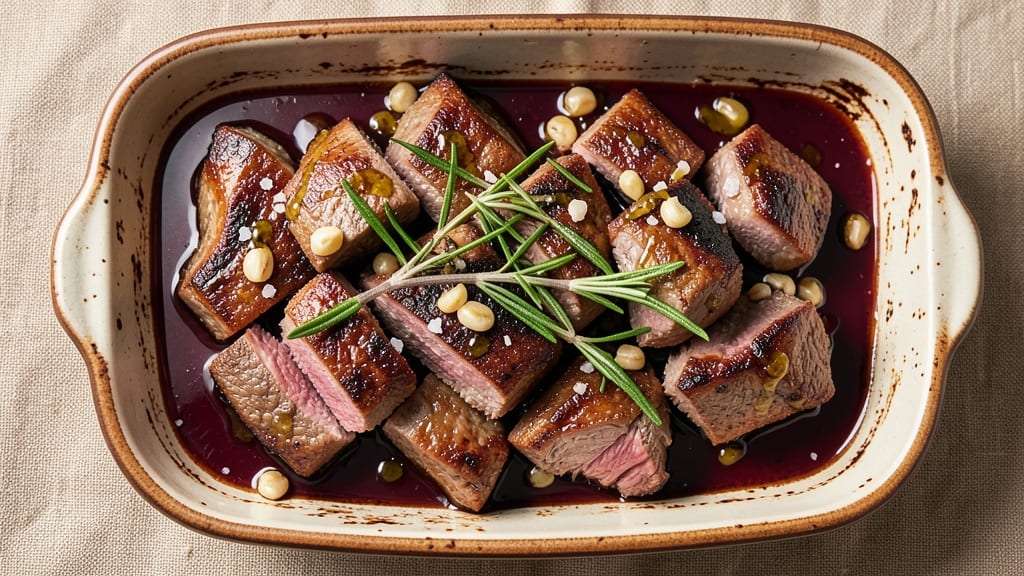
This baked beef recipe delivers the perfect balance of crispy crust and juicy pink centers—a restaurant-worthy technique simplified for home cooks. The secret lies in a high-heat sear followed by precise oven time, locking in moisture while creating that coveted caramelized exterior.
I developed this method after years of experimenting with different cuts and temperatures, ensuring every bite is tender yet flavorful.
The process starts with a 30-minute marinade using garlic, rosemary, and a touch of balsamic to deepen the beef's natural richness. After a quick sear in a cast-iron skillet, the beef finishes in the oven at 400°F for 12-15 minutes, depending on thickness.
This foolproof method guarantees a crispy exterior without drying out the interior—no guesswork, just consistent results.
What you’ll end up with is a juicy, pink center surrounded by a golden, crackling crust, ready to be sliced against the grain for maximum tenderness.
The aroma alone will have everyone gathering around the table, and the flavor—savory, herbaceous, with a hint of sweetness—makes it a showstopper for dinner parties or family meals.
Pair with a bold red wine like Cabernet Sauvignon or a crisp white like Sauvignon Blanc, and serve alongside roasted potatoes or a fresh green salad. The restaurant-quality finish comes from attention to detail, not complexity—perfect for cooks who want impressive results with minimal effort.
Ingredients for baked beef
Twelve ingredients, restaurant-quality results—this beef delivers crispy crusts with juicy pink hearts inside.
| Ingredient | Amount | Notes |
|---|---|---|
| Beef Chuck Roast 🥩 | 2 lb | Trimmed of excess fat, cut into 1.5-inch cubes |
| Garlic Cloves 🧄 | 6 cloves | Freshly minced, for marinade |
| Fresh Rosemary 🌿 | ¼ cup | Chopped, stems removed |
| Balsamic Vinegar 🍷 | 2 tbsp | High-quality aged variety |
| Olive Oil 🫒 | ½ cup | Extra-virgin, for searing |
| Diamond Crystal Kosher Salt 🧂 | 1 ½ tsp | For seasoning and marinade |
| Freshly Ground Black Pepper 🌶️ | 1 tsp | Coarsely ground |
| All-Purpose Flour 🌾 | ½ cup | For dredging, fine texture |
| Unsalted Butter 🧈 | 2 tbsp | Cold, for crust formation |
| Yellow Onion 🧅 | 1 whole | Thinly sliced, for garnish |
| Fresh Thyme Leaves 🌿 | ¼ cup | Chopped, for garnish |
| Red Wine 🍷 | ¼ cup | Bold dry variety, for deglazing |
| Beef Broth 💧 | ½ cup | Low-sodium, for pan sauce |
The beef cut is non-negotiable—chuck roast delivers that perfect marbling for juiciness while holding its shape during searing. Costco or Whole Foods carry excellent pre-cubed options, but if buying whole, ask your butcher to trim excess fat and cut into even 1.5-inch pieces for consistent cooking. Fresh rosemary and garlic should be vibrant—no wilted stems—and the balsamic should be aged at least 25 years for that rich depth. For the olive oil, California-based brands like Corto or Lucini offer the perfect balance of peppery notes without overpowering the beef's natural flavor.
No fresh rosemary? Dried works at one-third the amount, though it lacks the same aromatic punch. Substituting balsamic with red wine vinegar plus 1 tsp sugar mimics the depth, though purists will notice the difference. The flour for dredging can be swapped for panko crumbs if you prefer extra crunch, but all-purpose creates a lighter, more delicate crust. If you're avoiding wine entirely, beef broth plus 1 tbsp soy sauce makes an excellent deglazing liquid—just increase the salt in the final sauce. For the butter, European-style brands like Plugrá melt more cleanly than American varieties, creating a smoother crust.
Marinate the beef for no more than 30 minutes to avoid over-tenderizing the surface—longer marinades work better for leaner cuts. Store any unused beef in the fridge for 3-4 days or freeze for up to 3 months, wrapped tightly in parchment and foil. The marinade components keep separately in the fridge for 5 days, though fresh garlic and herbs are always preferable. For make-ahead convenience, pre-dredge the beef cubes and refrigerate them on a wire rack—this ensures maximum crispiness when searing later. Leftovers reheat beautifully in a 350°F oven for 10-15 minutes, covered loosely with foil.
Why You'll Love This Recipe
- One-Pan Magic: I swear by this for lazy nights—the roast goes straight from fridge to oven, no chopping, no fuss. Just a quick rub of olive oil, garlic, and rosemary, then let the oven do the work while I pour wine and pretend I’m a chef.
- Rosemary-Garlic Obsession: That fresh rosemary and minced garlic? It turns tough chuck into melt-in-your-mouth perfection. The balsamic glaze at the end? Chef’s kiss—sticky, tangy, and impossible to resist.
- Leftovers That Beg for More: Between us, this roast tastes even better the next day—shredded into sandwiches, tossed in pasta, or reheated for breakfast tacos. Honestly, I’ve eaten it cold straight from the fridge, and it still wins.
- Budget-Friendly Feast: A chuck roast stretches for a crowd without breaking the bank, and the ingredients? Basic pantry stuff. I’ve served this to 10 people for under $30, and no one ever guessed it was “budget-friendly.”
Step-by-step instructions for crispy crust beef with juicy pink centers
Master this technique for a perfect balance of golden-brown crust and tender pink beef every time.
Prepare the Beef and Marinade for Maximum Flavor
Pat the 2 lb beef chuck roast dry with paper towels—this is critical for achieving that crispy crust. Using a sharp knife, cut the roast into 1.5-inch cubes, ensuring each piece is roughly the same size for even cooking. In a large bowl, combine the 6 cloves minced garlic, 0.25 cup chopped fresh rosemary, 2 tbsp balsamic vinegar, 1.5 tsp Diamond Crystal kosher salt, and 1 tsp freshly ground black pepper. Add the beef cubes and toss gently to coat evenly. Let the mixture marinate at room temperature for 30 minutes while you prepare the next components.
This marinade does double duty—infusing the beef with aromatic flavors while the acidity of the balsamic vinegar helps tenderize the meat. The rosemary and garlic will create layers of complexity that shine through the crispy crust. Don't skip this step; proper marinating ensures the beef develops deep flavor rather than just absorbing salt.
Create the Crispy Crust Coating
In a shallow dish, combine the 0.5 cup all-purpose flour with an additional 0.5 tsp kosher salt and 0.5 tsp black pepper. Remove the beef from the marinade (reserve the marinade for later) and pat it dry again with paper towels. This drying step is essential—it prevents the flour from absorbing moisture and turning to paste. Working in batches, dredge each beef cube in the flour mixture, pressing gently to adhere the coating evenly. Place the coated beef on a wire rack set over a baking sheet to allow air circulation on all sides.
Next, melt the 2 tbsp unsalted butter in a small saucepan over low heat until just liquid. Remove from heat and let it cool slightly. Brush this butter generously over the flour-coated beef cubes. The butter will help create a golden-brown crust while adding richness. Let the beef rest for 10 minutes while you preheat the oven to 425°F, allowing the butter to set slightly and the flour coating to adhere better.
Bake for Crispy Crust and Juicy Centers
Transfer the wire rack with beef to the preheated oven and bake for 25 minutes, rotating the pan halfway through for even browning. You're aiming for a deep golden-brown crust that's crisp to the touch—this indicates the Maillard reaction has occurred, creating those complex, savory flavors. After 25 minutes, remove the beef from the oven and let it rest for 5 minutes while you prepare the pan sauce.
Here's the key to perfect doneness: the internal temperature should reach 130-135°F for medium-rare beef with juicy pink centers. If you have a meat thermometer, use it to check the thickest piece. If the beef hasn't reached this temperature, return it to the oven for 5-10 minute increments until it does. The crust will stay crisp while the centers remain tender when cooked to this temperature range.
Build the Pan Sauce for Rich Flavor
In a large oven-safe skillet, heat 0.5 cup olive oil over medium-high heat until shimmering. Add the reserved beef marinade and simmer for 2 minutes to concentrate the flavors. Pour in the 0.25 cup red wine and scrape up any browned bits from the bottom of the pan—this is where all the flavor hides. Let the wine reduce by half, about 3-4 minutes. Add the 0.5 cup beef broth and bring to a gentle simmer.
Return the beef to the skillet, spooning the sauce over the top. Cover the skillet and transfer it to the oven, baking for an additional 10-15 minutes until the sauce has thickened slightly and the beef has absorbed all the flavors. The residual heat will finish cooking the beef while infusing it with the rich pan sauce. Remove from the oven and let the beef rest for 5 minutes before serving.
Garnish and Serve with Confidence
Transfer the beef to a serving platter and garnish with the thinly sliced yellow onion and 0.25 cup chopped fresh thyme leaves. The onions add a touch of sharpness that cuts through the richness, while the thyme enhances the herbal notes from the marinade. Serve immediately with the pan sauce spooned over the top, ensuring each piece is generously coated.
Each bite should deliver that perfect contrast: a crisp, golden-brown crust that gives way to tender, juicy pink centers infused with rosemary and garlic. The pan sauce should cling to the beef, adding another layer of depth to every forkful. This technique ensures you'll achieve restaurant-quality results at home, every single time.
Pro Tips For Making Baked Beef
- Sear the Roast First: Chuck roast needs a head start—hit it with high heat in olive oil for 3-4 minutes per side before baking. I learned this the hard way: skipping the sear means bland, gray meat no matter how long you bake it. The crust locks in flavor and keeps the roast from drying out later.
- Slice Garlic Thinly: Don’t smash those cloves—slice them paper-thin for even cooking and maximum flavor. Thick slices burn or stay raw, and you’ll end up with bitter bits instead of sweet, mellow garlic. A sharp knife and steady hand make this easy (yes, even if you’re impatient like me).
- Deglaze with Balsamic Early: After searing, pour in 2 tablespoons of balsamic vinegar right away—it caramelizes into the pan while the roast bakes. I used to add it later, and the sauce was always thin and forgettable. This gives you a rich, sticky glaze without extra effort.
- Rest Before Slicing: Give the roast a solid 10 minutes under foil before cutting—this keeps it juicy and makes slicing cleaner. I know, I know, but trust the process: skipping this step turns a tender roast into a dry, shredded mess. (Your future self will thank you.)
Regional styles of this dish
Classic Texas-Style
In Texas, beef isn't just a dish—it's a way of life, and their baked beef takes center stage. Here, you'll find a bold, smoky twist using chuck roast that's slow-cooked with chopped onions, garlic, and a splash of bourbon instead of balsamic.
The key is wrapping the beef in butcher paper after the initial sear, then baking at 275°F for 3-4 hours until fork-tender. Serve with white bread and pickled jalapeños for that true Lone Star vibe. 🌶️
For an authentic Texas touch, finish the dish with a smoked salt rim on your serving platter. I like using Traeger's smoked salt—it adds a subtle campfire aroma that pairs perfectly with the rich beef.
The secret? Let the beef rest for at least 30 minutes before slicing to keep those juices locked in.
Italian-Inspired Bistecca alla Fiorentina
Italy takes baked beef to elegant heights with their Bistecca alla Fiorentina, traditionally made with T-bone or porterhouse steaks rather than roast. The marinade here swaps rosemary for fresh sage and thyme, plus a generous drizzle of olive oil and red wine reduction.
After a quick sear in a cast-iron skillet, the beef finishes in the oven at 400°F for 10-12 minutes for medium-rare perfection. 🍷
For a true Florentine experience, serve the beef with creamy mashed potatoes and a bold Chianti wine. The Italians swear by no sauce—just the beef, sliced thick, with a sprinkle of coarse sea salt and freshly cracked black pepper.
If you want to add a sauce, try a simple reduction of the beef's drippings with a splash of white wine vinegar for brightness.
French Bouillon de Bœuf
France elevates baked beef into a luxurious bouillon, where the beef becomes the star of a rich, aromatic broth. Start with beef chuck roast seared in duck fat (or butter for a lighter version), then simmered in a red wine and herb-infused broth for 3-4 hours.
The French technique involves browning the beef deeply before adding carrots, celery, leeks, and a bouquet garni—no flour crust here, just pure, unadulterated beef flavor. 🥖
Serve the beef thickly sliced over buttery egg noodles or crusty baguette, with the reduced broth ladled generously on top. For an extra touch, garnish with chopped parsley and a drizzle of truffle oil.
The French version is all about simplicity and depth—let the beef's natural richness shine through the slow-cooked broth.
Caribbean Jerk-Style Baked Beef
Bring the bold flavors of Jamaica to your baked beef with a jerk marinade that packs heat and sweetness. Combine minced scallions, thyme, allspice, Scotch bonnet peppers, and brown sugar with the beef, then bake at 375°F for 20-25 minutes until the crust is deeply caramelized.
The jerk spices create a sticky, slightly sweet glaze that contrasts beautifully with the crispy exterior. 🌶️
Serve this version with grilled plantains and coconut rice to balance the heat. The jerk marinade works best if made a day ahead—the flavors meld together beautifully. For an extra smoky touch, finish the beef under a broiler for 2-3 minutes before serving to intensify the caramelization.
German Rinderrouladen
Germany takes baked beef in a rolled, stuffed direction with Rinderrouladen, where thin slices of beef are stuffed with mustard, bacon, and pickles, then baked until tender.
The German approach uses beef top round rather than chuck, seared in a pan with onions and paprika before baking at 325°F for 2-2.5 hours. The result is a juicy, flavor-packed beef roll that's perfect for hearty meals. 🥓
Serve with red cabbage and potato dumplings for a classic German spread. The mustard and bacon in the filling add a tangy, savory depth that pairs perfectly with the crispy crust. For a shortcut, use pre-sliced beef and store-bought mustard—just don't skimp on the pickles for that signature tang.
Japanese Gyudon-Style Baked Beef
Japan transforms baked beef into Gyudon, a sweet-savory dish where thinly sliced beef is marinated in soy sauce, mirin, and sake, then baked until tender and slightly caramelized.
The Japanese technique often includes a touch of sugar to balance the umami, and the beef is served over steamed rice with onions for a comforting bowl. 🍚
For a baked version, slice the beef thinly against the grain and marinate for at least 1 hour. Bake at 350°F for 15-20 minutes until the edges are lightly crispy.
Top with sliced onions and a drizzle of the marinade reduction for that classic Gyudon flavor. Serve with pickled ginger to cut through the richness.
Nutrition facts
Frequently asked questions
Can I use a different cut of beef for this recipe?
This recipe works best with chuck roast because of its natural fat marbling, which keeps the meat juicy during baking. However, you can substitute with brisket or short ribs—just increase baking time by 5-10 minutes since these cuts are denser. Avoid lean cuts like sirloin, as they tend to dry out when baked.
How do I know when the beef is done without a meat thermometer?
For medium-rare with juicy pink centers, the beef should feel slightly firm when pressed but still yield to gentle pressure. Cut into a piece—it should show a pink center with a golden-brown crust. If it's too firm, return it to the oven for 5 more minutes. Overcooking is the biggest mistake!
Can I make this recipe ahead of time?
Marinate the beef overnight for deeper flavor, but don't dredge it in flour until just before baking. Cooked beef keeps well in the fridge for 3-4 days in an airtight container. Reheat gently in a 350°F oven for 10-15 minutes with a splash of beef broth to restore moisture. The crust may soften slightly, but the beef stays juicy.
What if my crust isn't crispy?
Crispy crusts happen when beef is pat dry and dredged properly. If yours is soft, try these fixes: Broil for 2-3 minutes at the end to crisp the surface, or brush with melted butter and return to the oven for 5 more minutes. Another trick? Use cornstarch instead of flour for dredging—it creates extra crunch!
What are the best sides for this dish?
This rich beef pairs perfectly with starchy sides to balance its bold flavors. Try garlic mashed potatoes, roasted root vegetables, or crusty bread to soak up the pan sauce. For a lighter option, a fresh arugula salad with lemon vinaigrette cuts through the richness beautifully.