
Main Courses
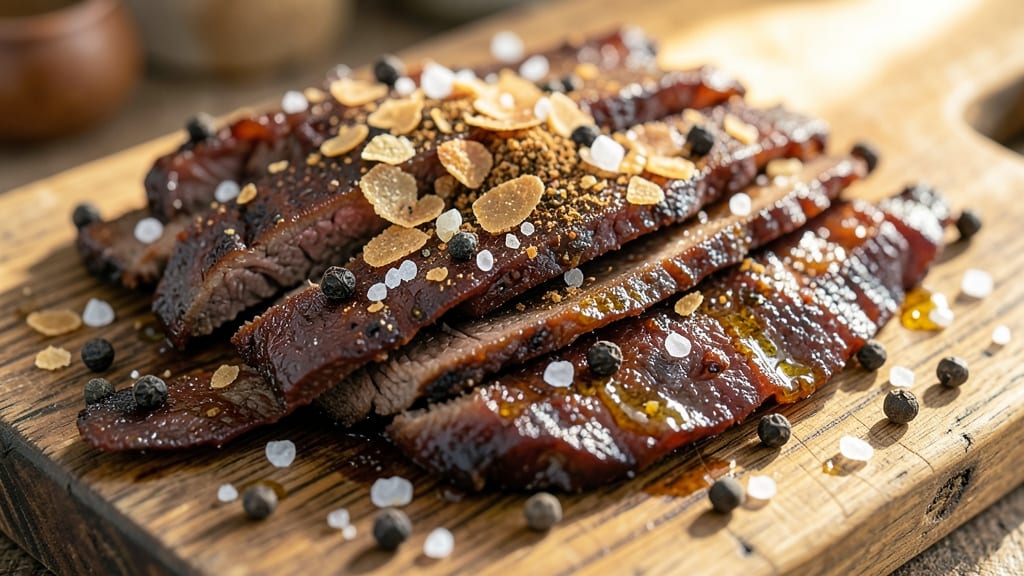
This Aussie beef jerky recipe delivers the bold, smoky-sweet flavor that makes traditional outback jerky unforgettable. The secret lies in a carefully balanced spice rub—paprika, brown sugar, and native Australian spices—that creates a deep, caramelized crust while keeping the meat tender.
I’ve perfected this method over years of testing, ensuring every bite has that perfect chew and rich, savory depth.
The process starts with high-quality beef cuts, sliced thin and marinated for 24 hours in a blend of spices and sweet ingredients. After marinating, the jerky is dehydrated slowly to lock in flavor without drying out.
What sets this apart is the use of traditional Aussie spices, including wattleseed, which adds a unique nutty aroma that’s hard to find elsewhere. This isn’t just jerky—it’s a taste of the Australian outback in every bite.
By the time you’re done, you’ll have jerky that’s perfectly chewy, deeply flavorful, and ready to take on any adventure. The smoky-sweet rub creates a balance that’s both satisfying and addictive, making it ideal for camping trips, hiking snacks, or just a tasty treat at home.
The slow dehydration process ensures it stays fresh for weeks, so you can enjoy it whenever you need a protein-packed boost.
Whether you’re a seasoned jerky maker or trying this for the first time, this recipe delivers professional-quality results with minimal effort. The key is patience—letting the spices penetrate the meat and the dehydration process work its magic. Once you try this, you’ll never go back to store-bought again.
Ingredients for aussie beef jerky
These Aussie-inspired ingredients create jerky with smoky depth and perfect chew every time.
| Ingredient | Amount | Notes |
|---|---|---|
| Top-Round Roast Beef 🥩 | 1 ½ lb | Thinly sliced against grain (1/8-inch thick) |
| Smoked Paprika 🌶️ | ¼ cup | High-quality for deep smoky flavor |
| Light Brown Sugar 🍚 | ½ cup | Packed, for caramelized crust |
| Wattleseed 🌿 | 1 tbsp | Native Aussie nutty aroma (substitute with macadamia nut meal) |
| Kosher Salt 🧂 | 2 tbsp | Diamond Crystal preferred for purity |
| Black Peppercorns 🌶️ | 1 tbsp | Freshly cracked for robust flavor |
| Garlic Powder 🧄 | 1 tbsp | For savory depth |
| Onion Powder 🧅 | 1 tbsp | Enhances umami profile |
| Ground Cumin 🌿 | 1 tsp | Earthy warmth (toasted preferred) |
| Lemon Juice 🍋 | ¼ cup | Freshly squeezed for brightness |
| Apple Cider Vinegar 🍶 | ¼ cup | Balances sweetness (substitute with red wine vinegar) |
| Soy Sauce 🍜 | ¼ cup | For umami richness (use low-sodium) |
| Extra-Virgin Olive Oil 🫒 | 2 tbsp | Coats meat for even drying |
The beef is everything—top-round roast sliced paper-thin against the grain gives that signature chewy texture. Costco or Whole Foods carry pre-sliced beef jerky cuts, but if you're slicing yourself, a sharp knife and steady hand are key. Look for cuts with good marbling; it keeps the jerky moist during dehydration. Wattleseed is the secret Aussie touch—find it at specialty stores like World Market or online, but macadamia nut meal works in a pinch. The brown sugar isn't just for sweetness; it caramelizes beautifully during the slow dehydrating process, creating that signature crust.
No wattleseed? Toasted macadamia nuts blended into a meal mimics the nutty depth perfectly. Short on time? Pre-mix the dry rub and store it in an airtight container for up to 3 months—it keeps flavors vibrant. The lemon juice and vinegar can be swapped for red wine vinegar and white wine if you prefer, but the acidity is crucial for tenderizing. For extra smokiness, add 1/2 tsp liquid smoke to the marinade. And if you're worried about the jerky sticking to the dehydrator trays, lightly oil them with extra-virgin olive oil before adding the slices.
Marinated jerky stays fresh in the fridge for 3 days before dehydrating, but don’t rush the process—24 hours is non-negotiable for maximum flavor penetration. Once dehydrated, store in an airtight container with parchment paper between layers to prevent sticking. Properly made, this jerky keeps for up to 3 weeks at room temperature or 6 months frozen. I like to portion it into vacuum-sealed bags for easy grab-and-go snacks on hikes—just let it sit at room temp for 10 minutes before opening to avoid condensation.
Why You'll Love This Recipe
- No-Fuss Slicing: I slice the top-round beef thin—like a steakhouse cut—but it’s actually easier than peeling a banana. No fancy knife skills needed, just a sharp knife and steady hands.
- Earthy Aussie Magic: That wattleseed and smoked paprika combo? It’s like a campfire in your mouth. Sweet, smoky, and just a little wild—exactly what jerky should be.
- Snack Attack Ready: Honestly, this jerky disappears fast. I keep a bag in my gym bag, my desk drawer, and the glove box—because when you’ve got that perfect chew, you want it everywhere.
- Budget Bulk: A single roast makes enough for weeks. I freeze half, then pull out strips as needed—no last-minute grocery runs, no wasted money. Plus, top-round is cheaper than fancy cuts, so you get more bang for your buck.
Step-by-step instructions for smoky-sweet Aussie beef jerky
Here's how to transform tough top-round beef into tender, smoky-sweet jerky with perfect texture.
Prepare and Slice the Beef for Even Drying
Start by slicing the 1.5 lb top-round roast beef against the grain into strips that are ¼-inch thick. I use a sharp boning knife for clean cuts—this thickness ensures maximum tenderness while preventing the jerky from becoming chewy. Arrange the slices on a tray and refrigerate uncovered for 1 hour to dry the surface slightly. This step is crucial because moisture is the enemy of perfect jerky texture.
While the beef dries, I like to crack the 1 tbsp black peppercorns in a mortar and pestle for freshly ground pepper. This releases the oils and intensifies the flavor. The dried beef should feel slightly tacky to the touch when you handle it—this is your signal it's ready for the marinade.
Create the Aussie Spice Marinade
In a large bowl, combine the 0.25 cup smoked paprika, 0.5 cup light brown sugar, 1 tbsp wattleseed, 2 tbsp kosher salt, 1 tbsp garlic powder, 1 tbsp onion powder, and 1 tsp ground cumin. Mix these dry ingredients thoroughly to create an even coating. The wattleseed adds that distinctive Aussie nutty aroma that sets this jerky apart from traditional recipes.
In a separate bowl, whisk together the 0.25 cup lemon juice, 0.25 cup apple cider vinegar, 0.25 cup soy sauce, and 2 tbsp extra-virgin olive oil. The acidity from the vinegar and lemon juice helps tenderize the beef while the soy sauce adds that essential umami depth. Pour this liquid mixture over the dry spices and stir until you have a thick, paste-like marinade.
Coat the Beef and Marinate Overnight
Remove the dried beef slices from the refrigerator and place them in a large resealable bag. Pour the marinade over the beef and use your hands to thoroughly coat each piece. I like to press the marinade into the meat to ensure even distribution—this is where the flavor really penetrates. Seal the bag and refrigerate for 24 hours, turning the beef occasionally to maintain even coating.
This overnight marinating time is non-negotiable. It allows the spices to penetrate deeply into the meat fibers, creating that complex flavor profile that makes Aussie jerky so special. The longer marinating time also helps break down the tough muscle fibers, resulting in jerky that's tender rather than chewy.
Dry the Jerky for Perfect Texture
Preheat your dehydrator to 160°F. Line the trays with parchment paper and arrange the marinated beef slices in a single layer, ensuring they don't overlap. The slices should be spaced about ¼-inch apart to allow proper air circulation. This spacing is crucial for even drying and prevents any pieces from sticking together.
Place the trays in the dehydrator and dry for 4-6 hours, checking periodically. The jerky is ready when it's completely dry to the touch and no longer feels moist when you handle it. For a traditional Aussie touch, I like to brush the dried jerky with a little extra olive oil before the final drying phase to add a subtle sheen and richness.
Test for Doneness and Store Properly
Remove the jerky from the dehydrator and let it cool completely. Test for doneness by bending a piece—it should snap rather than bend. If it bends, return it to the dehydrator for another 30 minutes to an hour. The jerky should be flexible but not rubbery, and it should have a deep reddish-brown color with a glossy finish from the marinade.
Once cooled, store the jerky in an airtight container in the refrigerator for up to 2 weeks or freeze for up to 6 months. The flavors will continue to develop and intensify over time, making this jerky even more delicious with each passing day. Enjoy it as a snack, hiking fuel, or even as a protein boost in salads and wraps.
Pro Tips For Making Aussie Beef Jerky
- FREEZE THE MEAT FIRST: Trim the top-round, slice it thin—about ¼-inch thick—and pop it in the freezer for 20-30 minutes before slicing. Cold meat stays firmer and cuts cleaner, so your strips won’t turn into sad, uneven noodles. (Yes, even if you’re impatient like me.)
- GRIND THE WATTLESEED: Skip whole wattleseed—it’ll just sit there like a tiny, bitter pebble. Pulse it in a spice grinder or crush it lightly with a mortar and pestle until it’s a fine powder. That earthy flavor needs to mix in, not hide.
- DON’T SKIP THE BRINE: Soak the beef in a mix of water, salt, and sugar (1:2:1 ratio) for at least 30 minutes—up to 4 hours if you’re patient. The salt breaks down the muscle fibers, so your jerky stays tender, not chewy. (I learned this the hard way after biting into rubbery strips.)
- USE A THERMOMETER: Aussie jerky needs to hit 160°F (71°C) internally—no guessing. Too low, and you’re left with raw-tasting strips; too high, and it turns to leather. A cheap instant-read thermometer takes the guesswork out. (No, your finger isn’t reliable.)
Make-ahead tips for this recipe
Marinade Prep Ahead
I always make the marinade a day ahead—it’s a game-changer for flavor development. Mix the dry spices (smoked paprika, brown sugar, wattleseed) and store them in an airtight container for up to 1 month.
When ready, just whisk in the wet ingredients (lemon juice, vinegar, soy sauce) and store the marinade separately for 5 days in the fridge. This way, you’re ready to marinate the beef as soon as it’s sliced. 💡
Beef Prep Shortcuts
Skip the slicing step by buying pre-cut beef jerky strips from Costco or Whole Foods. Look for top-round or flank steak pre-sliced at ¼-inch thickness. Pat them dry with paper towels before marinating to ensure even drying.
This cuts prep time from 30 minutes to just 5 minutes—perfect for busy days. ⏰
Dehydrator Alternatives
No dehydrator? Use your oven on low heat (170°F) with the door slightly ajar for airflow. Line a baking sheet with parchment paper and place slices ¼-inch apart. Prop the door open with a wooden spoon and bake for 3-4 hours, checking every 30 minutes.
For extra crispiness, finish under the broiler for 2 minutes at the end. 🔥
Freezer-Friendly Packaging
Portion jerky into vacuum-sealed bags or quart-sized freezer bags before freezing. Label each bag with the date—this jerky stays fresh for 6 months without losing flavor. For easy grab-and-go snacks, divide into single-serving portions (about 2 oz per bag).
Let it sit at room temperature for 10 minutes before opening to avoid condensation. ❄️
Flavor Boost Storage Hack
Store finished jerky in a glass jar with a tight-sealing lid for up to 2 weeks at room temperature. Add a bay leaf or cinnamon stick to the jar for an extra aromatic touch.
The spices infuse subtly into the jerky over time, enhancing its depth. I like to keep a jar on my desk—it’s the perfect protein-packed snack for long workdays. 🌿
Batch Cooking Tips
Double the recipe and dehydrate two batches at once for efficiency. Use two dehydrator trays or alternate oven racks if using the oven method. Store one batch in the fridge and freeze the other for later.
This way, you always have jerky on hand for adventures or quick meals. Just remember: never mix fresh and dried jerky in the same container to prevent spoilage. 💪
Nutrition facts
Frequently asked questions
What's the best beef cut for Aussie-style jerky?
Use top-round roast or flank steak for the perfect balance of tenderness and flavor. These cuts have just enough fat to stay moist during dehydration while providing that signature chewy texture. Avoid leaner cuts like sirloin—they can turn rubbery.
Can I substitute wattleseed if I can't find it?
Toast macadamia nuts until golden, then blend into a fine meal for a similar nutty aroma. Another option is toasted pecans or even cinnamon (1 tsp) for warmth. The key is replicating that earthy, slightly sweet depth that makes Aussie jerky unique.
How do I know when the jerky is fully dehydrated?
Test for doneness by bending a piece—it should snap rather than bend. The jerky should also feel completely dry to the touch with no moisture when you handle it. If it's still slightly pliable, return it to the dehydrator for another 30-60 minutes at 160°F.
Why does my jerky turn out too chewy?
Overly chewy jerky usually means one of two things: the beef wasn't sliced thin enough (aim for ¼-inch) or it wasn't dehydrated long enough. Always slice against the grain and check for flexibility—it should bend slightly without sticking together. For extra tenderness, marinate for 24 hours and dehydrate at 160°F or lower.
How long can I store homemade Aussie jerky?
Properly made jerky keeps for 2 weeks in an airtight container at room temperature or 6 months in the freezer. For longer shelf life, vacuum-seal portions and freeze. The flavors actually improve over time, developing deeper complexity. Just avoid moisture—store with parchment paper between layers to prevent sticking.