
Main Courses
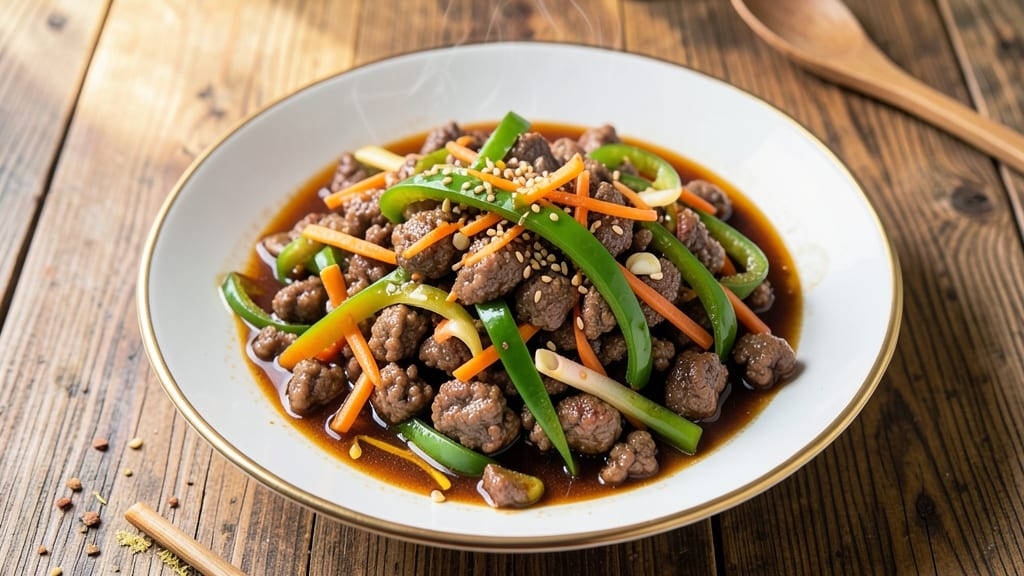
This Asian ground beef stir fry delivers the bold flavors of your favorite takeout—crisp-tender beef, vibrant vegetables, and a glossy soy-ginger sauce that clings to every bite. The secret lies in high-heat wok technique and proper sauce reduction, transforming simple ingredients into a restaurant-quality dish. I've perfected this recipe after years of testing, ensuring it works equally well in a wok or cast-iron skillet.
The foundation begins with properly seared beef—small, evenly sized pieces that develop a caramelized crust while remaining tender inside. Fresh ginger and garlic infuse the sauce with aromatic depth, while a touch of sesame oil adds nutty richness.
What sets this apart is the two-stage sauce process: first blooming the aromatics, then reducing with soy sauce and a hint of brown sugar for balance.
By the time you plate it, you'll have perfectly cooked beef with vibrant vegetables and a sauce that's glossy yet not overly sweet. The high heat creates that signature wok-hei—smoky, slightly charred edges that elevate every bite.
Serve over steamed jasmine rice or noodles to soak up every last drop of that flavorful sauce.
This recipe adapts beautifully to any stir-fry night—whether you're feeding a family or meal prepping for the week. The technique is straightforward once mastered, and the flavor combinations are endlessly customizable. Let's get started on creating your perfect Asian ground beef stir fry.
Ingredients for asian ground beef stir fry
Bold flavors start with the right ingredients—crisp beef, fresh aromatics, and a glossy sauce that sticks.
| Ingredient | Amount | Notes |
|---|---|---|
| Ground Beef (85% lean) 🥩 | 1 ½ lb | Small, even-sized pieces preferred |
| Fresh Ginger Root 🌿 | 2 tbsp | Finely grated, aromatic |
| Garlic Cloves 🧄 | 6 cloves | Minced, for aromatic depth |
| Low-Sodium Soy Sauce 🥢 | ½ cup | High-quality, for umami base |
| Brown Sugar 🍯 | 2 tbsp | Lightly packed, for balance |
| Sesame Oil 🫒 | 1 tbsp | Toasted, for nutty richness |
| Red Bell Pepper 🌶️ | 1 whole | Thinly sliced, vibrant color |
| Green Onions 🧅 | 3 whole | Thinly sliced, for freshness |
| Carrots 🥕 | 2 whole | Julienned, for texture contrast |
| Neutral Oil (Avocado or Vegetable) 🫒 | 2 tbsp | High smoke point preferred |
| Cornstarch 🌾 | 1 tbsp | For tenderizing beef |
| Sesame Seeds 🌱 | 1 tbsp | Toasted, for garnish |
| White Rice Vinegar 🍶 | 1 tbsp | For brightness, optional |
| Diamond Crystal Kosher Salt 🧂 | ½ tsp | For seasoning |
| Ground Black Pepper 🌶️ | ¼ tsp | Freshly ground |
The beef is non-negotiable here. 85% lean ground beef gives you that perfect balance of tenderness and flavor—90% lean or leaner can turn out dry. Look for packages labeled 'chopped' at Kroger or Whole Foods—they're pre-cut for even cooking. If you're buying a block, pulse it in the food processor for 2-3 seconds to break it into small, uniform pieces. Fresh ginger and garlic are worth the trip to the store—Trader Joe's has great prices on organic ginger roots. For the soy sauce, Kikkoman or Lee Kum Kee are my go-tos, but any low-sodium brand works.
No fresh ginger? Powdered ginger at half the amount is a decent swap, though it lacks that bright punch. Running out of sesame oil? Toasted sesame seeds + neutral oil gives you some of that nutty flavor. The brown sugar can be swapped for white sugar or coconut sugar—just remember it's there to balance the saltiness, not sweeten the whole dish. For the vegetables, whatever's on sale works—broccoli, snap peas, or mushrooms all play well in this stir-fry. Just make sure they're cut into even-sized pieces so they cook at the same rate as the beef.
The beef keeps best in the fridge for 1-2 days once ground, so use it up quickly. Fresh ginger lasts 2-3 weeks in the fridge if wrapped in a damp towel. For the sauce, make it a day ahead—flavors meld better. Store leftovers in airtight containers for up to 4 days, or freeze for 3 months. I always double the sauce because it disappears fast—great for drizzling on rice or noodles later. The sesame seeds toast in 30 seconds in a dry pan—don't walk away, or they'll burn.
Why You'll Love This Recipe
- One-Pan Magic: I swear by this for nights when I’m too tired to scrub pots—just brown the beef, toss in the ginger and garlic, and let the soy sauce and brown sugar work their magic. That crispy sear? It happens in one pan, no fuss.
- Umami Bomb: The combo of ginger, garlic, and low-sodium soy sauce hits different—bright, savory, with just enough sweetness from the brown sugar to balance it out. Honestly, the first time I made it, my partner stole half before I even sat down.
- Lunchbox Hero: Between us, this is my go-to for meal prep. Double the batch, pack it in containers, and boom—you’ve got lunch sorted for days. The flavors only get better after a night in the fridge, and it reheats like a dream.
- Budget Stretch: Ground beef and pantry staples? This recipe won’t break the bank. I’ve fed four people for under $15, and the leftovers? They disappear faster than I can say “second helping.” Plus, the ginger and garlic make it feel fancy without the price tag.
Step-by-step instructions for Asian ground beef stir fry
Here's how to create a restaurant-quality stir fry with perfect texture and bold flavors.
Prep All Ingredients for Maximum Efficiency
Start by measuring out the 1.5 lb ground beef (85% lean) and breaking it into small, even-sized pieces using your hands or a fork. This ensures even cooking and better texture. In a separate bowl, combine the 1 tbsp cornstarch, 0.5 tsp diamond crystal kosher salt, and 0.25 tsp ground black pepper, then toss the beef mixture thoroughly to coat.
While the beef marinates, prep the vegetables: thinly slice the 1 whole red bell pepper into strips, julienne the 2 whole carrots, and thinly slice the 3 whole green onions. Finely grate the 2 tbsp fresh ginger root and mince the 6 cloves garlic cloves. Keep all prepped ingredients within easy reach—this is a fast-moving dish.
Build the Flavor Base with Soy-Ginger Sauce
In a small bowl, whisk together the 0.5 cup low-sodium soy sauce, 2 tbsp brown sugar, 1 tbsp sesame oil, 1 tbsp white rice vinegar, and the freshly grated ginger and minced garlic. This sauce is the heart of your stir fry, balancing umami, sweetness, and aromatic depth. Taste it now—it should be rich and slightly tangy. If you prefer more brightness, add a touch more rice vinegar.
Set aside 2 tbsp of this sauce mixture for later use. The remaining sauce will cook down during the stir-fry process, intensifying its flavor. Keep this sauce at room temperature until you're ready to use it.
Sear the Beef for Maximum Texture
Heat a large wok or deep skillet over high heat until it's smoking hot. Add the 2 tbsp neutral oil and swirl to coat the pan evenly. Working in batches if needed (to avoid overcrowding), add the cornstarch-coated beef and let it sear undisturbed for 2-3 minutes until the edges are deeply browned and the meat releases easily from the pan.
Stir the beef and continue cooking for another 2-3 minutes until it's no longer pink in the center. Remove the beef from the wok and set it aside on a plate. The beef should be tender but still retain some bite—this is crucial for the perfect stir-fry texture. Don't drain the rendered fat from the wok; it's packed with flavor.
Stir-Fry Vegetables to Perfect Crisp-Tender Stage
Return the wok to high heat and add the julienned carrots, red bell pepper strips, and half of the sliced green onions. Stir-fry for 2-3 minutes until the vegetables begin to soften but still retain a satisfying crunch. The high heat is key here—you want to preserve that wok-hei, or "breath of the wok," that gives stir fries their signature smoky aroma.
Add the reserved 2 tbsp sauce to the wok and stir vigorously for 30 seconds to deglaze the pan, scraping up any browned bits that have formed. These bits are packed with flavor—don't miss them! The vegetables should be bright and vibrant, with just a hint of char on some edges.
Combine and Finish with Silky Gloss
Return the seared beef to the wok along with the remaining sauce mixture. Stir everything together vigorously for 1-2 minutes until the beef is evenly coated and the sauce has thickened slightly. The beef should be hot throughout, and the sauce should cling beautifully to each piece.
Taste and adjust seasoning if needed—you might want to add a splash more soy sauce for saltiness or a touch of rice vinegar for brightness. Garnish with the remaining green onions and 1 tbsp toasted sesame seeds, then serve immediately over steamed rice. The stir fry should be hot, vibrant, and packed with contrasting textures—tender beef, crisp-tender vegetables, and a glossy, flavorful sauce.
Pro Tips For Making Asian Ground Beef Stir Fry
- BREAK THE BEEF CLUMPS: I learned this the hard way—skipping this step means tough, chewy beef instead of tender, flavorful bites. Before cooking, spread the raw ground beef on a plate and break it into small, even pieces with your fingers (no bigger than a pea). This ensures even cooking and maximum surface area for that caramelized crust.
- GINGER: GRATE, DON’T CHOP: Fresh ginger loses its punch when it sits in water or gets chopped into big chunks. Use a microplane or the fine side of a grater to turn a 1-inch piece into a paste—no soaking needed. This releases the oils and aromatics faster, so your stir-fry gets that bright, zesty kick without waiting.
- SOY SAUCE LAST MINUTE: Add the low-sodium soy sauce in the final 30 seconds of cooking—yes, even if the recipe says otherwise. This prevents it from turning bitter or steaming the beef into mush. If you’re worried about flavor, toss the cooked beef with a splash of soy sauce after removing it from the pan for 30 seconds, then stir-fry any veggies separately.
- SUGAR: TOAST IT FIRST: Brown sugar burns faster than you think, especially when mixed with soy sauce. Sprinkle it directly into the hot pan after the beef is mostly cooked, let it melt for 10 seconds, then stir like crazy. This caramelizes the sugar without sticking—no more scraping burnt bits off the bottom (your future self will thank you).
Wine and beer pairings for this asian ground beef stir fry
Light Beers
For this Asian-inspired stir fry, I always reach for a crisp, light lager like Sapporo or Asahi from Japan. Their clean, slightly sweet profiles complement the soy-ginger sauce without overpowering the dish.
The subtle maltiness actually enhances the umami notes in the beef, creating a harmonious balance. Serve chilled—around 40-45°F—to refresh your palate between bites of rich, savory stir fry. 🍺
Dry Riesling
A dry Riesling from Germany or Washington State is my go-to white wine pairing. Its bright acidity cuts through the richness of the stir fry while its subtle citrus notes mirror the ginger in the sauce.
Look for a Kabinett-level Riesling with 8-10% ABV—it's light enough to complement the dish without competing. The slight mineral finish also cleanses your palate beautifully. 🍷
Sake Pairing
For an authentic Asian dining experience, serve your stir fry with a dry junmai sake like Dassai or Gekkeikan. The clean, slightly nutty profile enhances the sesame and soy flavors while the natural acidity balances the dish's richness.
Chill it to 45-50°F before serving—this temperature preserves its delicate aromatics. I like to pour a small amount into the sauce as a finishing touch for an extra layer of authenticity. 🍶
Hard Cider Option
If you prefer something lighter than beer, try a dry, crisp hard cider like Angry Orchard or Strongbow. The apple notes provide a refreshing contrast to the savory beef, while the slight effervescence helps cut through the sauce's richness.
Opt for a 4-5% ABV variety to avoid overwhelming the dish. Serve at 45°F for the best balance of flavor and crispness. 🍏
Spiced Rum Cocktail
For a festive touch, mix a dark rum cocktail with a splash of ginger beer and a lime wedge. The spiced rum adds warmth that complements the ginger in the sauce, while the ginger beer's fizz creates a refreshing contrast.
I like to use Bacardi Superior or Plantation Dark—just 1.5 oz rum, 4 oz ginger beer, and a squeeze of lime. This works especially well for holiday gatherings. 🍹
Nutrition facts
Frequently asked questions
Can I substitute ground turkey or chicken for the beef?
Use 1.5 lb ground turkey (93% lean) or chicken instead, but reduce cooking time to 1-2 minutes total to avoid drying out. Add 1 extra tbsp cornstarch to help tenderize the leaner meat. The flavor will be lighter but still delicious—just boost umami with an extra 1 tsp soy sauce in the sauce.
What's the best way to make this recipe in a regular skillet?
Use a 12-inch cast-iron skillet or heavy stainless steel pan on medium-high heat instead of high. Cook the beef in 2 batches to avoid crowding, and reduce vegetable cooking time to 1-2 minutes total. The key is keeping heat high enough to create wok-hei—just work faster! A splash of water or broth can help steam the veggies if needed.
How do I prevent the beef from turning out dry?
Never overcook the beef! It should only take 3-4 minutes total on high heat. Use 85% lean ground beef (never 90%+), coat it thoroughly with cornstarch, and avoid stirring too soon. If your pan isn't hot enough, the beef will steam instead of sear. A smoking-hot wok is non-negotiable for perfect texture.
Can I make this stir fry ahead of time?
Yes, but with a few adjustments. Cook the beef and vegetables separately, then refrigerate in airtight containers for up to 2 days. Reheat the beef and veggies separately in a hot pan with 1 tsp oil, then combine with fresh sauce. For best texture, serve immediately after reheating—veggies lose crispness when reheated.
What are some good vegetable substitutions?
Swap in broccoli florets, snap peas, or mushrooms for the carrots and bell pepper. For extra crunch, add water chestnuts or bok choy. Just ensure all veggies are cut to similar sizes so they cook evenly. The stir fry works with whatever's freshest—just aim for a mix of colors and textures!