
Main Courses
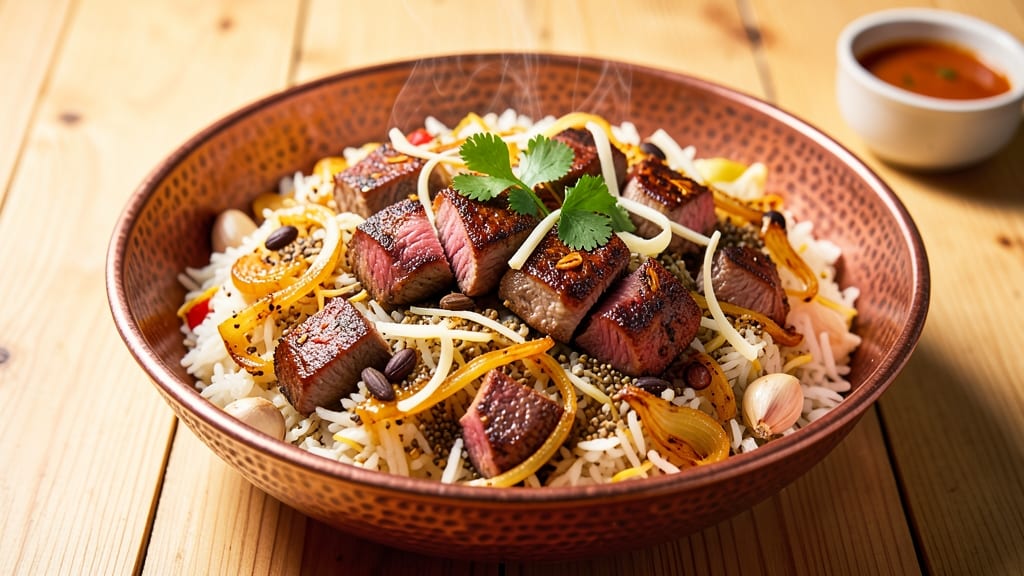
This Arabic beef biryani recipe delivers restaurant-quality layers of fragrant saffron rice and melt-in-your-mouth beef, all achieved through slow-cooked perfection. The secret lies in marinating the beef overnight with aromatic spices—cardamom, cinnamon, and cloves—while parboiling the basmati rice separately to maintain its signature texture.
Every bite combines tender meat, fragrant rice, and a symphony of warm spices that transport you to the streets of Cairo.
What sets this recipe apart is the traditional dum cooking technique, where the pot is sealed to steam the layers slowly. This method ensures the rice stays fluffy while the beef becomes fork-tender, infused with rich, earthy flavors.
The dish is completed with crispy fried onions and fresh herbs—mint and cilantro—that add a bright contrast to the deep, spiced layers below. No shortcuts here; this is biryani done right.
The result is a foolproof method that balances authenticity with approachability, perfect for both beginners and seasoned cooks. Whether you're serving a family gathering or a special dinner, this biryani will impress with its vibrant layers and complex flavors.
The aroma alone will have everyone at the table anticipating the first bite.
Pair it with classic sides like cucumber raita or pickled onions to round out the meal, or serve with warm mint tea for the full Arabic dining experience.
The recipe scales easily, so you can make it for a crowd or save leftovers for another day—though they rarely last that long. Let’s get started on creating this showstopper dish.
Ingredients for arabic beef biryani
Sixteen ingredients transform into aromatic layers of saffron rice and tender spiced beef.
| Ingredient | Amount | Notes |
|---|---|---|
| Beef Chuck Roast 🥩 | 3 lb | Cut into 1.5-inch cubes, boneless |
| Basmati Rice 🍚 | 2 cups | Uncooked, long-grain preferred |
| Saffron Threads 🌼 | ¼ tsp | High-quality, soaked in 2 tbsp warm water |
| Whole Milk 🥛 | 1 cup | Full-fat for richness |
| Yellow Onions 🧅 | 3 whole | 1 large thinly sliced, 2 medium grated |
| Garlic Cloves 🧄 | 10 cloves | Minced, fresh preferred |
| Ginger Root 🌿 | 2 tbsp | Freshly grated, aromatic |
| Ground Cumin 🌶️ | 2 tsp | Toasted for depth of flavor |
| Ground Coriander 🌿 | 1 ½ tsp | Freshly ground preferred |
| Cardamom Pods 🌿 | 8 whole | Lightly crushed, green preferred |
| Cinnamon Sticks 🌿 | 2 whole | 1-inch pieces, aromatic |
| Cloves 🌶️ | 4 whole | Whole, lightly crushed |
| Fresh Mint Leaves 🌿 | ½ cup | Chopped, stems removed |
| Fresh Cilantro Leaves 🌿 | ½ cup | Chopped, stems removed |
| Vegetable Oil 🫒 | ½ cup | High smoke point preferred |
| Salt 🧂 | 1 ½ tsp | Diamond Crystal preferred |
| Black Peppercorns 🌶️ | 1 tsp | Freshly cracked |
| Lemon Juice 🍋 | 2 tbsp | Freshly squeezed |
The beef cut is everything here—chuck roast delivers that melt-in-your-mouth texture when cooked low and slow. Whole Foods or your local butcher will have it pre-cubed, which saves time, but if you're buying a whole roast, ask for it to be cut into 1.5-inch pieces. The spices need to be fresh: Penzeys Spices or the bulk bins at Middle Eastern markets are your best bets for cardamom, cinnamon, and cloves. These spices should smell vibrant, not stale. For saffron, Bazaar Spices sells the highest quality threads—worth the investment for that signature golden hue. The basmati rice should be old crop (like India Gate or Tilda brands) for maximum fragrance and fluffiness.
No cardamom? Substitute with 1 tsp ground cinnamon plus 0.5 tsp allspice, though it won't be identical. Running out of cloves? Double the cinnamon for warmth, but you'll miss that deep, floral note. Fresh ginger and garlic are non-negotiable here—they're the backbone of the marinade. If you must use powdered, reduce to half the amount and toast the spices in oil first to revive their flavor. The fried onions? Use sweet Vidalia onions for caramelization—regular yellow onions work but won't be as sweet. For the herbs, fresh mint and cilantro are ideal, but if you're in a pinch, dried mint at one-third the amount will get you close.
This dish tastes even better the next day, so make it ahead if possible. Store the assembled biryani (uncovered) in the fridge for up to 2 days—the flavors meld beautifully. To reheat, cover with foil and warm in a 300°F oven for 20 minutes. For longer storage, freeze portions (without the fried onions) for up to 3 months. The fried onions are best added fresh right before serving, but you can make them a day ahead and store in an airtight container. The saffron-infused milk keeps for 5 days in the fridge—use it in other rice dishes if you don't finish it all.
Why You'll Love This Recipe
- One-Pot Magic: I swear by this recipe because it’s one pot, one lid, and zero stress. The beef and rice cook together—no layering, no guesswork—just rich, fragrant layers that taste like they simmered all day.
- Saffron Luxury: That tiny pinch of saffron threads? Total game-changer. It turns plain rice into golden, floral-perfumed grains that make the whole dish feel like a celebration—without breaking the bank.
- Leftovers That Shine: Between us, the second day is better. The flavors meld even more, and reheating it with a splash of milk keeps the rice tender. Pack it for lunches or freeze portions—it’s my go-to for lazy days.
- Budget-Friendly Feast: A chuck roast stretches far, and basmati rice fills bowls generously. The whole milk adds richness without needing heavy cream, and onions bulk it up beautifully. Feeds four for under $15, and everyone’s happy.
Step-by-step instructions for Arabic beef biryani
Mastering biryani requires patience and precision—these steps ensure tender beef and fragrant rice layers.
Marinate the Beef for Maximum Flavor
Cut the 3 lb beef chuck roast into 1.5-inch cubes and place in a large bowl. In a small bowl, combine 1 cup whole milk, 2 tbsp freshly grated ginger root, 10 minced garlic cloves, 2 tsp toasted ground cumin, 1.5 tsp freshly ground coriander, 8 lightly crushed cardamom pods, 2 whole cinnamon sticks (cut into 1-inch pieces), 4 whole lightly crushed cloves, 1.5 tsp salt, and 1 tsp freshly cracked black peppercorns. Pour this marinade over the beef and massage it in thoroughly.
Cover the bowl and refrigerate for at least 4 hours, preferably overnight. This long marinating time breaks down the beef fibers, ensuring tender, melt-in-your-mouth results. The spices will infuse deeply, creating layers of aromatic complexity that define authentic biryani.
Prepare the Saffron Milk and Rice
Soak the 0.25 tsp saffron threads in 2 tbsp warm water for 10 minutes to release their vibrant color and floral aroma. In a separate bowl, combine 2 cups basmati rice with 1 cup whole milk and the saffron infusion. Stir gently and let the rice soak for 30 minutes. This step ensures the rice absorbs the saffron's color and imparts a subtle floral note that elevates the dish.
Meanwhile, thinly slice 1 large yellow onion and grate 2 medium yellow onions. Heat 0.5 cup vegetable oil in a large skillet over medium heat and sauté the sliced onion until golden brown—about 8-10 minutes. Remove from heat and set aside. This caramelized onion will add sweetness and depth to the biryani layers.
Cook the Beef Until Tender
In the same skillet, add the marinated beef and cook over medium-high heat for 5 minutes to brown the meat. Reduce heat to medium-low, cover, and simmer for 1.5 hours, stirring occasionally, until the beef is fork-tender and nearly falling apart. The slow cooking ensures the meat remains juicy and absorbs the marinade's flavors.
Once tender, remove the beef from the skillet and set aside. Strain the cooking liquid through a fine-mesh sieve to remove any spices or impurities, reserving 1.5 cups of the liquid. This strained liquid will be used later to cook the rice, ensuring a clean, flavorful base.
Layer and Steam the Biryani
Preheat your oven to 375°F. In a large, heavy-bottomed pot or Dutch oven, spread half of the soaked rice in an even layer. Top with half of the cooked beef, half of the caramelized onions, and half of the reserved cooking liquid. Repeat with the remaining rice, beef, and onions, finishing with the remaining liquid.
Cover the pot tightly with foil and place it in the preheated oven. Bake for 25 minutes, then remove the foil and bake for an additional 10 minutes to allow the top layer to crisp slightly. The steam trapped inside the pot will infuse the rice and beef with aromatic flavors, creating the signature biryani texture.
Garnish and Serve with Fresh Herbs
Remove the biryani from the oven and let it rest for 10 minutes, covered. Before serving, fluff the rice gently with a fork and drizzle with 2 tbsp freshly squeezed lemon juice. This final step brightens the dish and balances the rich, spiced flavors.
Garnish generously with 0.5 cup chopped fresh mint leaves and 0.5 cup chopped fresh cilantro leaves. The herbs add a refreshing contrast to the warm, spiced biryani. Serve immediately, ensuring each bite delivers the perfect harmony of tender beef, fragrant rice, and aromatic spices.
Pro Tips For Making Arabic Beef Biryani
- Parboil Rice Twice: First boil the basmati rice in salted water until 70% cooked—about 5 minutes—then drain and spread it on a tray to dry slightly. This step prevents mushiness and makes the grains fluff up like a dream when steamed later. (Yes, even if you’re impatient like me, resist the urge to skip it.)
- Bloom Saffron Properly: Crush the saffron threads with your fingers, then steep them in warm whole milk for at least 10 minutes before adding to the rice. This extracts the color and aroma fully—no more pale, watery rice that looks like it’s missing its soul. (I used to just toss it in, and the difference is night and day.)
- Sear Beef in Batches: Cut the beef chuck roast into 1.5-inch chunks and brown them in a single layer over medium-high heat, working in batches if needed. Overcrowding steams the meat instead of searing, and you’ll end up with sad, gray chunks instead of caramelized, flavor-packed pieces. (Your future self will notice.)
- Layer Rice and Meat Dry: After cooking the beef and rice separately, let both cool slightly before layering them in the pot. A little dryness between layers means the rice steams evenly and doesn’t turn into a gluey mess when you open the lid. (This isn’t the prettiest method, but it’s the tastiest.)
Storing and reheating this recipe
Refrigerator Storage
Store your freshly made biryani in an airtight container with a tight-fitting lid, covering it loosely with a clean kitchen towel to prevent condensation. Keep it refrigerated at 40°F or below for up to 2 days—the flavors actually deepen as the spices meld further.
I always make a double batch because leftovers taste even better the next day! 🌟
For best results, let the biryani cool completely before refrigerating to avoid moisture buildup. The rice will firm up slightly but remains perfectly fluffy when reheated. Pro tip: Store the fried onions separately in a small container—they crisp up beautifully when reheated.
Freezer Storage
Portion your biryani into freezer-safe containers (glass or heavy-duty plastic) and freeze for up to 3 months. Leave 1-inch headspace at the top to account for expansion. I recommend freezing the biryani without the fried onions—they don't freeze well and are best added fresh when serving. 🥶
When ready to eat, thaw overnight in the refrigerator. For a quick option, microwave on 50% power for 3-4 minutes, then cover with a damp paper towel and let sit for 5 minutes before serving. The texture will be slightly softer but still delicious.
Oven Reheating
My preferred method is reheating in a 375°F oven for 20-25 minutes, covered with foil. This gently warms the biryani while preserving its layered texture.
Add 2-3 tablespoons of water to the bottom of the oven-safe dish before reheating to prevent drying. The steam helps restore the biryani's signature moistness. ⏰
For extra crispiness, remove the foil for the last 5 minutes of reheating. This creates a slight crust on top that adds texture contrast. If the biryani looks dry, sprinkle a little warm water over the top and cover again for 5 minutes to steam.
Microwave Reheating
For convenience, use the microwave on low power (50-60%) in 1-minute intervals, stirring between each interval. Cover with a damp paper towel to retain moisture. Most biryanis reheat well in 2-3 minutes total, but check at 1 minute to avoid overcooking. Stirring helps redistribute the flavors evenly. 🔥
If your biryani seems dry after reheating, add 1-2 tablespoons of warm water or beef broth and microwave for an additional 30 seconds. The extra liquid will help restore the rice's tenderness without making it mushy.
Reviving Fried Onions
Store fried onions separately in an airtight container at room temperature for up to 3 days. To revive them before serving, heat them in a dry skillet over medium-low heat for 1-2 minutes until crispy again.
Sprinkle a pinch of salt to enhance their flavor. These crispy onions are the secret to that restaurant-quality finish! 🍚
Nutrition facts
Frequently asked questions
What's the best cut of beef for biryani?
Chuck roast is ideal for its rich flavor and tender texture when slow-cooked. The 1.5-inch cubes break down beautifully during the 1.5-hour simmering, creating melt-in-your-mouth results. For extra tenderness, ask your butcher to cut against the grain.
Can I make biryani without saffron?
Yes! While saffron adds that signature golden hue and floral aroma, you can substitute with ½ tsp turmeric for color plus 1 tsp orange blossom water for fragrance. For flavor depth, add an extra pinch of cardamom and cinnamon. The dish will still be delicious—just slightly different in appearance.
Why does my biryani turn out mushy?
Overcooking or improper layering are the usual culprits. Always parboil rice separately (just until tender) and use the dum cooking method—sealing the pot traps steam to cook gently. For extra fluffiness, spread rice in even layers and avoid pressing down. If it's still mushy, try reheating with 1 tbsp ghee over low heat.
How do I make biryani in a pressure cooker?
After layering rice and beef, seal the pot with foil and cook on low heat for 15 minutes (instead of oven-baking). For pressure cookers, use the high-pressure setting for 8 minutes after initial sealing. The key is to avoid overcooking—check rice doneness immediately after pressure releases. Add fried onions at the end as usual.
What sides pair best with Arabic beef biryani?
Classic pairings include cucumber raita (yogurt with grated cucumber and mint), pickled onions (for tangy contrast), and papadums (crispy lentil crackers). For drinks, serve with mint tea or mango lassi to balance the rich spices. A simple green salad with lemon vinaigrette also cleanses the palate beautifully.