
Main Courses
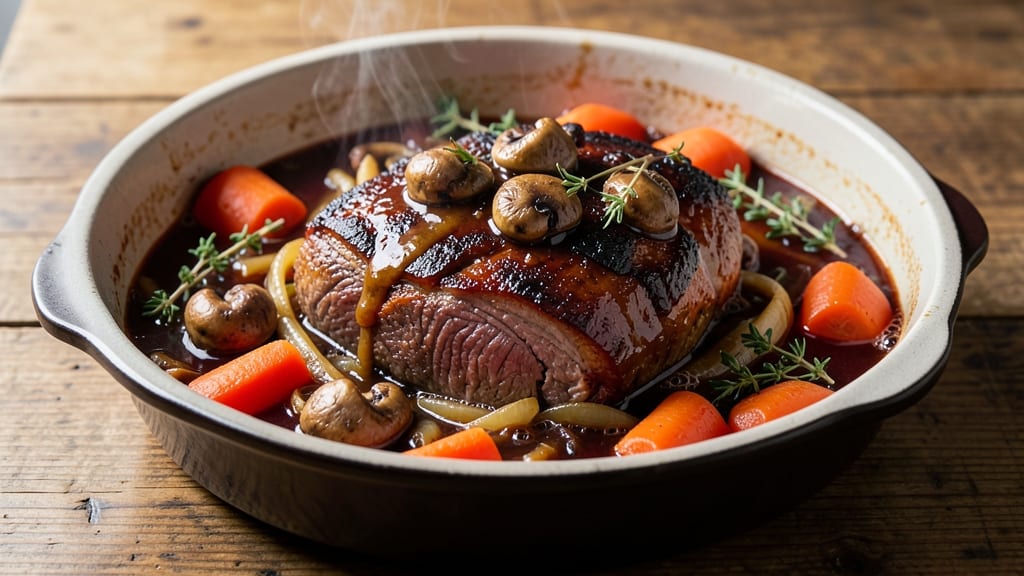
Anne Burrell's beef bourguignon recipe transforms tough beef into melt-in-your-mouth tenderness through slow braising with red wine and aromatic vegetables. This classic French dish delivers rich, complex flavors that make every bite feel like a restaurant-quality meal. The secret lies in proper browning of the beef and patient simmering—techniques that develop deep, caramelized notes and tender meat that practically falls apart.
What sets this recipe apart is the balance of ingredients: earthy mushrooms, sweet onions, and bold red wine create a sauce that's both savory and slightly sweet. Anne Burrell's method emphasizes proper wine reduction to concentrate flavors, while herbs like thyme and bay leaf add aromatic depth.
The result is a dish where each component—tender beef, caramelized vegetables, and velvety sauce—works in perfect harmony.
This beef bourguignon is perfect for special occasions or cozy weeknight dinners, especially when served with crusty bread to soak up every drop of that luxurious sauce. The slow cooking process allows flavors to meld beautifully, creating a dish that tastes even better the next day.
With proper technique, you'll achieve restaurant-quality results in your own kitchen.
The key to success lies in patience and attention to detail during the browning and deglazing stages. These steps build the flavor foundation that makes all the difference in transforming simple ingredients into something extraordinary. Once mastered, this recipe will become a staple in your culinary repertoire.
Ingredients for anne burrell beef bourguignon
French technique meets home kitchen—these ingredients create restaurant-worthy beef bourguignon with tender beef and rich wine sauce.
| Ingredient | Amount | Notes |
|---|---|---|
| Chuck Roast 🥩 | 2 ½ lb | Trimmed of excess fat, cut into 1.5-inch cubes |
| Yellow Onion 🧅 | 2 whole | Thinly sliced, 1/4-inch thick |
| Garlic Cloves 🧄 | 6 cloves | Peeled, smashed with side of knife |
| Cremini Mushrooms 🍄 | 16 oz | Trimmed, halved if large |
| Carrots 🥕 | 2 whole | Peeled, cut into 1-inch chunks |
| Fresh Thyme 🌿 | ½ oz | OR 2 sprigs, leaves stripped |
| Fresh Rosemary 🌿 | ½ oz | OR 1 sprig, needles removed |
| Bay Leaves 🍃 | 2 whole | Dried, standard size |
| All-Purpose Flour 🌾 | 2 tbsp | For dredging beef |
| Dry Red Wine 🍷 | 2 cups | Bold Cabernet Sauvignon or Merlot |
| Beef Stock 🥫 | 2 cups | Homemade or high-quality store-bought |
| Tomato Paste 🍅 | 2 tbsp | Smooth, not chunky |
| Unsalted Butter 🧈 | 4 tbsp | Cold, cubed for finishing |
| Kosher Salt 🧂 | 1 ½ tsp | Diamond Crystal preferred |
| Freshly Ground Black Pepper 🌶️ | ½ tsp | Coarsely cracked |
The chuck roast is non-negotiable—its marbling ensures melt-in-your-mouth texture. Look for well-marbled cuts at Whole Foods or your local butcher; avoid leaner options like sirloin. For the wine, any bold, dry red works here—Cabernet Sauvignon, Merlot, or even Pinot Noir. Avoid sweet varieties. The mushrooms should be firm and dry; cremini or baby bella work best, but oyster mushrooms add earthy depth. Fresh thyme and rosemary should smell vibrant—if they're wilted or lack aroma, they're past their prime. For the beef stock, homemade is ideal but high-quality store-bought like Kitchen Basics works in a pinch.
No red wine? Substitute with beef broth plus 1 tbsp balsamic vinegar—it mimics the acidity. Fresh herbs unavailable? Dried thyme and rosemary at one-third the amount suffice. The tomato paste can be replaced with 1/4 cup crushed tomatoes if needed, but paste delivers deeper flavor. For the flour, all-purpose works best—bread flour makes the sauce gummy. The butter should be unsalted and cold when added at the end for maximum richness. If you're using a pre-cubed roast, pat it dry thoroughly before dredging in flour—this ensures a proper sear.
This dish tastes even better the next day as flavors meld. Store in an airtight container in the fridge for up to 5 days or freeze for 3 months. For reheating, add 1-2 tbsp water or stock to prevent drying. The sauce thickens as it cools—thin with additional stock if needed. Portion into individual containers for easy lunches; the sauce clings beautifully to beef. For a restaurant touch, garnish with extra butter and fresh parsley before serving.
Why You'll Love This Recipe
- One-Pot Magic: I swear by this recipe because it’s actually hands-off after the initial sear. The chuck roast practically melts into tender perfection while you sip wine and pretend you’re in a Parisian bistro—no fancy Dutch oven required.
- Mushroom-Garlic Love: Between us, the earthy cremini mushrooms and caramelized onions make this dish ridiculously good. That deep, savory umami from slow-cooked garlic? It’s the kind of flavor that turns a Tuesday into a “maybe I’ll wear pants” night.
- Leftovers? More Like Leftovers: This recipe doubles as tomorrow’s lunch without any extra effort. The beef gets even more tender overnight, and reheating it in the same pot with a splash of red wine? Pure satisfaction—no sad, dry meat here.
- Budget-Friendly Luxury: Chuck roast is my go-to for stretching dollars without sacrificing flavor. A few carrots, a handful of mushrooms, and some pantry staples turn into a dish that feels fancy but costs less than takeout. (Yes, even on a Tuesday.)
Step-by-step instructions for anne Burrell's beef bourguignon
This classic French technique transforms tough chuck roast into melt-in-your-mouth beef threads using slow braising and rich red wine.
Sear the Beef for Maximum Flavor
Heat a heavy Dutch oven over medium-high heat until very hot. Pat the 2.5 lb chuck roast dry with paper towels—this ensures a proper sear. Working in batches if needed, add the beef to the pot and sear for 3-4 minutes per side until deeply browned. You're building flavor through the Maillard reaction here, so don't rush this step.
Once browned, remove the beef and set aside. Add 2 tablespoons all-purpose flour to the pot and stir vigorously for 30 seconds to remove any browned bits. This creates a light roux that will thicken your sauce later. Return the beef to the pot and set it aside temporarily.
Develop the Aromatic Base
In the same Dutch oven, add 4 tablespoons unsalted butter and let it melt completely. Add the 2 whole yellow onion and cook for 5-6 minutes until softened and golden. Add the 6 cloves garlic cloves, 16 oz cremini mushrooms, and 2 whole carrots, stirring frequently for 4-5 minutes until the mushrooms release their moisture and begin to brown.
Stir in the 2 tablespoons tomato paste and cook for 1 minute to deepen its flavor. Add the 2 cups dry red wine, scraping up any browned bits from the bottom of the pot. This deglazing step captures all the flavor you've built so far. Let the wine simmer for 3-4 minutes until reduced by about half.
Build the Braising Liquid
Pour in the 2 cups beef stock, then add the 1.5 teaspoons kosher salt, 0.5 teaspoon freshly ground black pepper, 0.5 oz fresh thyme, 0.5 oz fresh rosemary, and 2 whole bay leaves. Return the beef to the pot, along with any accumulated juices. The liquid should come about halfway up the beef pieces.
Bring the mixture to a gentle simmer, then reduce heat to low. Cover the pot and transfer to a preheated 325°F oven. Here's the thing—this is where patience pays off. Braise for 2.5-3 hours until the beef is fork-tender and pulls apart easily. You'll know it's done when the meat fibers separate cleanly and the sauce has thickened beautifully.
Finish and Serve with Perfect Sauce
Once the beef is tender, remove the pot from the oven and uncover. Increase heat to medium-high and simmer for 5-7 minutes to reduce the sauce slightly and deepen its flavor. Remove and discard the bay leaves and herb sprigs.
For the final touch, whisk in the 4 tablespoons cold unsalted butter one tablespoon at a time until fully incorporated. This creates a velvety, luxurious sauce that coats the beef perfectly. Taste and adjust seasoning if needed—sometimes the wine can make the dish taste slightly acidic, so a pinch more salt often helps.
Serve immediately with crusty bread or mashed potatoes to soak up every bit of that rich, wine-infused sauce. The beef should be falling apart with just a gentle fork pressure, and each bite should deliver layers of umami from the sear, depth from the wine, and a luxurious finish from the butter.
Pro Tips For Making Anne Burrell Beef Bourguignon
- SEAR THE ROAST UNTIL IT BROWNS: I learned this the hard way—skipping the deep sear means flavorless beef. Use a heavy pot and let the chuck roast sit in the oil for 3-4 minutes per side until it’s dark golden, not just pink. That crust locks in the juices and makes the whole dish taste richer.
- CHOP ONIONS AND CARROTS EVENLY: Uneven veggies mean some burn while others stay raw. Cut onions into ½-inch chunks and carrots into ¼-inch rounds—small enough to cook through but big enough to hold shape. (Yes, even if it looks like you’re overworking them.)
- DEGLAZE WITH THE RED WINE IMMEDIATELY: Let that browned beef fond stick—it’s packed with flavor. Pour in the red wine right after removing the roast and scrape the bottom with a wooden spoon. If you wait, you’ll lose half the taste. (I know, I know, but trust the process.)
- ADD MUSHROOMS LAST AND COOK QUICKLY: Mushrooms release water like crazy, which dilutes the sauce. Toss them in just 5 minutes before serving and cook them on high heat until they’re golden, not soggy. (Your future self will thank you.)
Essential equipment for anne burrell beef bourguignon
Heavy-Duty Dutch Oven
This is your secret weapon for beef bourguignon—the Dutch oven's thick walls and tight lid create the ideal environment for even heat distribution and moisture retention. I recommend a 5-6 quart Le Creuset Dutch oven for its durability and even heating, but any heavy-gauge pot will work.
The lid should fit snugly to trap steam and tenderize the beef during braising. Avoid thin, lightweight pots—they won't maintain consistent temperatures during the long cooking process. 🌡️
High-Quality Meat Thermometer
Precision is key when cooking beef bourguignon, and a good thermometer ensures you don't overcook the meat. I use a Thermoworks Smoke thermometer with a probe—it's accurate to ±1°F and can monitor both the oven temperature and internal beef temperature simultaneously.
The beef is perfect at 203-205°F internal temperature, where it becomes fork-tender but doesn't dry out. A basic oven thermometer won't give you the same level of control.
Sharp Chef's Knife
A sharp 8-inch chef's knife is essential for properly prepping your ingredients. I use a Wüsthof Ikon because it maintains its edge through repeated use. For the chuck roast, you'll need to cut it into 1.5-inch cubes for even cooking.
The onions should be sliced 1/4-inch thick to caramelize properly, and mushrooms should be halved if large. Dull knives make prep difficult and increase the risk of uneven cuts, which affects cooking times and presentation.
Wooden Spoon or Ladle
Use a wooden spoon or silicone spatula when deglazing the pot with wine—metal utensils can scratch your Dutch oven's enamel coating over time.
I prefer a heat-resistant silicone spatula because it's gentle on cookware and flexible enough to scrape up all those flavorful browned bits from the bottom of the pot. This step is crucial for building depth in your sauce, so don't skip it.
A regular metal spoon will work in a pinch, but it's not ideal for long-term use.
Fine-Mesh Strainer
While not strictly necessary, a fine-mesh strainer comes in handy if you want to clarify your sauce for a restaurant-quality presentation. After braising, you can strain the sauce through a cheesecloth-lined fine-mesh strainer to remove any herb bits and create a silky-smooth consistency.
I recommend a 3-inch metal strainer like those from OXO Good Grips—it's sturdy enough for hot liquids and easy to clean. This step is optional but elevates the dish to gourmet level.
Oven Thermometer
Even if your oven has a built-in thermometer, it's often inaccurate. A separate oven thermometer ensures your oven is actually at 325°F during braising—critical for even cooking. I use a Thermopro TP18 because it's affordable, reliable, and gives me peace of mind.
If your oven runs hot or cold, you'll need to adjust cooking times accordingly. This small investment prevents undercooked or overcooked beef, which can ruin the entire dish. 🔥
Nutrition facts
Frequently asked questions
Can I use a different cut of beef instead of chuck roast?
While chuck roast is ideal for its marbling and tenderness, you can substitute with brisket, short ribs, or even stew beef—just adjust cooking time. Avoid lean cuts like sirloin or tenderloin, as they lack the fat needed for rich flavor. If using short ribs, reduce braising time to 2 hours since they cook faster.
What if I don't have red wine? Can I make this without it?
Yes! Replace the 2 cups red wine with 2 cups beef broth plus 1 tablespoon balsamic vinegar to mimic acidity. For depth, add 1 teaspoon soy sauce or Worcestershire sauce. The dish will still be flavorful, though the wine's complexity will be missing.
How do I know when the beef is fully tender?
The beef is done when it reaches 203-205°F internal temperature and fibers separate easily with a fork. For a no-thermometer test, insert a knife—juices should run clear, not pink or bloody. If the sauce thickens too much before the beef tenderizes, add 2-3 tablespoons stock to maintain moisture.
Can I make this recipe in a slow cooker?
Brown the beef first in a skillet, then transfer everything to a 6-quart slow cooker. Cook on low for 7-8 hours or high for 4-5 hours. The slow cooker method is perfect for hands-off prep, though oven-braising delivers deeper caramelization. Stir occasionally to prevent sticking.
Why did my sauce turn out too thin?
Sauce thinning usually happens if the beef wasn't seared properly (no roux) or if the pot wasn't tightly covered during braising. Fix it by simmering uncovered for 10-15 minutes to reduce, or whisk in 1 tablespoon cornstarch mixed with 2 tablespoons cold water. For future batches, ensure the Dutch oven lid fits snugly and the beef is fully submerged.