
Soups & Stews
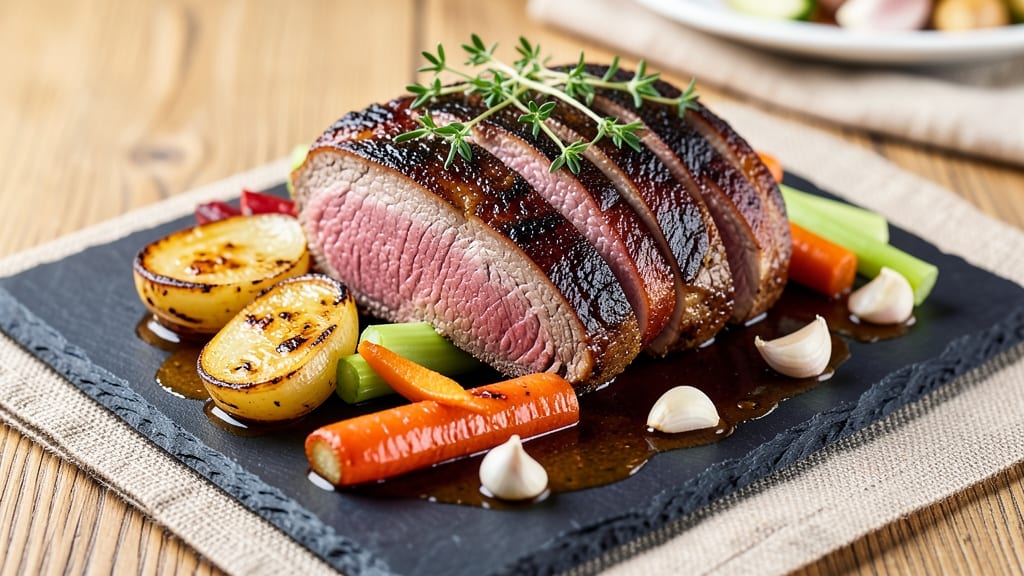
Transforming tough cuts into melt-in-your-mouth perfection, this Angus beef round recipe delivers restaurant-quality braised beef with deep umami flavor and caramelized fond magic. The secret lies in slow cooking, which breaks down connective tissue while building layers of rich, savory depth that transforms simple ingredients into something extraordinary.
What sets this recipe apart is the technique: searing the beef first creates a flavorful crust while the slow braise tenderizes the meat perfectly. You'll start with a deep brown sear in a hot pan, then let the beef simmer in aromatic liquids until fork-tender.
The result is beef that falls apart with just a touch, coated in a glossy sauce infused with garlic, thyme, and red wine.
By the time you serve this dish, you'll have perfectly tender beef with a caramelized crust and a sauce so rich it clings to every bite.
The aroma alone will have everyone anticipating dinner, and the texture—tender yet substantial—makes it ideal for feeding a crowd or enjoying a special weeknight meal.
Pair with roasted root vegetables or creamy mashed potatoes to complete the meal. This recipe proves that with the right technique, even less expensive cuts can become the star of your dinner table—rich, flavorful, and impossible to resist.
Ingredients for angus beef round
Sixteen ingredients transform tough Angus beef round into luxurious braised perfection with deep umami richness.
| Ingredient | Amount | Notes |
|---|---|---|
| Angus Beef Round Roast 🥩 | 3 lb | Center-cut for tenderness, trimmed of excess fat |
| Yellow Onion 🧅 | 1 whole | Medium size, sliced into half-moons |
| Carrots 🥕 | 4 whole | Medium size, cut into 2-inch chunks |
| Celery Stalks 🌿 | 3 whole | Cut into 1-inch pieces |
| Garlic Cloves 🧄 | 6 cloves | Smashed but not minced |
| Fresh Thyme Sprigs 🌿 | 4 whole | Or 1 tbsp dried thyme |
| Red Wine 🍷 | 1 ½ cups | Bold dry variety like Cabernet Sauvignon |
| Beef Broth 💧 | 3 cups | Low-sodium preferred |
| Tomato Paste 🍅 | 2 tbsp | High-quality for depth |
| Olive Oil 🫒 | 2 tbsp | Extra-virgin for searing |
| Balsamic Vinegar 🍶 | 1 tbsp | For acidity balance |
| Kosher Salt 🧂 | 1 ½ tsp | Diamond Crystal preferred |
| Freshly Ground Black Pepper 🌶️ | 1 tsp | Coarsely ground |
| All-Purpose Flour 🌾 | 1 tbsp | For dusting roast |
The Angus beef round is the star here—center-cut delivers the best tenderness, and marbling ensures flavor. Most butchers will trim it for you, but if buying whole, look for bright red color and minimal fat. For the best quality, local butchers or high-end grocers like Whole Foods or Costco carry excellent cuts. The 3-pound roast serves six generously, perfect for a family dinner or crowd-pleasing meal. Sear the roast immediately after purchase for best flavor retention. If you can't find center-cut, top round works but will require slightly longer braising.
No red wine? Substitute with beef broth plus 1 tbsp balsamic vinegar—the acidity mimics wine's depth. Fresh thyme is ideal, but dried thyme at one-third the amount works in a pinch. For the vegetables, frozen carrots and celery save time without sacrificing texture. The tomato paste adds umami—if unavailable, 1 cup crushed tomatoes in a pinch. Diamond Crystal kosher salt dissolves better than table salt, so measure carefully. Olive oil should be extra-virgin for searing; cheaper oils may burn too quickly. Balsamic vinegar balances richness—aged varieties add complexity if you want to splurge.
This braise tastes even better the next day as flavors meld. Store leftovers in an airtight container for up to 5 days in the fridge or 3 months frozen. Portion into individual containers for easy reheating—simply add 2 tbsp broth and warm through. The sauce thickens upon cooling, so thin with extra broth if needed. Reheat gently on the stove to preserve texture. For a make-ahead shortcut, prepare the braise through the searing step, then refrigerate overnight before completing the cook—this intensifies flavors dramatically.
Why You'll Love This Recipe
- One-Pot Magic: I swear by this—just toss the roast, onions, carrots, and celery into a Dutch oven with garlic and broth, then let it slow-cook. No chopping boards, no extra pans, just hands-off perfection while you do other things.
- Deep, Savory Bite: That Angus beef round? It gets so tender it practically melts, but the crust stays rich and caramelized. The onions and garlic turn sweet and jammy, and the carrots? They become this buttery, almost candy-like bite.
- Game Day or Dinner Party: Between us, this is my go-to for game day crowds or when unexpected company shows up. It’s hearty enough for a big group but still feels special—like you actually put in effort. (No one will guess it’s this easy.)
- Leftovers That Don’t Suck: Honestly, I make this on Sundays just to have it for the week. The beef stays juicy for days, and the veggies hold up perfectly. Reheat slices in a pan with a splash of broth, and it’s like eating fresh again. Zero food waste, all flavor.
Step-by-step instructions for deep umami braised Angus beef round
Master this technique and you'll transform tough beef round into melt-in-your-mouth perfection.
Prepare and Sear the Beef
Pat the 3 lb angus beef round roast dry with paper towels—this ensures maximum browning. Dust it evenly with the 1 tbsp all-purpose flour, pressing gently so it adheres completely. Heat 1 tbsp of the 2 tbsp olive oil in a heavy Dutch oven over medium-high heat until shimmering.
Place the beef in the Dutch oven and sear for 4-5 minutes per side until deeply browned. The goal is to develop a rich, caramelized crust that will form the flavor base for your braise. If the oil starts smoking excessively, reduce heat slightly but maintain steady searing. Remove the beef and set aside on a plate.
Build the Aromatic Base
In the same Dutch oven, add the remaining 1 tbsp olive oil over medium heat. Add the sliced 1 whole yellow onion, 4 whole carrots cut into chunks, and 3 whole celery stalks cut into pieces. Sauté for 8-10 minutes until the vegetables soften and begin to caramelize, stirring occasionally.
Add the 6 smashed garlic cloves and 4 whole fresh thyme sprigs. Cook for another 1-2 minutes until fragrant—this releases their essential oils and builds complex flavor. Stir in the 2 tbsp tomato paste and cook for 30 seconds, allowing it to darken slightly. This paste forms the umami-rich foundation for your braise.
Deglaze and Simmer the Braise
Pour in the 1.5 cups red wine, scraping up all the browned bits from the bottom of the Dutch oven with a wooden spoon. This deglazing step captures all the concentrated flavors that would otherwise burn. Let the wine simmer for 3-4 minutes until reduced by half.
Add the 3 cups beef broth, 1 tbsp balsamic vinegar, 1.5 tsp kosher salt, and 1 tsp freshly ground black pepper. Return the beef to the Dutch oven, submerging it completely in the liquid. Bring to a gentle simmer, then reduce heat to maintain a bare bubble at the surface. Cover partially and simmer for 2-2.5 hours, turning the beef occasionally.
Finish and Rest for Maximum Tenderness
After simmering, check for doneness by inserting a meat thermometer into the thickest part of the beef. It should read 195-200°F—this low internal temperature ensures fork-tender results. If needed, continue cooking for another 15-30 minutes.
Remove the beef and let it rest for 15 minutes before slicing. This resting period allows the juices to redistribute throughout the meat. Skim any excess fat from the braising liquid and adjust seasoning if needed. The finished braise should have a rich, velvety consistency with deep umami flavor from the caramelized vegetables and wine reduction.
Pro Tips For Making Angus Beef Round
- USE A MEAT THERMOMETER: I learned this the hard way—Angus round roast can play tricks with visual doneness. Stick that probe in the thickest part and pull it at 130°F for medium-rare (yes, even for roasts—it’ll climb to 135°F while resting). No guessing, no overcooked disappointment.
- TRIM THE FAT, NOT THE FLAVOR: Angus round has less fat than ribeye, so don’t cut it all off. Leave a thin layer—it baste the meat as it cooks and keeps it juicy. Just scrape off the hard, silvery bits; the yellow fat is your friend.
- DON’T CROWD THE VEGETABLES: If you’re roasting onions, carrots, and celery alongside the beef, spread them out in a single layer. Piling them up steams them instead of caramelizing—you’ll end up with sad, soggy veggies instead of sweet, golden edges. A little oil and high heat make all the difference.
- REST IT LIKE YOUR LIFE DEPENDS ON IT: I know, I know—you’re starving and the meat looks perfect. But tent that roast with foil and walk away for 15 minutes. The juices need time to redistribute, or you’ll slice into a dry mess. (Your future self will thank you.)
Wine and beer pairings for this angus beef round
Red Wine Pairings
A bold, full-bodied Cabernet Sauvignon from Napa Valley is my go-to choice for this dish. Its dark fruit notes and tannic structure stand up beautifully to the rich, umami flavors of the braised beef.
Look for a vintage with 12-14% alcohol—this ensures it won't be overwhelmed by the dish's depth. A 2018 or newer bottle will have enough freshness to complement the caramelized fond without clashing. 🍷
For something slightly lighter but still robust, try a Syrah from the Rhône Valley. Its blackberry and peppery undertones harmonize perfectly with the thyme and balsamic in the braise. A Crozes-Hermitage or Saint-Joseph will offer great value while delivering complexity.
If you prefer Italian wines, a Chianti Classico with its bright acidity and cherry notes provides an excellent contrast to the beef's richness.
Beer Complements
A Belgian Dubbel like Westmalle Trappist adds a malty sweetness that balances the braise's acidity. The caramel and dark fruit notes in the beer enhance the dish's umami profile without overpowering it. Serve slightly chilled (55-60°F) to let its complexity shine alongside the beef's depth. 🍺
For a more approachable option, try an American Brown Ale such as Fat Tire. Its toasted malt and caramel flavors complement the caramelized vegetables in the braise, while the moderate bitterness cuts through the dish's richness.
If you prefer hoppier beers, a German Dunkel with its roasted malt and subtle hop bite offers a refreshing contrast.
Unexpected Pairings
Surprisingly, a dry Riesling from Germany can work wonders. Its citrus acidity and minerality cleanse your palate between bites, while its stone fruit notes echo the caramelized onions in the sauce.
Choose a Kabinett or Spätlese for the perfect balance of sweetness and acidity. This pairing is especially effective if your braise leans slightly sweet from the balsamic vinegar. 🍇
For a non-alcoholic option, try a sparkling hibiscus tea infused with rosemary and lemon. The bright acidity and earthy notes mirror the thyme and balsamic in the dish, while the effervescence refreshes your palate.
Brew hibiscus tea with rosemary sprigs and chill before serving over ice with a squeeze of lemon.
Nutrition facts
Frequently asked questions
Can I use a different cut of beef instead of the round?
While this recipe is designed for the beef round's tenderness when braised, you can substitute with chuck roast or short ribs. These cuts have more connective tissue, so they'll need 3-4 hours of braising instead of 2-2.5 hours. The round's leaner profile makes it ideal for this technique, but richer cuts will develop even more depth of flavor.
How do I know when the beef is done?
Use a meat thermometer for perfect results—the beef should reach 195-200°F in the thickest part. This low internal temperature ensures maximum tenderness without drying out. If you don't have a thermometer, check by piercing with a fork: it should slide in easily with no resistance. The sauce should also thicken noticeably as the beef cooks.
Can I make this recipe in a slow cooker?
Brown the beef first in a skillet, then transfer everything to a 6-quart slow cooker on low for 6-8 hours. The slow cooker's gentle heat will tenderize the beef perfectly. For extra richness, finish by simmering the sauce uncovered on the stove for 10 minutes to reduce and thicken it. This method is ideal for busy days!
What if I don't have red wine?
No problem! Replace the wine with 1.5 cups beef broth plus 1 tbsp balsamic vinegar. The vinegar adds acidity that mimics wine's depth, while the broth maintains the umami base. For even more complexity, add 1 tsp soy sauce to the braising liquid. The dish will still be delicious—just slightly less rich.
How should I serve the leftovers?
Store leftovers in an airtight container for up to 5 days. Reheat gently in a saucepan with 2 tbsp extra broth to restore moisture. For sandwiches, slice the beef thinly and layer on crusty bread with caramelized onions and a smear of mustard. The beef becomes even more tender when reheated properly!