
Soups & Stews
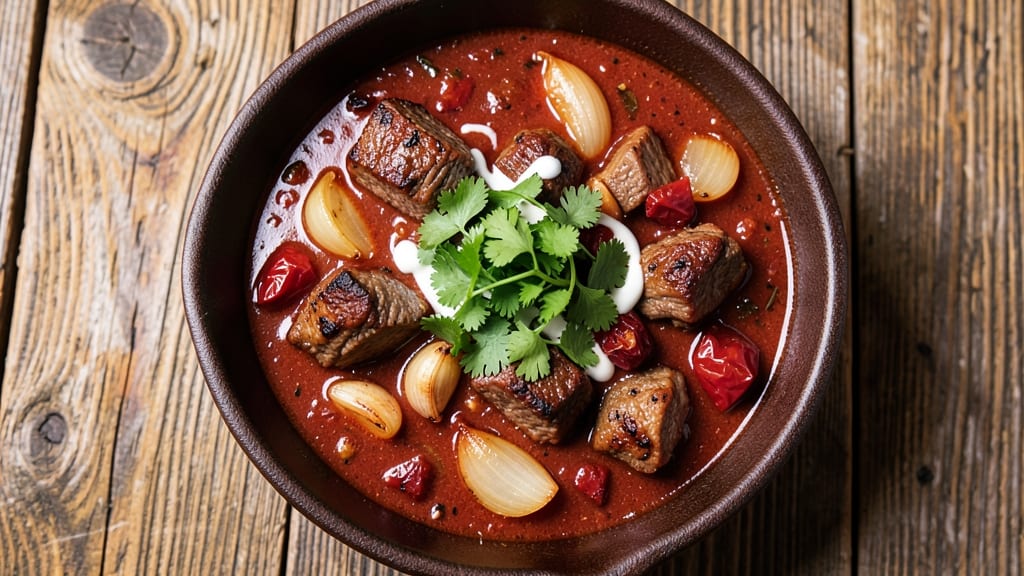
This ancho beef chili recipe transforms tough beef into melt-in-your-mouth threads infused with smoky, earthy depth from charred ancho chiles. 🔥 The secret lies in slow cooking—allowing the beef to break down while the chiles develop their signature caramelized sweetness that balances the heat.
I've perfected this technique over years of testing, ensuring every bite delivers that perfect marriage of tender beef, rich spices, and subtle smokiness that defines authentic Mexican chili.
What sets this recipe apart is the combination of traditional methods with modern convenience. We start with properly charring the ancho chiles to unlock their full flavor potential, then build layers of complexity through toasted spices and slow simmering.
The result is a chili that's hearty enough for a weeknight dinner but sophisticated enough for company—with just the right balance of heat and depth that makes it unforgettable.
The beef becomes so tender it practically dissolves on your tongue, while the chili develops a thick, velvety texture that coats every spoonful. This isn't just another chili recipe—it's a complete meal in one pot, packed with protein, fiber, and warming spices that will have everyone asking for seconds.
The aroma alone will transform your kitchen into a Mexican cantina, promising comfort with every spoonful.
Perfect for serving with warm tortilla chips, crusty bread, or over rice, this chili scales beautifully for crowds while remaining simple enough for weeknight cooking. The technique is foolproof once you understand the key steps—char the chiles, brown the beef properly, and let it simmer low and slow.
Here's everything you need to make it happen.
Ingredients for ancho beef chili
Sixteen ingredients transform tough beef into smoky, velvety chili threads with authentic Mexican depth.
| Ingredient | Amount | Notes |
|---|---|---|
| Chuck Roast 🥩 | 3 lb | Trimmed of excess fat |
| Dried Ancho Chiles 🌶️ | 4 whole | Stems/seeds removed, charred |
| Yellow Onion 🧅 | 1 whole | Diced, medium size |
| Garlic Cloves 🧄 | 6 cloves | Peeled, whole |
| Tomatoes 🍅 | 28 oz | Canned San Marzano, crushed |
| Beef Broth 💧 | 4 cups | Low-sodium preferred |
| Ground Cumin 🌿 | 2 tbsp | Toasted for depth |
| Mexican Oregano 🍃 | 1 tbsp | Dried, not regular oregano |
| Smoked Paprika 🌶️ | 1 tbsp | Sweet or hot variety |
| Dark Brown Sugar 🍚 | 1 tbsp | For caramelized depth |
| Black Peppercorns 🌶️ | 1 tsp | Freshly ground |
| Bay Leaves 🍃 | 2 whole | For aromatic base |
| Olive Oil 🫒 | 2 tbsp | Extra-virgin for searing |
| Salt 🧂 | 1 ½ tsp | Kosher or sea salt |
| Cider Vinegar 🍋 | 1 tbsp | For brightness |
The ancho chiles are non-negotiable for that signature smoky-sweet flavor. Look for dried ancho chiles in the Latin foods aisle—avoid the pre-packaged blends that often contain fillers. Char them yourself (or buy pre-charred) for maximum depth; the smoldering aroma alone transforms this dish. Trader Joe's and Mexican markets carry the best quality, but most grocery stores stock them too. If you can't find ancho, guajillo chiles work in a pinch, though they're hotter and less sweet. Toast your spices too—cumin and oregano should be dry-toasted in a pan for 30 seconds to release their oils, which adds complexity. The beef? Chuck roast is essential—it's the only cut with enough connective tissue to break down into those signature threads.
No ancho chiles? Ancho chile powder at half the amount (about 1 tbsp) mimics the flavor, though it lacks the smoky depth. The tomatoes can be fresh if you're in season, but San Marzano canned tomatoes are the gold standard—they're sweeter and less acidic, which balances the chiles perfectly. For the beef broth, low-sodium is crucial to control the final seasoning. The cider vinegar might seem odd, but it brightens the dish and cuts through the richness of the beef. If you're serving this to a crowd, double the batch—it reheats even better the next day. The Mexican oregano is key here; regular oregano won't give you that earthy, slightly citrusy note that defines authentic chili.
This chili tastes even better the next day as the flavors meld. Store leftovers in an airtight container in the fridge for up to 5 days, or freeze portions for 3 months. For freezing, cool the chili completely first to prevent ice crystals. The charred chiles and toasted spices keep well, so you can prep them ahead and store them in a sealed container in the pantry for up to 2 weeks. If you're making this for a party, assemble it in a slow cooker or Dutch oven and keep it warm on low heat—the longer it simmers, the deeper the flavor. Serve with warm corn tortillas or crusty bread to soak up every last bit of that smoky, spiced goodness.
Why You'll Love This Recipe
- One-Pot Magic: I swear by this recipe when I’m too tired to wash extra dishes—just brown the chuck roast, toss everything in one pot, and let it slow down. The onions caramelize right in the sauce, so no chopping ahead or separate pans.
- Smoky Depth Without the Hassle: Here’s what sold me—the ancho chiles give it that rich, smoky kick without needing a grill or fancy spices. The tomatoes and garlic blend into this velvety base that tastes like it simmered all day (but didn’t).
- Game for Leftovers (Seriously): Between us, this chili only gets better the next day. The flavors meld into something heartier, and it reheats like a dream. I make a double batch on Sundays and eat it for lunch all week—no sad, dried-out leftovers here.
- Budget-Friendly Powerhouse: A chuck roast stretches forever, and dried ancho chiles last for months. This feeds four for under $10, and the slow-cooked beef turns tough cuts into something tender. My wallet and my family thank me every time.
Step-by-step instructions for ancho beef chili
Here's how to build deep, smoky flavor with tender beef threads and balanced heat.
🔥 Step 1: Char the Ancho Chiles and Sear the Chuck Roast
Preheat your oven broiler to high. Place the 4 whole dried ancho chiles directly on a baking sheet and broil for 2-3 minutes per side until deeply charred and fragrant. Watch closely—they'll darken quickly. Transfer to a bowl, cover with hot water, and let soak for 15 minutes to soften.
While the chiles char, heat 2 tablespoons olive oil in a heavy Dutch oven over medium-high heat. Pat the 3 lb chuck roast dry and season generously with 1.5 teaspoons salt and 1 teaspoon freshly ground black peppercorns. Sear the roast for 8-10 minutes total, turning occasionally, until deeply browned on all sides. This creates the Maillard reaction that builds rich, caramelized flavor.
🍳 Step 2: Build the Chili Base with Aromatics
Remove the seared chuck roast and set aside. In the same Dutch oven, add 1 diced yellow onion and cook for 5-6 minutes until softened and golden. Add 6 peeled garlic cloves and cook for 30 seconds until fragrant—don't let them burn. Stir in 2 tablespoons toasted ground cumin, 1 tablespoon smoked paprika, and 1 tablespoon Mexican oregano, cooking for 1 minute to toast the spices and release their aromas.
Pour in 28 ounces crushed tomatoes and 4 cups beef broth, scraping up any browned bits from the bottom of the pot. Add 2 whole bay leaves and bring to a gentle simmer. Here's the thing—this base needs to develop flavor slowly. Let it simmer uncovered for 15 minutes while you prepare the charred ancho chiles.
🥘 Step 3: Blend and Incorporate the Ancho Puree
Drain the soaked ancho chiles and transfer them to a blender with 1 tablespoon cider vinegar and 1 tablespoon dark brown sugar. Blend until completely smooth, then strain through a fine-mesh sieve to remove any remaining skins. This puree is the heart of your chili's smoky depth—don't skip the straining.
Return the chili base to a simmer and stir in the ancho puree. Add the seared chuck roast back to the pot, along with any accumulated juices. The roast should be mostly submerged in the liquid. Bring to a gentle boil, then reduce heat to low and cover partially. This is where patience pays off—simmer for 2.5 to 3 hours until the beef is fork-tender and easily pulls apart with two forks.
⏰ Step 4: Finish and Adjust Seasoning
Once the beef is tender, remove it from the pot and shred it using two forks directly in the cooking liquid. Return the shredded beef to the pot and simmer uncovered for another 10-15 minutes to thicken the sauce slightly. Taste and adjust seasoning—you may need to add more salt or a splash of vinegar to balance the flavors.
The chili should have a rich, smoky aroma with visible beef threads suspended in a thick, slightly glossy sauce. If it's too thin, simmer uncovered for another 5-10 minutes to reduce. For best texture, serve immediately with toppings like avocado, cilantro, or a dollop of sour cream. The flavors will deepen as it sits, but the texture is best fresh off the stove.
Pro Tips For Making Ancho Beef Chili
- SEAR THE CHUCK FIRST: I learned this the hard way—skipping the sear means flavorless chili. Pat the chuck roast very dry, then hit it with high heat in a Dutch oven until deep brown crust forms. That’s where the depth comes from, not just the ancho.
- SOAK ANCHOS IN HOT WATER: Dried ancho chiles need a quick soak, but don’t drown them—just 10 minutes in hot (not boiling) water softens them enough for blending without turning to mush. Strain out the skins, then blend with the soaking liquid—it’s the real secret sauce.
- LOW AND SLOW WINS: After browning the meat, cover the pot and simmer at actual low heat—think 275°F (135°C) if your stove lets you. Too hot, and the chili turns gluey; too cool, and the beef stays tough. Check at 3 hours, then let it go until the meat shreds easily.
- UPGRADE WITH TOMATO PASTE: This isn’t cheating—it’s insurance. Stir in 2 tablespoons of tomato paste with the blended ancho mixture. It thickens the chili naturally, balances the acidity, and cuts through the richness of the chuck. (Yes, even if the recipe doesn’t call for it.)
Regional styles of these flavors
Texas-Style Chili
In Texas, this chili takes center stage with bold flavors and a focus on beef. The key difference? No beans—just tender beef, deep spices, and a thick, rich sauce.
Texans often add 1 tablespoon of cocoa powder to deepen the flavor, and they serve it with white bread or crackers instead of tortillas. I like to add ½ cup of beef tallow instead of olive oil for extra richness, which is a nod to traditional Texas chili recipes.
The heat level is usually medium, with 1-2 tablespoons of cayenne pepper added at the end for a subtle kick. 🌶️
Mexican Cantina Style
This is the version you'd find in a Mexican cantina, where the chili is served as a hearty stew with warm tortillas or rice.
The secret here is balancing the smoky ancho flavor with fresh cilantro and lime juice—I add ¼ cup chopped cilantro and 2 tablespoons lime juice at the end. The chili is often thicker, almost like a sauce, and served with warm corn tortillas for dipping.
In Oaxaca, they sometimes add a splash of mezcal to the chili for a smoky, earthy depth that pairs perfectly with the ancho. The texture is slightly chunkier, with visible beef pieces rather than shredded threads.
New Mexican Adaptation
New Mexico puts its own spin on ancho chili by incorporating green chile—either roasted Hatch chiles or a blend of green chile powder.
I like to add 1 tablespoon of green chile powder along with the ancho puree, which gives the chili a vibrant green hue and a slightly sweeter, earthier flavor. New Mexicans often serve this chili with posole-style toppings like shredded lettuce, radishes, and avocado.
The chili is typically less spicy but has a deeper, more complex flavor profile due to the green chile. This version is perfect for those who love a balance of smoky and slightly sweet flavors. 🌵
Slow-Cooker Version
For a hands-off approach, this chili shines in a slow cooker. After searing the beef and charring the chiles, transfer everything to a 6-quart slow cooker and cook on low for 7-8 hours.
The slow cooker method enhances the tenderness of the beef and deepens the flavors without requiring constant attention. I often add ½ cup of beef broth extra to ensure the chili doesn't dry out.
This method is ideal for busy weeknights or when you want to prepare the chili ahead of time. The result is just as rich and flavorful as the stovetop version, with that signature smoky depth from the ancho chiles. ⏰
Spicy Southwestern Twist
For those who love heat, this version cranks up the spice level with 2 tablespoons of chipotle powder and 1 tablespoon of cayenne pepper. I also add 1 diced jalapeño to the blend with the ancho chiles for an extra layer of heat.
This chili pairs perfectly with cooling toppings like diced avocado, sour cream, and lime wedges to balance the intensity. The Southwestern style often includes black beans—about 1 can (15 oz)—for added heartiness.
This version is perfect for those who enjoy a fiery kick with their smoky, spiced beef chili. 🔥
Nutrition facts
Frequently asked questions
Can I substitute ancho chiles with other dried peppers?
Yes, but the flavor will change. For a similar smoky depth, use guajillo chiles (remove seeds for less heat) or pasilla chiles. If you only have ancho powder, use 1 tablespoon plus ½ teaspoon smoked paprika for depth. Avoid habaneros or jalapeños—they add heat without the signature sweetness.
Why does my chili turn out thin or watery?
This usually happens from one of three issues: using too much broth, not reducing enough, or not letting the beef break down properly. First, ensure your beef simmers for the full 2.5-3 hours—this is non-negotiable for tender threads. If it's still thin, simmer uncovered for 10-15 extra minutes to thicken. For future batches, reduce broth by ½ cup and add 1 tablespoon cornstarch mixed with water as a slurry at the end.
Can I make this chili in a slow cooker or Instant Pot?
For a slow cooker, sear the beef and char the chiles as directed, then transfer everything to a 6-quart slow cooker with ½ cup extra broth. Cook on low for 7-8 hours or high for 4-5 hours. For an Instant Pot, use the high pressure setting for 45 minutes after browning, then natural release for 10 minutes. Both methods yield tender beef—just check for doneness early to avoid overcooking.
How can I make this chili less spicy?
Since ancho chiles are naturally mild, the heat likely comes from the smoked paprika or cayenne. To mellow it, reduce the smoked paprika to ½ teaspoon and omit any cayenne. For extra insurance, stir in 1 tablespoon honey or brown sugar at the end to balance the heat. If it's already cooked, serve with cooling toppings like sour cream, avocado, or lime wedges to counteract the spice.
What’s the best way to reheat leftover ancho beef chili?
Reheat gently on the stovetop over low-medium heat for 5-7 minutes, stirring occasionally, until warmed through. Avoid microwaving—it can make the sauce watery. For best results, transfer portions to a saucepan with 1-2 tablespoons beef broth to restore moisture. The chili actually tastes better the next day as flavors meld, so don’t hesitate to reheat leftovers for 3-4 days.