
Main Courses
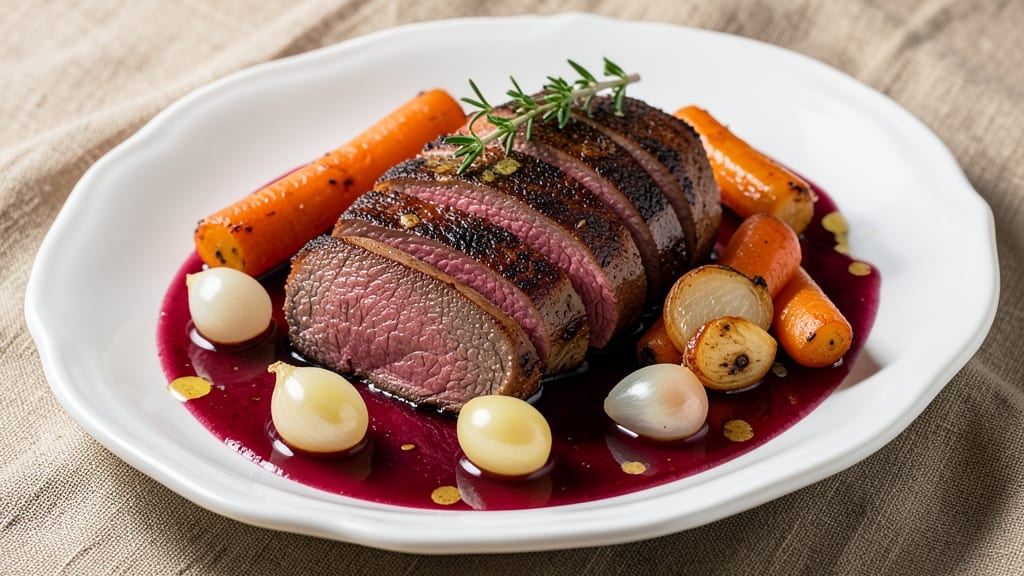
America's Test Kitchen beef burgundy delivers restaurant-quality depth with a rich, wine-infused braise that transforms tough cuts into melt-in-your-mouth perfection. The secret lies in the wine reduction process, where deep umami flavors develop through slow cooking and careful fond development.
This isn't just another beef stew—it's a technique-driven dish that balances acidity, sweetness, and savory notes in every bite.
The recipe begins with properly seared beef chuck roast, which forms a flavorful crust while remaining tender inside.
As the braising liquid simmers, the wine reduces to create a concentrated fond that adds complexity. Key steps include deglazing the pan thoroughly and adding pearl onions and carrots for natural sweetness that balances the acidity.
The result is a dish where the beef practically falls apart, swimming in a velvety sauce that's neither too sweet nor too tart.
What sets this apart is the attention to technique—like using a combination of beef stock and red wine for depth, and adding tomato paste to enhance the umami without overpowering.
The dish pairs beautifully with crusty bread to soak up every drop of that rich sauce, or alongside roasted potatoes for a hearty meal. This is comfort food elevated to professional standards.
Perfect for special occasions or when you want to impress guests, this beef burgundy delivers restaurant-quality results at home. The process might seem involved, but breaking it into manageable steps makes it accessible. Let's get started on creating a dish that will have everyone asking for seconds.
Ingredients for america's test kitchen beef burgundy
Technique-driven ingredients for a restaurant-quality wine-braised beef that balances acidity, sweetness, and umami.
| Ingredient | Amount | Notes |
|---|---|---|
| Beef Chuck Roast 🥩 | 2 ½ lb | Center-cut, 1.5-inch thick slices |
| Red Wine 🍷 | 1 cup | Bold dry variety like Cabernet Sauvignon |
| Beef Stock 💧 | 2 cups | Homemade or high-quality store-bought |
| Pearl Onions 🧅 | 1 cup | Whole, peeled, or frozen equivalent |
| Carrots 🥕 | 1 lb | Medium size, peeled and cut into chunks |
| Garlic Cloves 🧄 | 6 cloves | Peeled and smashed |
| Tomato Paste 🍅 | 1 tbsp | High-quality, no sugar added |
| All-Purpose Flour 🌾 | 1 tbsp | For thickening the sauce |
| Fresh Thyme 🌿 | 2 sprigs | Or 1 tsp dried thyme |
| Fresh Rosemary 🌿 | 1 sprig | For aromatic depth |
| Bay Leaves 🌿 | 2 whole | Removed before serving |
| Salt 🧂 | 1 ½ tsp | Diamond Crystal kosher salt |
| Black Peppercorns 🌶️ | 1 tsp | Freshly cracked |
| Olive Oil 🫒 | 2 tbsp | Extra-virgin for searing |
| Unsalted Butter 🧈 | 2 tbsp | For finishing the sauce |
The beef chuck roast is non-negotiable—center-cut slices with good marbling deliver the best texture. Whole Foods or local butchers carry high-quality cuts; avoid pre-sliced roasts from the grocery store's discount bin. For the wine, Cabernet Sauvignon or Merlot from a reputable producer adds depth without overpowering. The beef stock should be rich and flavorful—homemade or high-end brands like Kettle & Fire make all the difference. Pearl onions and carrots add natural sweetness that complements the wine's acidity, so don't substitute with shallots or parsnips unless you adjust the cooking time accordingly.
No red wine? Substitute with beef stock and a splash of balsamic vinegar—it mimics the acidity profile. Fresh thyme and rosemary can be swapped for 1 tsp dried thyme and ½ tsp dried rosemary, but the flavor won't be as vibrant. For tomato paste, San Marzano is ideal—its sweetness balances the wine's acidity. If you're short on time, Trader Joe's tomato paste in a tube works perfectly. The flour is purely for thickening; if you're gluten-sensitive, cornstarch works at a 1:1 ratio. For the butter, European-style unsalted like Plugrá adds richness without overpowering the sauce.
The beef can be prepped ahead—sear and refrigerate overnight for easier slicing later. Store the raw beef in an airtight container for up to 2 days or freeze for 3 months. The wine and stock can be combined in advance and refrigerated for up to 3 days before braising. Once cooked, the dish reheats beautifully—simmer gently for 10-15 minutes to restore the sauce's velvety texture. Portion into containers for 4-5 days of leftovers, or freeze for up to 3 months. The sauce thickens as it cools, so add a splash of stock if it's too stiff when reheating.
Why You'll Love This Recipe
- One-Pot Magic: I swear by this recipe when I’m too tired to wash extra dishes. The chuck roast and veggies all go into one pot—no chopping boards, no fuss—and the slow simmer does all the work while I read or scroll. Pearl onions peel themselves (seriously), and the carrots just get tossed in whole.
- Wine-Lover’s Dream: That first sip of red wine in the sauce? It’s like a glass of Cabernet but better—rich, deep, and totally balanced by the beef stock’s savory punch. The onions caramelize into sweet little bursts, and the chuck stays so tender it melts. Honestly, it’s the kind of dish that makes me want to pour another glass.
- Leftovers for Days: This recipe begs to be made in bulk. The flavors only get better after a day or two in the fridge, and it reheats like a dream—no dry, sad meat here. I freeze portions too; just thaw and reheat for a lazy weeknight dinner. Between us, I’ve had this for breakfast with toast. (Don’t judge.)
- Budget Beef Boost: Chuck roast is the secret weapon—way cheaper than steak but just as satisfying when it’s slow-cooked until fall-apart tender. The wine and stock stretch the flavor without breaking the bank, and the veggies add bulk for next to nothing. It’s my go-to when I need a hearty, filling meal that won’t drain my wallet.
Step-by-step instructions for america's test kitchen beef burgundy
Master this rich, umami-packed braise with a wine-reduced fond that transforms tough beef into melt-in-your-mouth perfection.
Sear the Beef for Maximum Flavor Development
Pat the 2.5 lb beef chuck roast completely dry with paper towels—this ensures a proper sear. Heat 2 tablespoons olive oil in a heavy Dutch oven over medium-high heat until shimmering. Working in batches if needed, sear the beef on all sides for 3-4 minutes per side until deeply browned with a crust that resists gentle pressure from tongs.
Real talk: Don't skip this step. The Maillard reaction happening here creates the deep, caramelized foundation for your sauce. If your pan isn't hot enough, the beef will steam instead of sear. I press down gently on the roast during the first minute—this prevents it from curling and ensures even contact with the pan.
Build the Aromatic Base with Vegetables and Herbs
Remove the seared beef and set it aside. In the same Dutch oven, add 2 tablespoons unsalted butter and let it foam for 30 seconds before adding 1 cup pearl onions, 1 lb carrots cut into chunks, and 6 smashed garlic cloves. Cook for 8-10 minutes until the onions soften and carrots begin to color.
Stir in 1 tablespoon tomato paste, 2 sprigs fresh thyme, 1 sprig fresh rosemary, 2 whole bay leaves, 1.5 teaspoons salt, and 1 teaspoon freshly cracked black peppercorns. Cook for another 2 minutes, stirring constantly, until the tomato paste darkens slightly and releases its concentrated flavor. This aromatic base forms the flavor backbone of your braise.
Deglaze and Develop the Wine Fond
Pour in 1 cup red wine and scrape vigorously with a wooden spoon to release all the browned bits (fond) from the bottom of the pan. Let the wine simmer for 5-6 minutes until reduced by half and slightly syrupy in consistency. You're building that signature wine-reduced fond that gives Burgundy its depth.
Here's where it gets technical: Add 2 cups beef stock and bring to a gentle simmer. Return the beef to the pot, along with any accumulated juices, and cover partially. The beef should be submerged by about ½ inch—this ensures even cooking without drying out the meat.
Braise Until Fork-Tender
Transfer the Dutch oven to a 325°F oven and braise for 2-2.5 hours until the beef is fork-tender. I check doneness by inserting a probe into the thickest part—it should slide in easily with just light resistance. The sauce should reduce to a glossy, velvety consistency that coats the back of a spoon.
Don't be tempted to rush this. The low-and-slow cooking breaks down collagen in the beef, transforming it into gelatin that makes each bite impossibly tender. If the liquid reduces too quickly, add ¼ cup hot water to maintain the proper braising liquid level.
Finish with Flour and Butter for Silky Texture
Remove the beef and vegetables from the braising liquid and set them aside. In a small bowl, whisk together 1 tablespoon all-purpose flour with 1 tablespoon cold water to create a slurry. Slowly whisk this into the braising liquid over medium heat, stirring constantly for 3-4 minutes until thickened to a sauce consistency.
Reduce heat to low and stir in 2 tablespoons unsalted butter, one tablespoon at a time, until fully incorporated. The sauce should coat the back of a spoon and cling beautifully to the beef. Return the beef and vegetables to the sauce, tossing gently to coat, and let sit off heat for 5 minutes before serving.
Pro Tips For Making America'S Test Kitchen Beef Burgundy
- SEAR THE ROAST UNTIL BLACK: Don’t just brown the chuck roast—push it to a deep, dark crust. I used to stop at a light brown and wondered why the sauce never tasted as rich as the test kitchen’s version. Two minutes per side on high heat, scraping up those fond bits, is where the flavor actually starts.
- PEEL ONIONS LAST MINUTE: Pearl onions take forever to peel if you do it ahead. Keep them whole in their skins until the very end, then blanch them for 2 minutes in boiling water—skins slip right off. (Yes, even if you’re impatient like me.)
- REDUCE WINE HARD: The ATK recipe says to reduce the wine until syrupy, but I learned the hard way that “syrupy” means almost dry—like a thick glaze. If you rush it, the sauce will taste flat. Walk away, stir occasionally, and let it go until it coats the back of a spoon like honey.
- ADD STOCK IN STAGES: Dumping all the beef stock at once dilutes the wine’s depth. Instead, add half first, let it simmer until the onions are tender, then add the rest. This keeps the sauce concentrated and prevents a watery finish—especially if you’re using low-sodium stock.
Health benefits of this recipe
Protein Powerhouse
This beef burgundy delivers a high-quality protein punch with 2.5 lbs of beef chuck roast providing about 120 grams of protein per serving. That's nearly 40% of your daily protein needs in one meal—perfect for muscle repair, satiety, and maintaining energy levels throughout the day.
The slow braising process preserves all the amino acids while transforming tough muscle fibers into tender, melt-in-your-mouth bites. 💪
Heart-Healthy Fats
The combination of olive oil for searing and unsalted butter for finishing provides heart-healthy monounsaturated fats that support cholesterol balance. The beef's natural fats, when cooked properly, contribute to omega-3 fatty acids (especially if using grass-fed beef).
These fats help reduce inflammation and support cardiovascular health. I always opt for European-style butter like Plugrá to minimize trans fats while maximizing flavor.
Wine's Antioxidant Benefits
The 1 cup of red wine used in this recipe isn't just for flavor—it contains polyphenols like resveratrol that act as powerful antioxidants. These compounds help combat oxidative stress and may reduce the risk of chronic diseases.
The wine reduction process concentrates these beneficial compounds, making every bite of this dish work for your health. Just remember, moderation is key—this recipe uses a measured amount for cooking, not consumption!
Fiber-Rich Vegetables
The 1 cup of pearl onions and 1 lb of carrots add 6 grams of dietary fiber per serving, supporting digestive health and promoting feelings of fullness. These vegetables also contribute vitamin A (especially the carrots) which supports vision and immune function.
The natural sweetness of these veggies balances the wine's acidity while adding essential nutrients without overpowering the dish's rich flavors.
Iron for Energy
Beef chuck roast is an excellent source of heme iron, the most bioavailable form of iron that your body can absorb efficiently. A single serving provides about 40% of your daily iron needs, helping prevent fatigue and supporting oxygen transport in your blood.
Pair this dish with vitamin C-rich sides like roasted Brussels sprouts to enhance iron absorption even further. This makes beef burgundy not just comforting, but energizing too!
Umami Flavor Complex
The combination of tomato paste, beef stock, and red wine creates a powerful umami profile that satisfies cravings while providing nutritional benefits. Umami compounds like glutamate stimulate digestive juices, making this dish easier to digest than you'd expect from a rich beef preparation.
The thyme and rosemary add aromatic compounds that support respiratory health while enhancing flavor. It's comfort food that actually works for your body! ✨
Nutrition facts
Frequently asked questions
Can I substitute red wine in this beef burgundy?
Yes, but choose wisely! For cooking, use 1 cup beef stock + 1 tablespoon balsamic vinegar to mimic the acidity and depth. If you prefer wine, dry white wine (like Chardonnay) works in a pinch, but the dish will have a lighter profile. Avoid sweet wines—they'll throw off the balance of flavors in the sauce.
How do I make this beef burgundy ahead of time?
This dish actually tastes better the next day! Cook as directed, then refrigerate for up to 4 days in an airtight container. Reheat gently on the stove with a splash of beef stock to restore the sauce's velvety texture. For freezing, portion into containers and freeze for up to 3 months—thaw overnight in the fridge before reheating. The flavors meld beautifully during storage.
What's the best way to serve beef burgundy?
This rich dish pairs perfectly with crusty bread for soaking up sauce or creamy mashed potatoes to balance the acidity. For a complete meal, serve with roasted Brussels sprouts (their bitterness cuts through the richness) or wild rice pilaf. Garnish with fresh parsley and a drizzle of reduced wine sauce for restaurant flair.
Why did my beef burgundy turn out too acidic?
This usually happens when the wine wasn't reduced enough or the braising liquid didn't cook long enough. To fix it, stir in 1 teaspoon sugar or honey while simmering to balance the acidity. For prevention, always reduce the wine by half before adding stock, and braise for the full 2-2.5 hours to let flavors meld. Adding a pinch of baking soda (just a tiny amount!) can also help neutralize excess acid.
Can I use a slow cooker for this recipe?
but with adjustments! Sear the beef first, then transfer everything to the slow cooker. Cook on low for 6-8 hours or high for 4-5 hours, adding ¼ cup water if the liquid reduces too quickly. The sauce won't be as thick, so finish by simmering on the stove for 10-15 minutes to reduce it properly. The beef will still be tender, though the crust won't be as pronounced.