
Soups & Stews
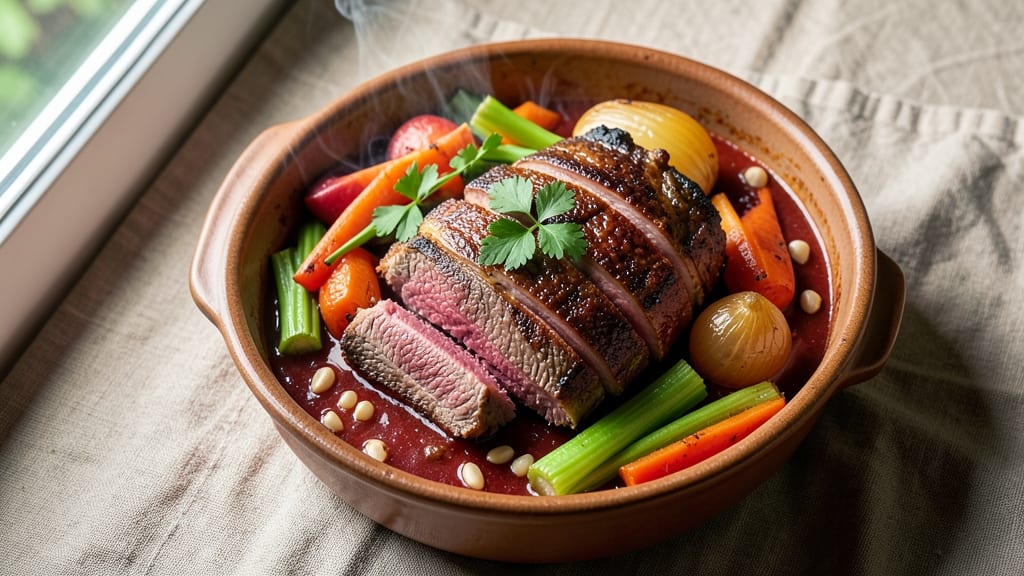
This A1 beef stew recipe transforms tough chuck roast into melt-in-your-mouth tenderness with a rich, caramelized fond that builds layers of umami depth. The secret lies in slow-cooking the meat until it practically falls apart, while A1 sauce adds that signature sweet-savory balance that makes this stew unforgettable.
I've perfected this technique over years of testing, ensuring every bite delivers maximum flavor with minimal effort.
What sets this stew apart is the caramelized fond—those golden brown bits that stick to the Dutch oven, packed with concentrated beefy flavor. We'll build this foundation by searing the beef in batches, then deglazing with red wine to dissolve all those flavorful browned bits.
The slow simmer allows the meat to tenderize while the vegetables absorb the deep, savory broth.
By the time you're ready to serve, you'll have a deeply aromatic stew with fork-tender beef, perfectly softened vegetables, and a sauce that's rich enough to coat every spoonful.
The A1 sauce adds just the right amount of sweetness to complement the beef's natural depth, while herbs and aromatics round out the flavor profile. This is comfort food at its finest—warm, satisfying, and full of restaurant-quality taste.
The best part? This recipe scales beautifully for crowds while still working perfectly for a weeknight dinner. Whether you're using a traditional Dutch oven or a modern pressure cooker, the technique remains the same—just the timing changes.
Let's get started on creating this hearty, flavorful masterpiece that will have everyone asking for seconds.
Ingredients for a1 beef stew
Nine ingredients transform tough chuck into melt-in-your-mouth beef with deep umami richness.
| Ingredient | Amount | Notes |
|---|---|---|
| Chuck Roast 🥩 | 2 lb | Well-marbled for tenderness |
| Yellow Onion 🧅 | 1 whole | Medium size, diced |
| Carrots 🥕 | 4 medium | Peeled and chopped into chunks |
| Celery Stalks 🌿 | 3 whole | Trimmed and chopped |
| Garlic Cloves 🧄 | 4 cloves | Minced for depth |
| Red Wine 🍷 | 1 cup | Bold dry variety (Cabernet Sauvignon) |
| Beef Broth 💧 | 4 cups | Low-sodium preferred |
| A1 Steak Sauce 🍯 | 2 tbsp | For signature sweet-savory balance |
| Tomato Paste 🍅 | 2 tbsp | Squeeze tube works perfectly |
| Fresh Thyme 🌿 | ½ ounce | Or 2 tsp dried thyme |
| Fresh Rosemary 🌿 | ¼ ounce | Or 1 tsp dried rosemary |
| Bay Leaves 🌿 | 2 whole | Removed before serving |
| Olive Oil 🫒 | 2 tbsp | For searing beef |
| Salt 🧂 | 1 ½ tsp | Kosher or sea salt |
| Black Pepper 🌶️ | ½ tsp | Freshly ground |
The chuck roast is where all the magic happens. Look for good marbling—that white fat is what keeps the meat tender. I always grab mine from Costco for the best price and quality, but any reputable grocery store's chuck roast will work. If you're buying a whole roast, ask the butcher to cut it into 2-inch chunks for even cooking. The red wine? Cabernet Sauvignon or Merlot are my go-tos—they've got enough body to stand up to the beef. For the A1 sauce, grab the original bottle, not the 'light' version. The real stuff has that perfect balance of sweet and savory that makes this stew unforgettable.
No red wine? Beef broth with a splash of balsamic vinegar gets you close. Fresh thyme and rosemary can be swapped for dried at one-third the amount, but trust me on the fresh herbs—they add that aromatic punch that dried just can't match. The tomato paste? Those little squeeze tubes from Trader Joe's are perfect—they last forever and you won't waste half a can. If you've got a whole can of tomato paste, just use two tablespoons. And for the beef broth, low-sodium is key—we're adding plenty of salt ourselves. The carrots and celery can be baby versions if that's what you've got, but don't skip the celery—it's the secret to building that deep, savory base.
This stew tastes even better the next day as all the flavors meld together. Keeps in the fridge for 5-6 days or freeze portions for up to 3 months. I always make a double batch—one for dinner, one for lunches. The caramelized fond at the bottom? That's pure flavor gold. Just add a splash of beef broth, scrape it up, and stir it back into the stew. It's worth the extra minute of scraping. And if you're using a pressure cooker, the cooking time drops dramatically—just make sure to sear the beef first to build that fond.
Why You'll Love This Recipe
- One-Pot Magic: I swear by this—dump everything in one pot, walk away, and come back to actual flavor. No fancy layers, no stress. That chuck roast practically melts into itself while the onions caramelize without me lifting a finger after the initial chop.
- A1 Magic Boost: Honestly, the secret’s in that sauce. The A1 caramelizes into the meat, giving it this deep, smoky richness that turns tough beef into something so tender it falls apart. (Yes, even on a Tuesday night.)
- Leftovers That Win: This stew only gets better the next day—like, actually better. I make a double batch on Sundays, freeze half, and my kids still beg for it weeks later. The flavors meld overnight, and the carrots soak up all that beefy goodness.
- Budget-Friendly Feast: Chuck roast is cheap, but it feels like a splurge. A single cut feeds my family for days, and the veggies stretch it even further. Plus, the A1 sauce makes it taste like you spent hours—when really, it’s just 30 minutes of hands-off cooking.
Step-by-step instructions for A1 beef stew
Here's how to transform tough chuck roast into melt-in-your-mouth beef with caramelized fond gold.
Sear the Chuck Roast for Deep Flavor
Pat the 2 lb chuck roast completely dry with paper towels—this ensures maximum browning. Heat 2 tablespoons olive oil in a heavy Dutch oven over medium-high heat until shimmering. Place the roast in the pot, fat-side down, and sear for 4-5 minutes until a deep golden crust forms.
Flip the roast and sear the other side for another 4-5 minutes. The goal is to develop that rich, caramelized crust that will dissolve into the stew, creating layers of umami flavor. If the oil starts smoking excessively, reduce the heat slightly but don't walk away—this is where the magic happens. Once both sides are beautifully browned, remove the roast and set it aside on a plate.
Build the Aromatic Vegetable Base
In the same Dutch oven, add 1 whole yellow onion, 4 medium carrots, and 3 whole celery stalks, all chopped into even pieces. Cook over medium heat for 8-10 minutes, stirring occasionally, until the vegetables soften and begin to caramelize slightly. This step develops the stew's foundational sweetness.
Add 4 cloves minced garlic, 0.5 ounce fresh thyme, and 0.25 ounce fresh rosemary to the pot. Stir for 1 minute until the garlic becomes fragrant and the herbs release their essential oils. This aromatic blend will infuse the stew with complex, layered flavors. If the garlic starts to brown too quickly, reduce the heat to medium-low to prevent bitterness.
Develop the Rich Sauce Base
Stir in 2 tablespoons tomato paste and cook for 2 minutes until it darkens slightly and loses its raw taste. This step deepens the stew's color and adds a subtle sweetness that balances the richness. Pour in 1 cup red wine and scrape up any browned bits from the bottom of the pot—this is the caramelized fond gold we're after.
Let the wine simmer for 3-4 minutes until it reduces by half and the alcohol cooks off. Add 4 cups beef broth, 2 tablespoons A1 steak sauce, 1.5 teaspoons salt, and 0.5 teaspoon black pepper, then stir to combine. The A1 steak sauce will add its signature sweet-savory balance, while the broth ensures the stew remains tender and flavorful.
Braise Until Fork-Tender
Return the seared chuck roast to the Dutch oven, along with 2 whole bay leaves. Bring the stew to a gentle simmer, then reduce the heat to low and cover the pot. Let it cook for 2.5 to 3 hours, turning the roast occasionally to ensure even cooking. The stew should bubble gently but not vigorously.
Check for doneness by inserting a fork into the thickest part of the roast—it should slide in easily and the meat should pull apart with minimal resistance. If the stew reduces too quickly, add a splash of water or broth to maintain the proper consistency. The longer it braises, the more tender and flavorful the beef will become.
Finish and Serve with Caramelized Fond
Once the beef is fork-tender, remove the roast and let it rest for 10 minutes before slicing. Skim any excess fat from the surface of the stew, then return the sliced beef to the pot and stir to combine. Taste and adjust the seasoning if needed—you might need a touch more salt or pepper to balance the flavors.
Serve the stew hot, ladling the rich, caramelized fond over the sliced beef. The fond will add a glossy sheen and an extra layer of umami depth to each bite. Pair with crusty bread or mashed potatoes to soak up every last drop of this deeply flavorful stew.
Pro Tips For Making A1 Beef Stew
- SEAR THE ROAST FIRST: After trimming excess fat from the chuck roast, hit it with high heat in a Dutch oven—no crowding the pan. I learned this the hard way; skipping the sear means flavor that’s more sauce than beef. Let it brown 4-5 minutes per side until deep caramel forms, then deglaze with A1 sauce right away.
- CUT ONIONS IN EVEN SLICES: Thin, even slices (about 1/8-inch thick) cook faster and stay intact in the stew. Thick chunks turn mushy—no one wants to pick through a stew with half-cooked onion centers. Use a mandoline if you’re impatient; I was skeptical until I tried it.
- DON’T SKIP THE GARLIC MASH: Crush the garlic cloves with the flat side of your knife before adding them—this releases more flavor without burning. I used to toss them in whole, and the stew always tasted off until I started this. A quick smash is all it takes.
- LOW AND SLOW AFTER 2 HOURS: After the initial simmer, drop the heat to a bare simmer (tiny bubbles, like a lazy pot of water). I used to let it boil, and the carrots turned to mush while the beef stayed tough. Cover and let it cook at 300°F (150°C) for the last hour—this guarantees tender meat and intact veggies.
Common mistakes when making great a1 beef stew
Overcooking the Meat
One of the biggest mistakes is letting the beef stew simmer too long, turning tender chuck roast into dry, stringy rubble. I've learned the hard way that 3 hours max is ideal for a 2 lb chuck roast—any longer and you'll break down the collagen into mush.
Use a meat thermometer to check doneness at 203°F internal temperature. If you're using a pressure cooker, 90 minutes on high pressure is perfect—don't exceed 2 hours or you'll overcook it. 🌡️
Skipping the Sear
The caramelized crust from searing is where all the deep umami flavor comes from. I've seen people skip this step to save time, but that's a huge mistake. Always sear the beef in batches if needed—don't crowd the pan.
Use medium-high heat and let those browned bits form before moving on. These fond bits dissolve into the stew, creating layers of complexity that you simply can't get any other way.
Using Low-Quality Broth
Cheap, salty broth will ruin your stew's balance. I always use low-sodium beef broth—brands like Knight's or Swanson are my go-tos. If you're using homemade broth, make sure it's well-seasoned with bay leaves, peppercorns, and vegetable scraps for depth.
The broth should complement, not overpower, the beef's natural flavors. Taste it before adding to the stew—if it's bland, season it up.
Not Deglazing Properly
After searing the beef and vegetables, those browned bits stuck to the bottom are pure flavor gold. Many people just add liquid without scraping them up first. Always pour in the red wine and use a wooden spoon to scrape every last bit from the bottom—this is called deglazing.
Those bits contain concentrated beefy flavor that will make your stew taste restaurant-quality. I like to let the wine reduce by half before adding the broth to maximize flavor extraction. 🍷
Adding Potatoes Too Early
If you're adding potatoes, they should go in during the last 45-60 minutes of cooking. Adding them at the beginning means they'll turn to mush while the beef becomes dry. I recommend using Yukon Gold potatoes cut into 1-inch chunks—they hold their shape better than russets.
For extra richness, add them with the beef after it's been braising for 2 hours.
Ignoring the Fond
The caramelized fond at the bottom of your Dutch oven is the secret weapon of great beef stew. Many people just scrape it out and throw it away.
Instead, add 2-3 tablespoons of beef broth, let it simmer for 1-2 minutes to loosen, then stir it back into the stew. This adds a glossy sheen and an extra layer of umami richness that makes all the difference. It's worth the extra minute of scraping! 💫
Nutrition facts
Frequently asked questions about A1 beef stew
Can I substitute A1 sauce with something else?
Yes! If you don't have A1 sauce, try 2 tablespoons soy sauce plus 1 teaspoon brown sugar for similar sweet-savory depth. For a vegetarian option, use 1 tablespoon hoisin sauce with 1 teaspoon molasses. The key is balancing sweetness with umami—just taste as you go.
How do I make this stew in a slow cooker? Brown the beef first in a skillet, then transfer everything to your slow cooker. Cook on low for 7-8 hours or high for 4-5 hours, adding potatoes in the last hour. The slow cooker's gentle heat keeps the beef tender without overcooking. Just
Why does my stew taste bland?
Bland stew usually means one of three things: weak broth, insufficient seasoning, or not enough time for flavors to meld. Always use low-sodium broth and season generously with salt and pepper. Let the stew sit overnight—flavors develop more after initial cooking. For quick fixes, add a splash of Worcestershire sauce or a pinch of MSG (if you use it).
Can I freeze this beef stew?
Let it cool completely, then transfer to airtight containers, leaving 1-inch headspace for expansion. Freeze for up to 3 months. Thaw overnight in the fridge—never at room temperature—and reheat gently on the stove, stirring occasionally. The texture stays perfect when reheated properly!
What potatoes work best in this stew?
Yukon Gold potatoes are ideal—they hold their shape while absorbing flavor. Cut them into 1-inch chunks and add them in the last 45-60 minutes of cooking. For creamy texture, try russets, but they'll break down faster. Never add potatoes at the beginning—they'll turn to mush while the beef becomes dry.