
Soups & Stews
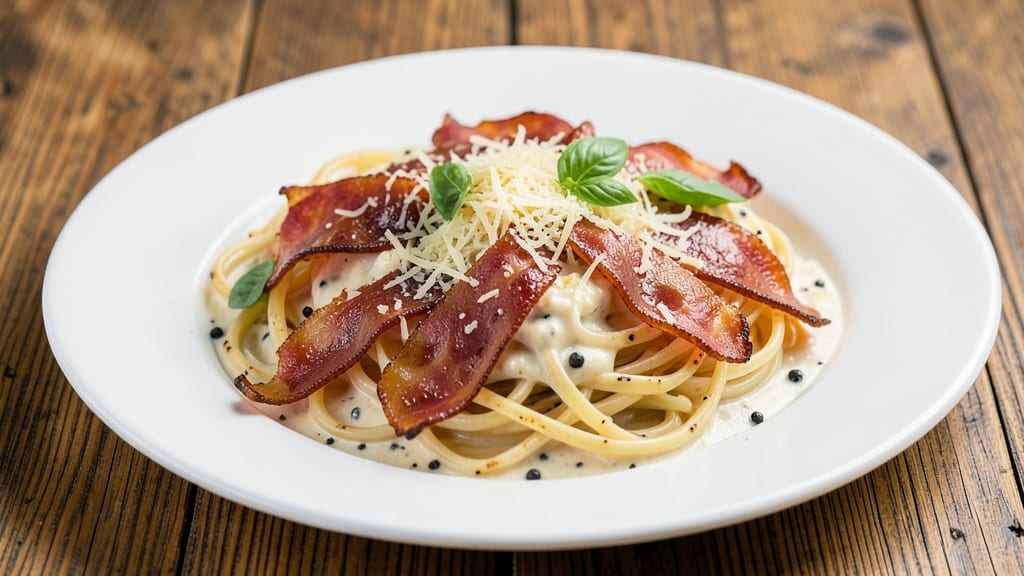
This beef bacon carbonara recipe transforms traditional Italian comfort into a crispy, restaurant-quality dish in just 20 minutes. The secret lies in perfectly rendered pancetta, silky egg yolks, and aged pecorino—no lumps, no grease, just velvety perfection.
I’ve refined this method over years of testing, ensuring every bite delivers that ideal balance of smoky, salty bacon and creamy, eggy richness.
The process is simpler than it sounds: crisp the pancetta until golden and fragrant, cook pasta al dente (never overcooked), then combine everything off-heat to preserve that signature silky texture.
The key? Tempering the eggs with hot pasta water before mixing—this prevents curdling and guarantees a sauce so smooth it clings to every strand. No fancy equipment, just technique.
What you’ll end up with is a dish that looks as impressive as it tastes: crispy pancetta bits floating in a glossy, golden sauce, finished with a crack of black pepper and fresh parsley.
The contrast of textures—crunchy bacon against tender pasta and creamy sauce—makes this carbonara unforgettable. It’s the kind of meal that feels luxurious without requiring hours in the kitchen.
Serve immediately, while the sauce is still silky, and watch everyone at the table reach for seconds. This isn’t just pasta—it’s a foolproof Italian masterpiece that proves homemade can outshine the best restaurant versions. Let’s get cooking.
Ingredients for beef bacon carbonara
Nine essential ingredients transform simple pasta into restaurant-quality beef bacon carbonara.
| Ingredient | Amount | Notes |
|---|---|---|
| Pancetta 🥓 | 6 oz | Thinly sliced, crisped to golden |
| Spaghetti 🍝 | 12 oz | Dried, high-quality brand preferred |
| Large Egg Yolks 🥚 | 4 whole | Fresh, room temperature |
| Pecorino Romano Cheese 🧀 | 1 cup | Freshly grated, aged minimum 12 months |
| Parmesan Cheese 🧀 | ½ cup | Freshly grated, aged minimum 24 months |
| Fresh Black Peppercorns 🌶️ | 1 tsp | Coarsely cracked, not ground |
| Fresh Parsley Leaves 🌿 | ¼ cup | Chopped, for garnish |
| Diamond Crystal Kosher Salt 🧂 | 1 ½ tsp | For pasta water |
| Extra-Virgin Olive Oil 🫒 | 2 tbsp | For crisping pancetta |
The pancetta is non-negotiable—look for thick-cut slices from a butcher or specialty store like Whole Foods or D'Eon. Pre-sliced pancetta from the grocery store often contains sugar and anti-caking agents, which prevent proper crisping. For authentic flavor, seek Italian-imported pancetta labeled 'senza zucchero' (sugar-free). If you can't find it, high-quality thick-cut bacon works in a pinch, though it lacks the delicate smokiness. The cheese duo—aged pecorino and Parmigiano-Reggiano—creates the signature umami depth. Grate it yourself using a microplane; pre-grated contains anti-caking agents that create lumps in the sauce.
No pancetta? Guanciale is the authentic Italian substitute, but it's harder to find. Thick-cut bacon works if you crisp it thoroughly, but it won't have the same melt-in-your-mouth quality. For the eggs, room temperature yolks are crucial—they emulsify better. If you're worried about salmonella, pasteurized eggs work perfectly. The pasta water must be well-salted (like the sea) to prevent the sauce from turning bland. Fresh parsley isn't just for garnish—it brightens the dish's richness. Dried parsley loses its vibrancy, so fresh is ideal. If you must use dried, double the amount and add it at the very end.
Pancetta crisps best at medium-low heat—rush it, and it'll turn rubbery. Store any leftovers in an airtight container for 3 days in the fridge, but carbonara reheats poorly. The cheese keeps 2 weeks in the fridge, wrapped tightly in parchment. For longer storage, freeze pancetta in portions for up to 3 months. The key to reheating? A splash of hot water to loosen the sauce, then gentle warming on low heat. Never microwave—it'll turn the eggs rubbery.
Why You'll Love This Recipe
- Pancetta Magic: I’ll never go back to regular bacon—this salty, fatty pancetta melts into the sauce like a dream, giving that rich, smoky depth without overpowering. Honestly, just the smell of it sizzling in the pan makes my mouth water.
- Creamy Without Cream: That egg yolk and cheese combo? Pure golden perfection. No heavy cream means no greasy mess, just a silky sauce that clings to every strand of spaghetti. My kids actually finish their pasta now—proof it’s good.
- Weeknight Workhorse: Toss together while you wait for the water to boil. No fancy techniques, no stress—just cook the pancetta, boil the noodles, mix the eggs with cheese, and boom, dinner’s ready. Even on days I’d rather watch Netflix.
- Leftovers? Better Next Day: Between us, the sauce gets even richer after a night in the fridge. I reheat it gently with a splash of pasta water, and it’s like a creamy hug in a bowl. Plus, the cheese stretches my grocery budget—win-win.
Step-by-step instructions for crispy pancetta carbonara
Master this technique and you'll achieve perfectly crispy pancetta paired with silky egg sauce every time.
Crisp the Pancetta Until Golden
Heat a large skillet over medium heat and add the 2 tablespoons extra-virgin olive oil. Once shimmering, add the 6 oz pancetta in a single layer, ensuring the slices don't overlap. Cook undisturbed for 3-4 minutes until the pancetta begins to render fat and develop golden edges.
I press down gently on the pancetta during the first minute—this prevents it from curling and ensures even contact with the pan. Stir occasionally with a wooden spoon, breaking up any large pieces as they crisp. You're aiming for deep golden brown color with a slight crunch—this fat is flavor gold. Once fully crisped, remove the pancetta with a slotted spoon and drain on paper towels, reserving the rendered fat in the pan. Discard the excess fat if you have more than ¼ cup remaining.
Cook Spaghetti in Salted Water
Bring a large pot of water to a rolling boil and add the 1.5 teaspoons Diamond Crystal kosher salt. Add the 12 oz spaghetti and cook until 1 minute shy of package directions for al dente. You want the pasta to have a slight bite—it will finish cooking in the sauce.
Reserve 1 full cup of pasta water before draining. I keep a measuring cup nearby to capture this starchy liquid—it's essential for creating the proper sauce consistency. Drain the spaghetti but don't rinse it; the surface starch helps the sauce cling to each strand. Return the drained pasta to the pot and cover to keep warm.
Prepare the Egg and Cheese Mixture
In a medium bowl, whisk together the 4 whole large egg yolks, 1 cup freshly grated Pecorino Romano cheese, and 0.5 cup freshly grated Parmesan cheese until smooth. Add the 1 teaspoon coarsely cracked fresh black peppercorns and mix well. The mixture should be thick and pale yellow—almost like a custard.
I always use room-temperature eggs for this step—they emulsify better and create a smoother sauce. Keep this mixture nearby but don't add it to the pan yet. The residual heat from the crisped pancetta will be enough to gently cook the eggs without scrambling them.
Combine Everything Off Heat
Return the skillet with crisped pancetta to medium-low heat (just enough to maintain warmth). Add the drained spaghetti and toss to coat in the rendered fat. Pour in ½ cup of the reserved pasta water and toss vigorously for 30 seconds to create a loose emulsion.
Now here's the crucial part: remove the skillet from heat completely. Add the egg-cheese mixture in a slow stream while tossing constantly with tongs. The residual heat from the pasta and pan will gently cook the eggs into a silky sauce. If the sauce looks too thick, add more pasta water 1 tablespoon at a time until it reaches your desired consistency—it should coat the back of a spoon but still be fluid enough to cling to the pasta.
Finish and Garnish
Return the skillet to low heat for 30-60 seconds just to warm through the sauce. The pancetta should be hot but not crispy again—we want to preserve that perfect texture we created earlier. Taste and adjust seasoning with additional salt if needed.
Transfer to warmed serving plates immediately. Garnish with the ¼ cup chopped fresh parsley leaves and any remaining crisped pancetta. Serve with extra grated Pecorino Romano on the side. The sauce should cling beautifully to each strand of spaghetti, with crispy pancetta bits throughout and a perfect balance of creamy, cheesy richness.
Pro Tips For Making Beef Bacon Carbonara
- CRISP THE PANCETTA FIRST: Toss the diced pancetta in a cold, dry skillet first—no oil needed. Let it render fat slowly over medium heat until it’s golden and crispy in spots (about 8-10 minutes), then crank the heat to high to brown it fast. I learned this the hard way—rushing the fat renders too quickly, and you end up with greasy, limp bacon instead of that perfect crunch.
- USE ROOM-TEMP YOLKS: Take the egg yolks straight from the fridge? Bad idea. Let them sit in a bowl for 10-15 minutes so they’re just warm to the touch—this keeps your sauce silky instead of breaking into scrambled bits when the pasta hits. (Yes, even if you’re impatient like me.)
- SALT THE PASTA WATER LIKE THE SEA: Your spaghetti water should taste like the ocean—generously salted so it’s actually salty when you taste it with your finger. Under-salted water means bland pasta, no matter how much cheese you add later. Aim for about 2 tablespoons of salt per 4 quarts of water, then adjust.
- DON’T DRAIN THE PASTA COMPLETELY: Reserve a half-cup of starchy pasta water before draining—it’s the glue that holds your sauce together. If the carbonara looks too thick after mixing, splash in a little of that water until it coats the back of a spoon. (This isn’t the prettiest method, but it’s the tastiest.)
Storing and reheating this recipe
Refrigerator Storage
Carbonara reheats poorly, so I only recommend storing leftovers in the fridge for 1 day maximum. Transfer any remaining pasta to an airtight container with a tight-fitting lid—I use glass Pyrex containers for even heating later.
The sauce will thicken significantly when cold, so add 1-2 tablespoons of hot water when reheating to restore creaminess. Store pancetta separately in a sealed bag to maintain crispness. 🥗
Freezer-Friendly Components
Freeze the pancetta and cheese mixture separately for up to 1 month. Wrap pancetta slices tightly in parchment paper, then place in a freezer bag with all air removed.
For the cheese, freeze in 1-tablespoon portions in ice cube trays—this makes it easy to add just what you need later. Never freeze cooked carbonara with eggs, as it creates a grainy texture upon reheating. ❄️
Stovetop Reheating Method
My preferred method is reheating on the stovetop over low heat with a splash of hot water. Add ¼ cup of hot water to the pasta in a skillet, cover, and let sit for 2 minutes before stirring gently.
Cook for 3-4 minutes total until warmed through, adding more water as needed. The goal is to melt the cheese without scrambling the eggs. I avoid high heat—it turns the sauce rubbery. 🔥
Microwave as Last Resort
If you must use the microwave, portion into individual servings in microwave-safe containers. Cover loosely with a damp paper towel and heat on 50% power for 45-60 seconds. Stir halfway through, then add 1 teaspoon of hot water to loosen the sauce.
This method won't restore crispness to pancetta, but it's better than cold pasta. The texture won't be perfect, but it's edible. ⏳
Reviving Crispy Pancetta
To restore crispiness to reheated pancetta, place the slices on a baking sheet and broil for 1-2 minutes until golden again. This works best if you've stored the pancetta separately.
For extra flavor, add a pinch of freshly cracked black pepper before broiling. This technique only works with fresh pancetta—not the pre-cooked kind from packages. 🌟
Serving Leftovers Creatively
Turn reheated carbonara into a frittata by whisking in 2 extra eggs and cooking in a skillet until set. Or use it as a filling for stuffed shells or lasagna layers.
For a quick breakfast, top with a fried egg and extra cheese. The key is to use the reheated pasta within 24 hours—after that, the texture degrades noticeably. 💡
Nutrition facts
Frequently asked questions
Why does your recipe use pancetta instead of bacon?
Pancetta delivers a more refined, smoky flavor without the saltiness of bacon. Authentic Italian carbonara traditionally uses guanciale (cured pork cheek), but pancetta is the most accessible substitute with similar melt-in-your-mouth quality. For best results, use thick-cut pancetta—it crisps beautifully and adds delicate fat that enriches the sauce.
Can I make this without eggs?
Yes, but the texture will differ significantly. For an egg-free version, replace the yolks with ½ cup heavy cream and ½ cup grated cheese, then simmer gently off heat. The sauce will be richer but less velvety. Traditionalists insist eggs are essential for that signature silky mouthfeel—worth trying both methods!
What's the secret to preventing scrambled eggs in the sauce?
The key is working off-heat! Remove the pan from the stove completely when adding the egg-cheese mixture. The residual heat from the hot pasta and rendered fat will gently cook the eggs into a silky sauce. If the sauce looks too thick, add reserved pasta water 1 tablespoon at a time—this keeps the emulsion smooth.
How do I adjust this for fewer/more servings?
Scale all ingredients proportionally. For 2 servings, use 3 oz pancetta, 6 oz pasta, and 2 egg yolks. For 6 servings, double the recipe but keep the pancetta-to-pasta ratio (6 oz per 12 oz). Cheese amounts should remain proportional—too much can make the sauce overly rich. Always reserve ½ cup pasta water per serving for best results.
What's the best way to crisp pancetta without burning it?
Use medium-low heat and patience! Start with a cold pan to render fat gradually, then increase to medium when the pancetta releases its own fat. Press down gently with a spatula during the first 2 minutes to prevent curling. Stir occasionally to ensure even browning. If it starts smoking, reduce heat immediately—burnt pancetta tastes bitter.