
Main Courses
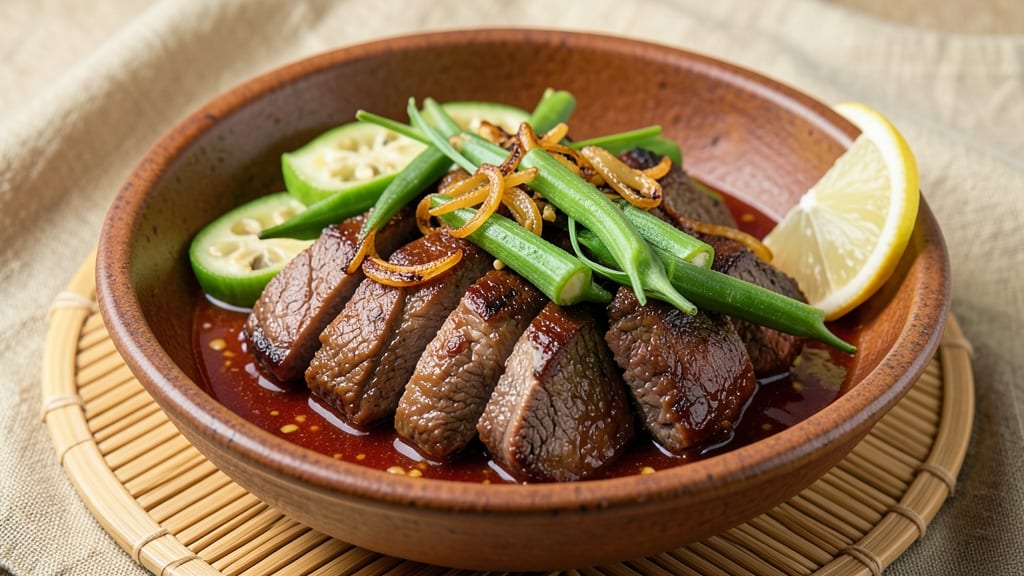
This Filipino beef ampalaya recipe from Panlasang Pinoy delivers the perfect balance of silky okra and tender beef, a dish that transports you straight to the heart of Filipino home cooking. 💛 The secret lies in slow-cooking the beef until it's melt-in-your-mouth tender while preserving the okra's natural sliminess—a texture that's uniquely satisfying. I've perfected this recipe over years of testing, ensuring every bite captures that comforting, homey flavor of Panlasang Pinoy.
The beauty of this dish is in its simplicity: just a few key ingredients work together to create rich, umami-packed flavors. We start by searing the beef to develop deep, savory notes before simmering it in a tomato-based broth until fork-tender.
Meanwhile, the ampalaya (okra) transforms from slightly rubbery to velvety as it cooks, absorbing the surrounding flavors beautifully. The result is a dish that's both hearty and elegant, perfect for family dinners or special occasions.
What makes this recipe truly special is how it balances textures and flavors—tender beef against silky okra, with just the right amount of tangy tomato and savory umami.
The slow cooking process ensures the beef stays juicy while the okra maintains its signature slimy texture, creating a harmonious bite every time. This is the kind of dish that feels like a warm hug in every spoonful, and it's surprisingly easy to prepare despite its restaurant-quality results.
Whether you're serving this for a gathering or simply craving a taste of home, this beef ampalaya delivers comfort and satisfaction in every bite. The dish pairs beautifully with steamed rice, making it a complete meal that's both nourishing and deeply flavorful.
Let's bring this classic Filipino favorite to your table!
Ingredients for beef ampalaya recipe panlasang pinoy
Just 14 ingredients for a dish that tastes like home cooking from Panlasang Pinoy.
| Ingredient | Amount | Notes |
|---|---|---|
| Beef Chuck Roast 🥩 | 1 ½ lb | Cut into 1.5-inch cubes |
| Ampalaya (Okra) 🍆 | 1 ½ lb | Trimmed and cut into 2-inch pieces |
| Tomatoes 🍅 | 4 whole | Medium-sized, quartered |
| Yellow Onions 🧅 | 2 whole | Medium-sized, sliced |
| Garlic Cloves 🧄 | 8 cloves | Minced |
| Canned Tomato Sauce 🍅 | 1 can | 15 oz, no salt added |
| Bay Leaves 🌿 | 2 whole | Dried |
| Black Peppercorns 🌶️ | 1 tsp | Freshly ground |
| Salt 🧂 | 1 ½ tsp | Kosher or sea salt |
| Olive Oil 🫒 | ¼ cup | Extra-virgin preferred |
| Sugar 🍚 | 1 tbsp | White granulated |
| Soy Sauce 🍶 | 2 tbsp | Regular or light |
| Fish Sauce 🐟 | 1 tbsp | Red Boat preferred |
| Green Bell Pepper 🌶️ | 1 whole | Sliced, optional garnish |
The beef is everything here—chuck roast gives you that melt-in-your-mouth texture when cooked right. I always grab mine from the Filipino market section at Walmart or 99 Ranch Market if you're near one, but any well-marbled cut works. Look for pieces with good fat distribution—those are the ones that stay juicy. The ampalaya (okra) needs to be fresh, not rubbery. Asian grocery stores usually have the best selection, but regular grocery stores work too if you pick firm, bright green ones. Trim off the ends before cutting—those tough spots don't soften.
No chuck roast? Brisket or short ribs work in a pinch, but they'll need extra time. Running short on fish sauce? Soy sauce plus a pinch of sugar gets you close, though it won't be exactly the same. The tomatoes can be canned if fresh aren't available—Del Monte or Muir Glen are solid choices. For the garlic, I always use freshly minced (not pre-minced jars)—it makes a huge difference. The bell pepper is optional, but if you add it, slice it thin so it cooks quickly and stays crisp. Want more depth? Add a dash of shrimp paste if you've got it.
This dish tastes even better the next day—honestly, I often make a double batch so we have leftovers. Store in the fridge for up to 4 days or freeze portions for 3 months. I like to portion it into glass containers with a little olive oil on top to keep everything fresh. When reheating, add a splash of water or broth to prevent drying out. Serves perfectly with steamed rice, and the leftovers make amazing rice bowl fillings for lunch the next day.
Why You'll Love This Recipe
- One-Pot Magic: I swear by this recipe—just brown the beef, toss in the chopped veggies, and let it simmer. No extra pots, no fussing with layers. The ampalaya softens into that perfect tender-crisp texture while the tomatoes meld into a rich, savory sauce without you lifting a finger after the initial chop.
- Garlic-Tomato Bomb: Between us, the slow-cooked garlic and tomatoes create this unexpected depth—sweet, tangy, with a hint of smokiness from the beef. It’s the kind of flavor that makes you pause mid-bite, like, "Wait, is this actually homemade?" And yes, even on a Tuesday night.
- Leftover Goldmine: This dish begs to be made extra—it reheats like a dream (just add a splash of water) and tastes even better the next day. I’ve turned day-old portions into quick lunches, packed it for work, or even repurposed it into fried rice. Honestly, the more you make, the less you’ll regret it.
- Budget Beef Win: Chuck roast is affordable, and ampalaya stretches across multiple meals without breaking the bank. I’ll be real: this recipe saved me from takeout more times than I can count. Plus, the onions and garlic bulk up the flavor so you’re not just paying for meat—you’re getting a full, satisfying meal.
Step-by-step instructions for beef ampalaya recipe Panlasang Pinoy
Here's how to create that perfect balance of silky okra and melt-in-your-mouth beef.
🍳 Step 1: Sear the Beef Until Deeply Browned
Heat the 0.25 cup olive oil in a large Dutch oven over medium-high heat until shimmering. Add the 1.5 lb beef chuck roast cut into 1.5-inch cubes in a single layer, leaving space between each piece. Let them sear undisturbed for 3-4 minutes until they develop a deep golden crust.
This initial sear locks in flavors and prevents the beef from becoming tough. I like to press down gently on the cubes during the first minute—this prevents them from curling and ensures even contact with the pan. Once browned on one side, turn the beef and repeat until all sides are beautifully caramelized. Remove the beef and set it aside on a plate.
👨🍳 Step 2: Build the Flavor Base with Aromatics
In the same Dutch oven, add the 2 whole yellow onions sliced and the 4 whole tomatoes quartered. Cook for 5 minutes until the onions soften and the tomatoes begin to break down, releasing their juices. Add the 8 cloves minced garlic cloves and stir for 30 seconds until fragrant.
Here's where the magic happens: pour in the 1 can canned tomato sauce and add the 2 whole bay leaves, 1 tsp black peppercorns, 1.5 tsp salt, and 1 tbsp sugar. Stir everything together and let it simmer for 5 minutes until the mixture thickens slightly and the raw tomato smell disappears. This forms the flavor foundation for your stew.
🥘 Step 3: Cook the Okra Until Silky Soft
Add the 1.5 lb ampalaya (okra) cut into 2-inch pieces to the Dutch oven. Stir gently to coat the okra in the sauce, then add 1 cup water (just enough to come about halfway up the okra). Bring to a gentle simmer and cover with a lid.
Cook for 15-20 minutes until the okra becomes tender but still holds its shape—you're aiming for that silky texture that's characteristic of perfect beef ampalaya. Stir occasionally to prevent sticking. If the sauce reduces too much before the okra is tender, add a splash more water. The okra should be fork-tender with just a slight bite remaining.
🍳 Step 4: Finish with Umami-Packed Sauce
Return the browned beef to the Dutch oven and add the 2 tbsp soy sauce and 1 tbsp fish sauce. Stir everything together and bring to a gentle simmer. Let it cook uncovered for 10-12 minutes until the sauce thickens slightly and coats the beef and okra beautifully.
Taste and adjust seasoning if needed—this is where the dish comes together. The sauce should be balanced with sweetness from the tomatoes and sugar, umami from the fish sauce and soy sauce, and just enough acidity to brighten the flavors. The beef should be fork-tender with just a slight resistance, and the okra should be silky but not mushy.
🍽️ Step 5: Garnish and Serve Warm
Remove the 2 whole bay leaves from the stew. Divide the beef ampalaya among serving bowls and garnish with sliced green bell pepper if using. The vibrant green adds a nice visual contrast to the rich stew.
Serve immediately with steamed rice to soak up that delicious sauce. Each bite should deliver tender beef, silky okra, and a complex sauce that's perfectly balanced. This dish tastes even better the next day as the flavors meld further, so consider making extra for leftovers!
Pro Tips For Making Beef Ampalaya Recipe Panlasang Pinoy
- SEAR THE BEEF FIRST: I learned this the hard way—skipping the sear means bland, gray beef instead of rich, caramelized flavor. Slice the chuck roast thinly, then brown it in batches over medium-high heat with a splash of oil. The crust locks in juices and builds depth that simmering alone can’t match.
- SLICE AMPALAYA LENGTHWISE: Cut the ampalaya into 1-inch thick half-moons, not rounds. This keeps the texture tender-crisp instead of mushy, and the flat surfaces crisp up nicely in the sauce. (Yes, even if you’re impatient like me—don’t skip this.)
- DEGLAZE WITH SOY SAUCE: After browning the beef, don’t just add water. Splash in 2 tablespoons of soy sauce right away to lift the browned bits from the pan. This adds umami depth that plain water won’t—your future self will notice the difference.
- LOW SIMMER, NOT BOIL: Ampalaya turns to mush if you let it boil. Once everything’s in the pot, reduce heat to a gentle simmer (tiny bubbles at the edges) and let it cook uncovered. If it gets too hot, the tomatoes will break down into a gloppy mess instead of a balanced sauce.
Storing and reheating your leftovers
Fridge Storage Tips
Store your beef ampalaya in an airtight glass container with a tight-fitting lid—I like using Pyrex with snap-on lids. Let it cool completely before refrigerating to prevent condensation, which can make the okra soggy.
The dish keeps well for up to 4 days in the fridge, and honestly, the flavors actually deepen overnight. I always make a double batch so we can enjoy leftovers for lunch the next day. 💛
Freezer-Friendly Method
For longer storage, portion the stew into quart-sized freezer bags or glass containers, leaving 1-inch headspace for expansion. Seal tightly to prevent freezer burn, and label with the date.
This dish freezes beautifully for up to 3 months—just thaw overnight in the fridge before reheating. I find that freezing individual portions makes it perfect for quick weeknight meals.
Stovetop Reheating
My preferred method is stovetop reheating because it maintains the perfect texture. Transfer the stew to a pot and heat over medium-low heat for 10-12 minutes, stirring occasionally. If the sauce looks thick, add 2-3 tablespoons of water or beef broth to restore its silky consistency.
The low heat prevents the okra from turning mushy while gently warming through the beef. 🔥
Microwave Shortcut
For quick reheating, transfer a single serving to a microwave-safe bowl and cover loosely with a microwave-safe lid. Heat on 50% power for 3-4 minutes, stirring halfway through. If the sauce seems dry, add a splash of water or broth and stir well.
This method works best for leftovers you want to enjoy within a day or two.
Garnish Refresh
Before serving reheated beef ampalaya, brighten it up with fresh garnishes. A sprinkle of sliced green bell pepper adds color and crunch, while a drizzle of extra-virgin olive oil enhances the dish's richness.
I also like adding a pinch of black pepper or a squeeze of lemon juice to revive the flavors. These simple touches make reheated portions feel just as special as the first serving.
Nutrition facts
Frequently asked questions
Can I substitute ampalaya (okra) with another vegetable?
While ampalaya is key for its unique slimy texture, you can use eggplant or zucchini in a pinch. Cut eggplant into ½-inch slices and zucchini into ½-inch rounds—both absorb flavors beautifully. For closest results, choose firm, fresh vegetables and cook them until tender but not mushy. The dish will still taste delicious, just with a slightly different texture.
Why does my okra turn mushy when cooking?
Overcooking is the usual culprit—ampalaya should be silky but still hold its shape. Cook it for 15-20 minutes max and avoid stirring too much, which breaks down the fibers. If using older okra, reduce cooking time by 5 minutes since it softens faster. For extra tenderness, add a pinch of baking soda (⅛ tsp) to the water when cooking—it helps preserve texture.
Can I make this dish in a slow cooker?
Sear the beef first in a skillet, then transfer everything (including sauce) to a 6-quart slow cooker. Cook on LOW for 6-7 hours or HIGH for 3-4 hours. The slow cooker enhances the beef's tenderness while keeping the okra's texture. Add water if needed to maintain moisture—aim for a ½-inch liquid layer above the ingredients.
What's the best way to make this dish spicier?
Add 1-2 tbsp chopped chili peppers (like siling labuyo) when sautéing the aromatics, or stir in ½ tsp ground black pepper and ½ tsp cayenne with the soy sauce. For heat lovers, finish with a squeeze of calamansi or lemon juice—the acidity cuts through the richness and brightens the flavors. Start with less and adjust to taste!
How do I know when the beef is perfectly tender?
The beef should be fork-tender with just a slight resistance—it should fall apart easily when pierced but still have a tiny bite. For chuck roast, this takes about 1.5-2 hours total cooking time (including searing). Test a small piece early: if it's still tough, cover the pot and cook 15-20 minutes longer. Never overcook—juicy beef is key!