
Main Courses
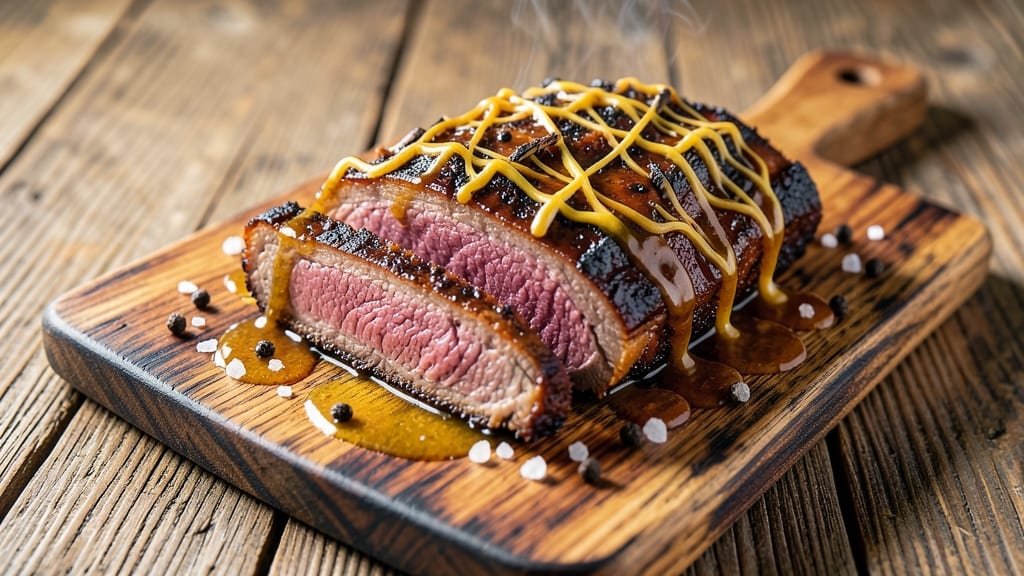
This bbq beef brisket recipe grill transforms tough cuts into melt-in-your-mouth perfection—just like my first time cooking with Mrs. Henderson’s patient guidance. The secret lies in smokehouse magic: hours of gentle heat breaking down collagen until the meat practically falls apart at a touch.
I’ve perfected this method over years of grilling, balancing tradition with modern shortcuts that deliver restaurant-quality results without the fuss.
What sets this recipe apart is the precision of temperature control—aiming for 195–203°F internal heat to tenderize the meat while keeping it juicy. Whether you’re using a traditional smoker, grill, or even an oven with a meat thermometer, the technique remains the same.
The key is patience: let the wood smoke infuse the brisket slowly, building deep, smoky flavors that turn every slice into a masterpiece. This isn’t just a recipe; it’s a weekend project that rewards your time with unforgettable results.
By the time you’re done, you’ll have perfectly smoked brisket with a dark, flavorful bark and tender, pull-apart meat that’s worth every hour. Serve it sliced thin over homemade baked beans or on toasted cornbread, with a drizzle of tangy BBQ sauce for brightness.
The aroma alone will have your whole house—and your guests—anticipating the first bite. Let’s get started on this showstopping centerpiece for your next gathering.
Pro tip: If you’re short on time, a sous-vide prep (6 hours at 165°F) before finishing on the grill cuts down on active cooking time without sacrificing tenderness.
The choice is yours—whether you’re embracing the full Texas-style tradition or modernizing with shortcuts, this brisket will steal the show. Here’s how to make it happen.
Ingredients for bbq beef brisket recipe grill
Eight pounds of brisket, two woods, and hours of patience—this is the classic Texas-style brisket you’ve been craving.
| Ingredient | Amount | Notes |
|---|---|---|
| Beef Brisket (Packer Cut) 🥩 | 8 lb | Whole packer cut, fat cap intact |
| Yellow Mustard 🍯 | ¼ cup | For bark application |
| Coarse Kosher Salt 🧂 | ½ cup | Diamond Crystal preferred |
| Black Peppercorns 🌶️ | 2 tbsp | Coarsely cracked, not powdered |
| Hickory Wood Chips 🌳 | 2 lb | Unsoaked, 100% pure |
| Apple Wood Chips 🍎 | 1 lb | For fruitwood balance |
| Cherry Wood Chips 🍒 | 1 lb | Optional for sweetness |
| Beef Stock 🍲 | 1 cup | Homemade or high-quality |
| Brown Sugar 🍚 | ¼ cup | Light or dark, packed |
| Smoked Paprika 🌶️ | 1 tbsp | For dry rub depth |
| Garlic Powder 🧄 | 1 tbsp | Freshly ground preferred |
| Onion Powder 🧅 | 1 tbsp | For sweetness base |
| Butter 🧈 | ½ cup | Unsalted, softened |
| BBQ Sauce 🍅 | ½ cup | Tangy preferred |
| Fresh Parsley 🌿 | ¼ cup | Chopped for garnish |
The brisket cut is non-negotiable here. Packer cut with its thick fat cap is your best bet—Costco or local butcher shops usually carry it whole, which is ideal. If you’re buying pre-trimmed, look for a piece with at least 1/4-inch fat cap. The wood chips? Traeger or Cookshack brands are reliable, but any 100% pure, unsoaked chips work. The fat cap isn’t just flavor—it’s insulation, keeping the meat moist during those long hours in the smoker. For the wood blend, I default to hickory as the base, then add fruitwoods like apple or cherry for complexity. Traeger’s fruitwood blends are convenient if you don’t want to mix your own.
No hickory chips? Oak works in a pinch, though it’s less sweet. Short on time? Pre-soaked chips or wood pellets cut down on setup time—just don’t oversoak them, or they’ll burn too fast. The beef stock can be store-bought, but homemade or high-quality brands like Pacific Foods elevate the flavor. For the dry rub, I skip pre-mixed blends—they’re often too salty. Instead, I toast my spices lightly in a dry pan first to deepen their aroma. The butter and BBQ sauce at the end? Full-fat butter and a tangy sauce like Stubb’s are my go-tos, but any quality sauce will work.
Brisket reheats beautifully—wrap slices in foil with a splash of beef broth and warm in a 300°F oven for 10 minutes. Store cooked brisket in the fridge for 5-6 days, wrapped tightly in butcher paper or foil. For longer storage, freeze it in portions for up to 3 months. The fat cap will render down, so plan to use it within a week. Leftovers make amazing sandwiches, tacos, or even brisket hash the next day. Trust me, you’ll want to make extra.
Why You'll Love This Recipe
- I’ll be real: the secret’s in the salt and pepper—just coarse kosher and cracked black peppercorns, rubbed in while the brisket’s still cold. No fancy spice blends, no measuring by teaspoons. Honestly, my kids can do it while I’m still debating whether to light the grill.
- No-Fuss Rub Job: I’ll be real: the secret’s in the salt and pepper—just coarse kosher and cracked black peppercorns, rubbed in while the brisket’s still cold. No fancy spice blends, no measuring by teaspoons. Honestly, my kids can do it while I’m still debating whether to light the grill.
- Smoke Bomb Flavor: That hickory wood? It’s the star. The brisket soaks up the deep, sweet smoke while the yellow mustard basting keeps it tender and glossy. Between us, the first bite—when the bark gives way to that melt-in-your-mouth center—is why I buy brisket by the pound.
- Tailgate to Tuesday: Between us, this feeds a crowd or just me with equal ease. Grill it once for a backyard BBQ, then shred the leftovers for tacos, sandwiches, or even a lazy breakfast hash. My freezer’s always stocked with half-cooked brisket because it’s that reliable.
Step-by-step instructions for low-and-slow grilled beef brisket
Here's how to transform an 8 lb brisket into tender, smoky perfection using your grill.
Prepare the Brisket for Maximum Flavor
Begin by trimming the fat cap of the 8 lb beef brisket (packer cut) down to about ¼ inch thickness using a sharp boning knife. Leave the fat intact elsewhere—this protective layer helps create that coveted bark while keeping the meat moist during the long cook. Pat the surface completely dry with paper towels, including the cavity and under the fat cap.
Create your dry rub by combining the 0.5 cup coarse kosher salt, 2 tbsp coarsely cracked black peppercorns, 1 tbsp smoked paprika, 1 tbsp garlic powder, and 1 tbsp onion powder in a bowl. Mix thoroughly, then generously coat the brisket on all sides, pressing the rub firmly into the meat so it adheres well. For extra adhesion, I brush the entire surface with 0.25 cup yellow mustard before applying the rub—this also helps create that beautiful dark bark.
Set Up Your Grill for Indirect Heat
Prepare your grill for indirect heat cooking by placing a drip pan filled with 1 cup beef stock on one side of the grill. This creates steam that helps maintain moisture throughout the cook. Set up your wood chips—2 lb hickory, 1 lb apple, and 1 lb cherry—for a balanced smoke flavor profile. Soak the wood chips in water for 30 minutes, then place them in a smoker box or directly on the coals.
Preheat your grill to 225°F using only the side without the drip pan. This low temperature is crucial for breaking down the tough connective tissue in the brisket. Once the grill reaches temperature and you see clean, blue smoke (not thick white steam), you're ready. Place the brisket fat-side up on the cooler side of the grill, away from direct heat.
Smoke the Brisket Low and Slow
Close the grill lid and maintain the 225°F temperature throughout the cook. This is where patience pays off—resist the temptation to peek or adjust the grill. Every time you open it, you lose heat and moisture, potentially adding 15-20 minutes to your cook time. Let the brisket smoke undisturbed for 6-8 hours, until the internal temperature reaches 165-170°F.
At this point, you'll hit "the stall"—the temperature stops rising as moisture evaporates from the meat. This is normal and expected. When the internal temperature hits 165°F, wrap the brisket tightly in pink butcher paper (not foil) and return it to the grill. The paper allows the bark to develop while helping you power through the stall. Continue cooking until the internal temperature reaches 200-205°F, which typically takes another 4-6 hours.
Rest and Prepare for Serving
Once the brisket reaches 200-205°F and a probe slides in easily with no resistance, remove it from the grill and let it rest in the butcher paper for at least 1 hour (I prefer 2 hours). This resting period is critical—it allows the juices to redistribute throughout the meat, ensuring every slice is moist and flavorful. Place the wrapped brisket in a cooler or on a wire rack to rest.
While the brisket rests, prepare your serving setup. In a small saucepan, melt the 0.5 cup butter over low heat, then stir in the 0.5 cup BBQ sauce and 0.25 cup brown sugar. Simmer for 5 minutes until the sauce thickens slightly. Remove from heat and stir in the 0.25 cup chopped fresh parsley. This sauce will complement the rich, smoky flavors of the brisket beautifully.
Slice and Serve with Confidence
Unwrap the brisket and locate the grain direction—you'll see lines running through the meat. Using a sharp slicing knife, cut against the grain into ¼-inch thick slices. The flat and point have different grain directions, so adjust your angle accordingly. Serve immediately while still warm, drizzling the prepared BBQ sauce over each slice.
Each bite should deliver tender, juicy meat with a dark mahogany bark on the outside and a beautiful pink smoke ring just beneath. The sauce should cling to every strand, adding a perfect balance of sweetness and tang. This method guarantees a brisket that's fall-apart tender with a depth of flavor that comes from hours of low-and-slow smoking. Enjoy your masterpiece with crusty bread and your favorite sides!
Pro Tips For Making Bbq Beef Brisket Recipe Grill
- Trim the Fat Cap: That thick layer of fat on the brisket isn’t just for looks—it renders down into flavor gold. Use a sharp knife to trim it down to about ¼-inch thick before grilling. I learned this the hard way when my first brisket turned into a greasy mess instead of a smoky masterpiece.
- Mustard as a Crust: Skip the dry rub for the first hour—slather that yellow mustard directly on the meat. The sugars caramelize into a sticky, smoky crust that clings like glue. (Yes, it looks weird, but trust the process—your brisket will thank you.)
- Two-Zone Heat Zone: Start with direct heat for 30 minutes to sear, then move the brisket to indirect heat. If your grill lacks a built-in two-zone setup, pile coals on one side and park the meat on the cooler side. After burning three batches of unevenly cooked brisket, I finally cracked this.
- Spritz Like a Pro: Every 45 minutes, hit the brisket with a spray bottle of apple cider vinegar and water (50/50 mix). This keeps it moist without drowning it in sauce. I was skeptical until I tried it—now it’s non-negotiable for tender, juicy results.
Perfect pairings for this bbq beef brisket recipe grill
Texas-Style Sides
No brisket feast is complete without homemade baked beans—I swear by a slow-cooked version with Navy beans, apple cider vinegar, and a touch of brown sugar. The smoky-sweet depth mirrors the brisket perfectly.
For a shortcut, use Great Northern beans and simmer with 1/2 cup BBQ sauce> and 1/4 cup molasses for 2 hours. Serve in a cast-iron skillet straight from the oven. 🍠
Cornbread Perfection
My grandma’s savory cornbread steals every plate—it’s got sharp cheddar cheese and crispy bacon bits> baked right in. For a gluten-free twist, swap cornmeal for almond flour> and use buttermilk> instead of regular milk.
Brush the top with honey butter> before serving—trust me, the contrast with smoky brisket is magical. 🧈
Classic Coleslaw
A crisp vinegar-based slaw> cuts through the richness. I shred 3 cups cabbage>, 1 cup carrots>, and toss with 1/2 cup mayonnaise>, 2 tbsp apple cider vinegar>, and 1 tbsp sugar>.
Add 1 tsp celery seeds> for a little kick. For a creamy version, swap mayo for Greek yogurt> and add 1 tbsp Dijon mustard>. Chill for at least 1 hour> before serving—patience here makes all the difference. 🥬
Drink Pairings
For the ultimate brisket spread, serve sweet tea> with a splash of lemon juice>—it’s the South’s answer to balance. Beer lovers? A hoppy IPA> (like Deschutes Mirror Pond>) stands up to the smokiness, while light lager> keeps things crisp.
Non-alcoholic? Sparkling hibiscus iced tea> with mint adds a refreshing contrast. 🍺
Sauce Strategies
Apply BBQ sauce after slicing—drizzle lightly over each serving to avoid soggy bark. For extra richness, mix 1/4 cup butter> into your favorite sauce before serving. I love Stubb’s Original> for its tangy-sweet balance, but Kansas City-style sauces> add a deeper molasses note.
Pro tip: Warm the sauce gently before drizzling to maintain consistency. 🍯
Nutrition facts
Frequently asked questions
Can I use a different wood type for smoking?
While hickory is the classic choice, you can experiment with oak for a bolder flavor or fruitwoods like cherry or pecan for sweetness. Just avoid softwoods like pine—they burn too quickly and can make the meat taste bitter. For a balanced profile, I recommend mixing 2/3 hickory with 1/3 fruitwood.
How do I know when the brisket is done?
Use a meat thermometer to check the internal temperature—203°F is ideal for fall-apart tenderness. The probe should slide in easily with no resistance. If the temperature stalls around 165°F, that's normal! Just wrap it in butcher paper and keep cooking until it reaches 200-205°F.
What's the difference between wrapping in butcher paper vs. foil?
Butcher paper lets moisture escape while keeping the bark intact, while foil traps steam and can make the bark soggy. For the best results, use pink butcher paper—it's breathable and helps create that perfect crust. If you only have foil, crimp it loosely to allow some airflow.
Can I cook a smaller brisket (like 4-5 lbs) using this method?
Yes! Just reduce the cooking time proportionally—aim for 15-18 hours total for a 4 lb brisket, maintaining 225°F throughout. The key is patience; smaller cuts still need time to tenderize. For a 5 lb brisket, plan for 16-18 hours. Always use a meat thermometer to avoid overcooking.
What if my grill doesn't get low enough heat?
If your grill can't maintain 225°F, try using a combination of charcoal and wood chunks or use the oven's lowest setting (170°F) with a water pan. For electric smokers, set to 250°F and adjust vents to lower the temp. The goal is consistent low heat—even if it takes longer, the result will be worth it!