
Soups & Stews
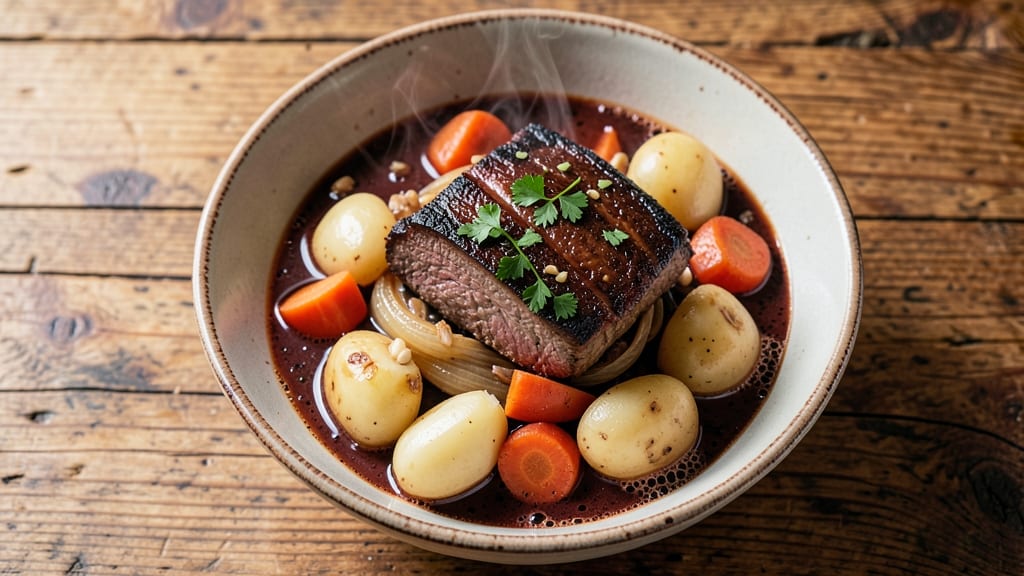
This authentic Irish beef stew recipe transforms tough cuts into melt-in-your-mouth tenderness with Guinness-infused richness and earthy root vegetables. The secret lies in slow simmering—where deep flavors develop over hours, creating a hearty, comforting stew that tastes like home.
Every bite delivers layers of savory depth from properly browned beef and aromatic herbs like thyme and bay leaf.
The recipe stays true to Irish tradition while adapting for modern kitchens—whether you simmer it on the stove for hours or use a pressure cooker for faster results. Crispy-skinned potatoes or crusty bread make perfect companions, soaking up every drop of that velvety gravy.
What makes this version special is the balance: tender beef, perfectly soft vegetables, and a sauce that's rich yet not overly heavy.
What you'll achieve is a stew with restaurant-quality depth—where the beef falls apart at the touch of a fork and the vegetables retain their natural sweetness. The Guinness adds a subtle bitterness that cuts through the richness, while the slow cooking process develops flavors that store-bought versions can't match.
This is the kind of meal that warms both body and soul on chilly evenings.
Perfect for family dinners or holiday gatherings, this stew scales beautifully while maintaining its authentic character. The method is straightforward but requires patience—worth every minute for that irresistible aroma filling your kitchen. Ready to create a taste of Ireland in your own home?
Ingredients for authentic irish beef stew
Pantry staples meet Irish pub flavors—this stew brings rich Guinness and tender beef to your table.
| Ingredient | Amount | Notes |
|---|---|---|
| Chuck Roast 🥩 | 3 lb | Well-marbled for tenderness |
| Guinness Stout 🍺 | 1 ½ cups | Full-bodied, not light |
| Yellow Onions 🧅 | 2 whole | Medium-sized, sliced thin |
| Carrots 🥕 | 4 whole | Medium-sized, peeled |
| Russet Potatoes 🥔 | 3 lb | Cut into 2-inch chunks |
| Garlic Cloves 🧄 | 6 cloves | Minced, fresh preferred |
| Fresh Thyme 🌿 | 2 tbsp | Leaves only, chopped |
| Bay Leaves 🍃 | 2 whole | Dried, standard size |
| Tomato Paste 🍅 | 2 tbsp | Smooth, not chunky |
| Beef Broth 💧 | 4 cups | Low-sodium preferred |
| Whole Black Peppercorns 🌶️ | 1 tsp | Freshly cracked |
| Kosher Salt 🧂 | 2 tsp | Diamond Crystal preferred |
| Olive Oil 🫒 | 2 tbsp | Extra-virgin for browning |
| Flour 🌾 | 2 tbsp | All-purpose, for dredging |
The chuck roast is non-negotiable here—its marbling melts into the stew, creating that signature Irish richness. Butcher sections often have it pre-cut, but if buying whole, ask for a well-marbled piece. Guinness matters too: Guinness Draught is ideal, but any full-bodied stout works. For the potatoes, Russets hold up best during long simmering. Fresh thyme and bay leaves? Don't skip them—they're the aromatic backbone of this dish. If you're short on time, frozen thyme works in a pinch, though fresh is always better.
No Guinness? Substitute with equal parts beef broth and a splash of balsamic vinegar—it won't be identical, but it'll get you close. Short on carrots? Parsnips or celery root add a similar earthy sweetness. The tomato paste can be swapped for crushed tomatoes (1 cup), but it'll dilute the depth slightly. For the flour, cornstarch works too if you're avoiding gluten, though it won't give the same texture. And if your beef broth is high-sodium, dilute it with water—this stew shouldn't taste like a salt lick.
This stew tastes even better the next day, so make a double batch if you can. Store in an airtight container in the fridge for up to 5 days, or freeze for 3 months. The potatoes will soften further when reheated, so add a splash of broth to loosen them up. For serving, crusty sourdough is a must—it soaks up every last drop of that velvety gravy. Leftovers reheat beautifully on the stove or in the microwave, though stove-top gives you better control over the texture.
Why You'll Love This Recipe
- One-Pot Magic: I swear by this—just toss everything into a heavy pot, let it simmer, and walk away. No fancy steps, no last-minute scrambling. That chuck roast practically melts into tender perfection while you sip your tea.
- Guinness Kiss: Here’s what sold me—the dark, malty richness of Guinness stout. It’s not just flavor; it’s the soul of the stew. The roast soaks it up like a sponge, giving every bite that deep, velvety warmth you crave.
- Leftovers That Shine: Between us, this stew only gets better after day two. The potatoes soften just right, the carrots caramelize, and the beef? Even more fall-apart tender. I make a double batch on Sundays—no regrets.
- Budget Hug: A chuck roast and a few veggies stretch into meals for days. Honestly, it’s my go-to for feeding the family without breaking the bank. Plus, the potatoes and carrots make it feel hearty, not cheap. Win-win.
Step-by-step instructions for authentic Irish beef stew
Here's how to build a rich, Guinness-infused stew with layers of flavor that sing.
Prepare the Chuck Roast for Maximum Flavor
Pat the 3 lb chuck roast dry with paper towels—this helps the flour adhere and creates a better sear. Place the roast in a large bowl and dredge it thoroughly in the 2 tbsp flour, pressing gently to coat all sides evenly. This step forms a light crust that locks in juices during cooking.
Heat the 2 tbsp olive oil in a heavy Dutch oven over medium-high heat until shimmering. Add the flour-coated roast and sear for 3-4 minutes per side until it develops a deep golden-brown crust. Don't rush this—you want that Maillard reaction happening for maximum flavor. Remove the roast and set it aside on a plate.
Build the Guinness and Vegetable Foundation
In the same Dutch oven, add the 2 whole yellow onions and 4 whole carrots (peeled and cut into 2-inch chunks). Cook for 5 minutes, stirring occasionally, until the onions soften slightly and begin to caramelize. Add the 6 cloves minced garlic and cook for another 30 seconds until fragrant.
Pour in the 1.5 cups Guinness stout and scrape up any browned bits from the bottom of the pot—these contain concentrated flavor. Stir in the 2 tbsp tomato paste and let it cook for 2 minutes until the alcohol smell dissipates. Add the 4 cups beef broth, 2 whole bay leaves, and 2 tbsp chopped fresh thyme leaves, bringing everything to a gentle simmer.
Slow Cook to Perfection
Return the seared chuck roast to the Dutch oven, along with the 3 lb russet potatoes (cut into 2-inch chunks). Add the 2 tsp kosher salt and 1 tsp freshly cracked whole black peppercorns. The potatoes should be partially submerged—if not, add a bit more broth.
Cover the pot and transfer to a preheated 325°F oven. Cook for 3 to 3.5 hours until the meat is fork-tender and pulls apart easily. The stew should have thickened significantly, with the vegetables tender and the meat falling apart at the touch. Here's the thing—don't peek or stir during cooking. This disturbs the heat circulation and can make the stew tough.
Adjust Consistency and Season
Once the stew is done, remove the bay leaves and adjust the seasoning if needed. Taste and add more salt if necessary—the Guinness and broth should provide enough natural saltiness, but sometimes you need to tweak it. If the stew is too thick, whisk in a splash of hot water or broth to reach your desired consistency.
For an extra layer of richness, you can optionally add a pat of butter to the stew and let it melt into the sauce. This isn't traditional but adds a lovely texture contrast. Let the stew sit off the heat for 10 minutes before serving—this allows the flavors to meld and the potatoes to absorb some of the liquid, ensuring each bite is perfectly balanced.
Pro Tips For Making Authentic Irish Beef Stew
- SEAR THE ROAST FIRST: I learned this the hard way—skipping the sear means flavorless stew. Heat your pot until smoking hot, pat the chuck roast dry, and sear it on all sides for 3-4 minutes per side. The crust locks in juices and adds depth that Guinness alone can’t match.
- CHOP ONIONS COARSELY: Thin slices turn to mush in stew. Cut yellow onions into ½-inch chunks—they’ll soften but stay intact, adding texture and sweetness that disappears if over-diced. (Yes, even if you’re impatient like me.)
- ADD POTATOES LATE: Potatoes absorb liquid fast and turn to glue. Hold off adding them until the last 30 minutes of cooking—this keeps them firm and prevents the stew from turning into a thick, pasty mess.
- STIR IN GUINNESS GRADUALLY: Pouring all the stout at once dilutes the flavor. Instead, deglaze the pot with ½ cup first, let it bubble for 2 minutes, then add the rest. This builds layers of richness that make the difference between "meh" and "proper Irish pub" stew.
Wine and beer pairings for this dish
Guinness Pairing Perfection
The star of this Irish stew is the Guinness, so why not pair it with its natural companion? A Guinness Draught (served at 50°F) enhances the stew's maltiness and balances its savory depth.
The dark, roasted notes of the beer mirror the caramelized onions and beef, creating a harmonious flavor bridge. 🍺
Red Wine Alternatives
For wine lovers, a medium-bodied red like Pinot Noir from Burgundy complements the stew beautifully. Its cherry and earthy undertones harmonize with the thyme and bay leaf, while its moderate tannins won’t overpower the dish.
A Syrah from the Rhône Valley also works, offering spice notes that echo the black peppercorns in the stew.
Crisp Lager Contrast
A dry Irish lager like Smithwick's or Murphy's provides a refreshing contrast to the rich stew. The hoppy bitterness cuts through the Guinness depth, cleansing your palate between bites. For a lighter option, a Belgian witbier (like Hoegaarden) adds citrusy brightness that pairs surprisingly well with the hearty flavors.
Cider for a Twist
Don’t overlook dry cider—an English bitter cider like Thatchers or Strongbow brings a crisp, slightly tart profile that enhances the stew’s savory-sweet balance. The apple and pear notes complement the carrots and potatoes, adding a subtle fruitiness that rounds out the meal.
Perfect for those who prefer something different from beer or wine.
Non-Alcoholic Options
For a non-alcoholic pairing, sparkling apple cider (chilled) or ginger beer (like Feather) works surprisingly well. The effervescence mimics the Guinness’s carbonation, while the ginger’s warmth echoes the stew’s spiced depth.
A black tea (like Earl Grey) with a splash of lemon also provides a comforting, aromatic match to the stew’s herbal notes.
Nutrition facts
Frequently asked questions
Why does authentic Irish beef stew need to simmer so long?
The slow cooking transforms tough cuts like chuck roast into melt-in-your-mouth tenderness through collagen breakdown. The 3-3.5 hour simmer at 325°F also allows flavors to meld deeply, creating that rich, velvety sauce characteristic of Irish pub-style stews. Patience is key—rushing makes the meat tough.
Can I use a different cut of beef instead of chuck roast?
While chuck roast is ideal for its marbling and flavor, you can substitute with brisket or short ribs (add 15 minutes to cooking time). Avoid lean cuts like sirloin—they won't become tender. For quick results, use pre-cut stew meat (often chuck or round), but trim excess fat to 1/4-inch thickness.
What if my stew turns out too thin or too thick?
For thin stew, simmer uncovered for 10-15 minutes to reduce. If too thick, whisk in 2 tbsp hot water or broth at a time until creamy. Pro tip: The potatoes release starch as they cook—this naturally thickens the sauce. If using a pressure cooker, reduce time slightly to prevent over-thickening.
How do I make this stew in a pressure cooker?
Follow the same prep steps, then cook on high pressure for 60 minutes after adding all ingredients. Natural release for 15 minutes before quick-release. The meat will be fork-tender but slightly less fall-apart than oven-braised. For extra richness, add 1 tbsp cornstarch mixed with 2 tbsp cold water at the end.
Can I freeze this stew for later?
Yes! Cool completely, portion into airtight containers, and freeze for up to 3 months. Thaw overnight in the fridge. Reheat gently on the stove with a splash of water to restore texture. For best results, reheat only until warmed through—overheating can make potatoes mushy. Avoid microwaving unless using a microwave-safe dish.