
Main Courses
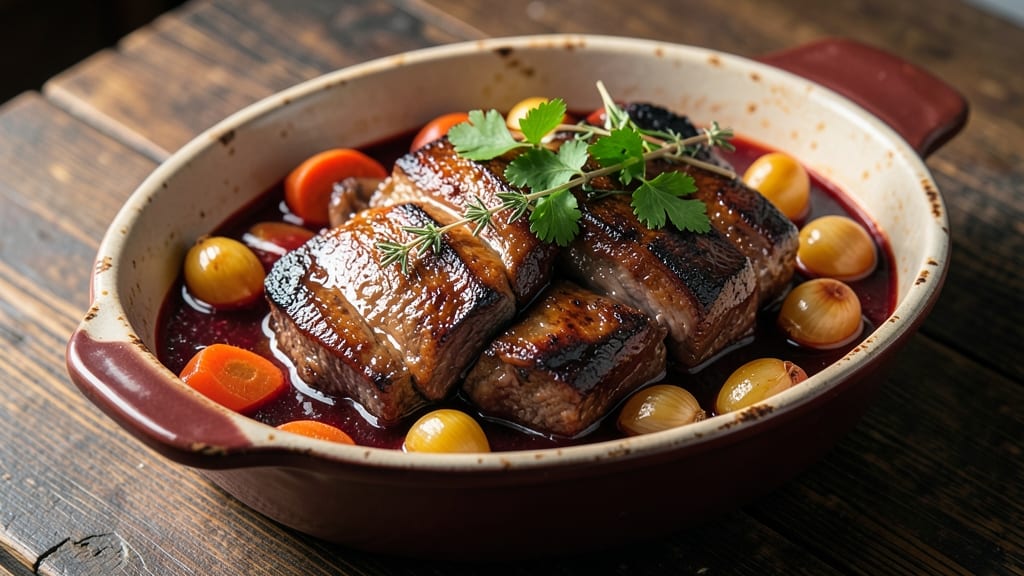
Auguste Escoffier's Beef Bourguignon transforms humble beef into a rich, wine-infused masterpiece that defines classic French cuisine. This recipe stays true to Escoffier's original technique—searing beef to develop deep umami, then slow-braising in red wine until tender. The result is a dish so aromatic and flavorful, it feels like dining in a 19th-century Parisian bistro. Every bite delivers layers of caramelized beef, earthy mushrooms, and velvety wine sauce that clings to each forkful.
The secret lies in patience and technique: browning the beef thoroughly creates a flavorful fond that forms the base of the sauce, while slow cooking in red wine reduces it to a concentrated, aromatic liquid. Escoffier's method ensures the beef becomes fork-tender while absorbing the wine's complexity.
This isn't just a recipe—it's a culinary experience that transforms simple ingredients into something extraordinary. The rich, deep flavors make it perfect for special occasions or when you want to impress guests with restaurant-quality results at home.
Pair this dish with crusty French bread to soak up every drop of the wine-infused sauce or serve alongside buttery mashed potatoes for a hearty meal.
The aroma alone will have everyone gathering at the table, and the presentation—golden-brown beef nestled in a glossy red sauce—makes it as visually stunning as it is delicious. Whether you're recreating a classic or creating a new family tradition, this Beef Bourguignon delivers the depth and elegance of French cuisine.
For an authentic touch, use a Burgundy or Pinot Noir—these wines complement the dish's earthy, umami notes perfectly. The slow cooking process allows the flavors to meld beautifully, creating a sauce that's rich yet balanced.
This recipe isn't just about following steps; it's about mastering the art of braising and understanding how each ingredient contributes to the final masterpiece. Let's bring Escoffier's legacy to your kitchen.
Ingredients for auguste escoffier beef bourguignon
Mastering Escoffier's technique starts with these carefully selected ingredients—each playing a crucial role in developing rich umami and wine-infused depth.
| Ingredient | Amount | Notes |
|---|---|---|
| Beef Chuck Roast 🥩 | 2 lb | Pre-cut into 1.5-inch cubes |
| Yellow Onion 🧅 | 1 whole | Cut into 0.5-inch dice |
| Garlic Cloves 🧄 | 6 cloves | Crushed for aromatic depth |
| Carrots 🥕 | 4 medium | Peeled, cut into 1-inch chunks |
| Fresh Thyme 🌿 | 2 sprigs | Or 2 tsp dried thyme |
| Fresh Parsley 🌿 | ¼ cup | Chopped for garnish |
| Dry Red Wine 🍷 | 2 cups | Burgundy or Pinot Noir |
| Beef Stock 🥫 | 2 cups | Homemade preferred |
| Tomato Paste 🍅 | 2 tbsp | High-quality, no sugar added |
| All-Purpose Flour 🌾 | 1 tbsp | For thickening sauce |
| Olive Oil 🫒 | 2 tbsp | Extra-virgin for richness |
| Salt 🧂 | 1 ½ tsp | Diamond Crystal preferred |
| Black Peppercorns 🌶️ | 1 tsp | Freshly cracked |
| Pearl Onions 🧅 | 1 lb | Peeled, halved lengthwise |
| Mushrooms 🍄 | 8 oz | Cremini or button, halved |
The beef selection is non-negotiable for authentic results. Chuck roast from a trusted butcher—look for good marbling—will yield the most tender, flavorful meat. Whole Foods or local specialty markets often carry premium cuts, but even standard grocery stores stock quality chuck. Avoid pre-cut cubes with excessive packaging; fresh-cut beef develops better fond during searing. For the wine, Burgundy or Pinot Noir from a reputable producer enhances the dish's earthy notes—avoid overly oaky or heavily sulfured wines, as they can overpower the delicate balance. The beef stock should be homemade if possible, as commercial versions often contain additives that alter the sauce's depth.
No chuck roast available? Beef short ribs or bottom round work as substitutes, though cooking times may vary. Swapping red wine for dry sherry or beef broth with 1 tbsp balsamic vinegar maintains the dish's essence, though the sauce will lack wine's complexity. Fresh thyme is ideal, but dried thyme at one-third the amount suffices in a pinch. For tomato paste, San Marzano or Cento brand deliver superior quality—avoid brands with added sugar or salt. The flour used for thickening should be all-purpose, not self-rising, as the latter contains baking powder that can alter the sauce's texture. If pearl onions are unavailable, small yellow onions peeled and halved provide a similar texture.
Proper ingredient prep ensures optimal results. Store beef in the coldest part of your fridge and use within 3 days for peak tenderness. Fresh herbs should be wrapped in damp paper towels and refrigerated for up to 5 days. The wine can be refrigerated until ready to use, though it should reach room temperature before adding to the braise. This dish reheats beautifully—simmer gently for 10-15 minutes to restore the sauce's velvety consistency. For meal prep, portion the beef and sauce separately; reheating together prevents the sauce from becoming watery. Leftovers keep for 4-5 days in the refrigerator or 3 months when properly frozen.
Why You'll Love This Recipe
- No-Fuss Sear: I swear by the quick sear on the beef chuck—just a few minutes in a hot pan, then it’s hands-off. That golden crust locks in flavor while the onions and carrots caramelize effortlessly in the same pot. (Yes, even on a Tuesday night.)
- Rich, Layered Depth: The thyme and garlic infuse the red wine reduction until the sauce is ridiculously good—tender beef swimming in a glossy, slightly tangy broth. It’s the kind of dish where every bite feels like a little celebration, no matter what else is going on.
- Weeknight to Dinner Party: Between us, this recipe works for both: toss it together for a lazy Sunday supper or double the batch for a crowd. The leftovers? Even better the next day, reheated with a splash of wine to revive the sauce. My go-to for when I want to impress without stress.
- Budget-Friendly Luxe: Beef chuck is affordable, and the veggies stretch across multiple meals. I’ll be real: it’s not the prettiest dish, but the taste makes up for it—deep, savory, and satisfying. Plus, the slow cook makes it feel fancy without breaking the bank.
Step-by-step instructions for auguste Escoffier's beef bourguignon
A classic French technique where rich red wine transforms tough beef into melt-in-your-mouth tenderness.
Sear the Beef Chuck Roast for Maximum Flavor
Heat the 2 tablespoons olive oil in a heavy Dutch oven over medium-high heat until shimmering. Pat the 2 lb beef chuck roast dry with paper towels—this ensures a proper sear. Working in batches if needed, add the beef cubes and sear for 3-4 minutes per side until deeply browned with a crust forming. The color change signals the Maillard reaction, which develops the deep, caramelized flavors essential for bourguignon.
Remove the beef and set aside. If your Dutch oven isn't large enough, you'll need to work in two batches—don't crowd the pan or the beef will steam instead of sear. The browned fond left behind will later dissolve into the wine, creating a complex sauce.
Develop the Aromatic Base with Onions and Carrots
In the same Dutch oven, add the 1 whole yellow onion and 4 medium carrots cut into chunks. Cook over medium heat for 5-6 minutes, stirring occasionally, until the onions soften and the carrots begin to caramelize at the edges. This step builds the foundational sweetness that balances the acidity of the wine.
Add the 6 cloves crushed garlic, 2 sprigs fresh thyme, and 1.5 teaspoons salt. Stir for 30 seconds until fragrant—you should smell the garlic's pungency and the thyme's earthy notes. This aromatic base will infuse the wine and stock with depth. If using dried thyme, add it now with the garlic.
Deglaze with Wine and Tomato Paste
Pour in the 2 cups dry red wine and scrape up all the browned bits from the bottom of the Dutch oven with a wooden spoon. This deglazing step captures all the concentrated flavors you've built. Let the wine simmer over medium-high heat for 5-6 minutes until reduced by half, until the liquid coats the back of a spoon.
Stir in the 2 tablespoons tomato paste and cook for another 2 minutes until the paste darkens slightly. The tomato paste adds umami depth and helps thicken the sauce. This is where the sauce begins to take shape—watch carefully to prevent burning.
Build the Braising Liquid and Add Vegetables
Pour in the 2 cups beef stock, then sprinkle the 1 tablespoon all-purpose flour over the top. Stir vigorously for 1 minute to create a light roux that will help thicken the sauce. Add the 1 lb pearl onions and 8 oz mushrooms (halved), along with the 1 teaspoon black peppercorns.
Return the seared beef to the Dutch oven, along with any accumulated juices. Bring the mixture to a gentle simmer over medium-low heat. The liquid should come up about halfway to the top of the beef cubes. Cover the Dutch oven with a tight-fitting lid and transfer to a preheated 325°F oven.
Braise Until Tender and Finish the Sauce
Braise the beef for 2.5-3 hours until the meat is fork-tender and easily pulls apart. The vegetables should also be tender but still hold their shape. Check occasionally and add ¼ cup water if the liquid reduces too much—you want enough liquid to keep the beef submerged.
Once the beef is tender, remove it from the Dutch oven and set aside. Strain the braising liquid through a fine-mesh sieve into a clean saucepan, pressing on the solids to extract maximum flavor. Skim off any excess fat that has risen to the surface. Return the strained liquid to the saucepan and simmer over medium heat for 10-15 minutes until slightly thickened. The sauce should coat the back of a spoon but remain silky.
Garnish and Serve with Perfect Presentation
Return the beef and vegetables to the saucepan and heat through for 2-3 minutes. Stir in the ¼ cup chopped fresh parsley just before serving. The parsley adds a bright contrast to the rich, umami flavors of the dish. Taste and adjust seasoning with additional salt or pepper if needed.
Serve the beef bourguignon family-style, ladling the sauce generously over the beef, pearl onions, and mushrooms. The dish should be rich, velvety, and deeply flavorful with each bite delivering tender beef, caramelized vegetables, and a complex wine sauce. Pair with crusty baguette and a glass of the same red wine used in the recipe.
Pro Tips For Making Auguste Escoffier Beef Bourguignon
- SEAR THE ROAST HARD: After patting the beef chuck dry, let it sit at room temp for 30 minutes—this guarantees a proper crust. Use a heavy pan (cast iron if you have it) and don’t move the meat until it’s deep brown with edges almost black. I learned this the hard way—rushing the sear means flavorless braising liquid.
- CHOP CARROTS UNIFORM: Cut carrots into even ½-inch chunks—no thick ends, no skin-on bits. The recipe relies on them softening evenly, and jagged edges turn to mush while others stay stubborn. My grandmother swore by this, and she was right: consistent size means consistent texture.
- DEGLAZE WITH PATIENCE: After browning the onions and garlic, pour in the wine slowly—about ¼ cup at a time—letting each splash bubble and reduce before adding more. Skipping this step means a thin, watery sauce. Sounds weird, but it works: the alcohol burns off properly, leaving rich depth.
- SALT THE LIQUID LATE: Hold off on adding salt to the braising liquid until the last 30 minutes of cooking. The carrots and onions release starches early, and salting too soon makes them turn mushy. I was skeptical until I tried it—crisp edges on the veggies, every time.
Regional styles of these flavors
Classic French Technique
Escoffier's original method emphasizes slow braising to tenderize the beef while developing deep, wine-infused flavors. The key is searing the beef first to create a flavorful fond that dissolves into the wine during deglazing.
This technique transforms tough chuck roast into melt-in-your-mouth perfection through patience and precise temperature control in the oven. 🌟
Burgundy Region Adaptation
In Burgundy, where this dish originated, cooks often use local Pinot Noir wine and mushrooms foraged from nearby forests. The region's cool climate produces wines with earthy notes that perfectly complement the dish's umami richness.
For an authentic touch, substitute some of the beef stock with 1 cup of mushroom stock made from the same wild mushrooms.
Provencal Variation
Southern France's Provencal style adds herbes de Provence (a blend of thyme, rosemary, lavender, and marjoram) to the braising liquid. Replace the thyme with 1 teaspoon herbes de Provence and add 1 bay leaf for a fragrant twist.
This variation works beautifully with white wine instead of red, creating a lighter but equally flavorful sauce.
Modern Twist with Red Wine Reduction
For a contemporary approach, reduce the wine sauce separately until it reaches a syrupy consistency. Strain it through a fine-mesh sieve, then drizzle it over the beef and vegetables just before serving.
This technique intensifies the wine's flavors while keeping the beef and vegetables tender. I like to finish with a sprinkle of freshly cracked black pepper for added depth.
Belgian-Inspired Pearl Onions
Belgian cooks often use pearl onions> in their versions of bourguignon, adding a delicate sweetness that balances the dish's richness. For an extra touch, caramelize the pearl onions separately in 1 tablespoon butter with a pinch of sugar before adding them to the braise.
This step enhances their natural sweetness and adds another layer of flavor complexity.
Wine Country Pairings
When serving this dish in wine country, pair it with a glass of the same wine used in the recipe. For Burgundy, a Gevrey-Chambertin or Nuits-Saint-Georges complements the dish's earthy notes perfectly.
In California's Napa Valley, a Cabernet Sauvignon with its bold tannins stands up to the beef's richness while enhancing the wine sauce's depth. 🍷
Nutrition facts
Frequently asked questions
Why does Escoffier's recipe require searing the beef first?
The searing step creates a flavorful browned crust called the fond through the Maillard reaction. This fond dissolves into the wine during deglazing, adding deep, caramelized richness that forms the sauce's foundation. Skipping this step results in a much milder flavor profile.
Can I substitute red wine with something else?
For best results, use red wine—it's essential for the dish's signature flavor. However, you can substitute with 2 cups beef broth + 1 tablespoon balsamic vinegar if needed. Avoid white wine or non-alcoholic substitutes, as they won't replicate the wine's complex umami notes.
How do I know when the beef is fully tender?
The beef is ready when it easily pulls apart with a fork and reaches an internal temperature of 203°F. It should have a fork-tender texture but not be mushy. If the vegetables are tender but the beef isn't, return it to the oven for another 30-45 minutes.
What's the best way to reheat leftover Beef Bourguignon?
Reheat gently in a saucepan over low heat with a splash of beef stock to prevent the sauce from thickening too much. Cover and simmer for 10-15 minutes, stirring occasionally. Never microwave—it can make the sauce watery and ruin the texture.
Can I make this dish in a slow cooker?
Yes, but with adjustments: Sear the beef first, then transfer everything to the slow cooker and cook on low for 6-8 hours or high for 3-4 hours. The sauce may need thickening with a cornstarch slurry before serving, as slow cookers don't reduce liquids as effectively.