
Main Courses
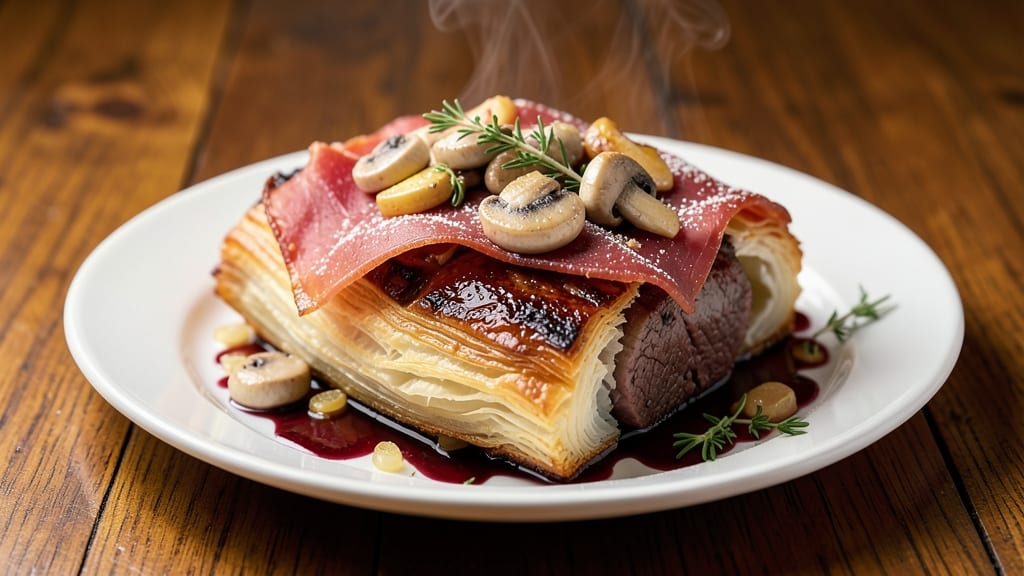
This 72-hour beef Wellington recipe transforms a simple beef tenderloin into a restaurant-worthy masterpiece with a crispy pastry shell and juicy, tender center. The secret lies in the slow marinating process—72 hours of flavor development ensures the beef stays impossibly tender while absorbing rich aromatics.
Every step, from the finely chopped mushroom duxelles to the delicate prosciutto wrapping, builds layers of depth that elevate this dish beyond ordinary roasts.
The magic begins with selecting a high-quality tenderloin and brining it for 24 hours before the 48-hour dry marinade—a technique that guarantees a juicy interior and prevents dryness during roasting.
The duxelles, a finely chopped mixture of mushrooms, shallots, and herbs, adds earthy richness, while the prosciutto layer contributes a subtle salty crunch. When assembled with puff pastry, the result is a golden, flaky crust that encases all the flavors perfectly.
Roasting to medium-rare (125°F internal temperature) ensures the beef remains tender and succulent, while the pastry achieves that coveted crispy finish. The dish rests briefly before slicing, allowing the juices to redistribute for an even more luxurious bite.
This isn’t just dinner—it’s a showstopping centerpiece that impresses even the most discerning guests.
Pair with a bold red wine reduction or truffle mashed potatoes to complete the experience. Whether serving for a special occasion or simply treating yourself, this 72-hour Wellington delivers restaurant-quality results at home. Let’s get started on creating your own culinary masterpiece.
Ingredients for 72 hour beef wellington
High-end ingredients and meticulous prep transform this classic Wellington into a showstopping centerpiece.
| Ingredient | Amount | Notes |
|---|---|---|
| Beef Tenderloin 🥩 | 1 ½ lb | Center-cut, trimmed of silver skin |
| Prosciutto di Parma 🥓 | ¼ lb | Thinly sliced, high-quality |
| Puff Pastry 🥧 | 1 sheet | Store-bought or homemade, thawed |
| White Mushrooms 🍄 | 8 oz | Finely chopped for duxelles |
| Shallots 🧅 | 2 whole | Finely minced, 2 tbsp total |
| Fresh Thyme 🌿 | ¼ cup | Leaves only, finely chopped |
| Fresh Parsley 🌿 | ¼ cup | Leaves only, finely chopped |
| Garlic Cloves 🧄 | 4 cloves | Finely minced, peeled |
| Dijon Mustard 🍯 | 2 tbsp | High-quality, smooth |
| Extra-Virgin Olive Oil 🫒 | 2 tbsp | For duxelles and brushing |
| Unsalted Butter 🧈 | ½ cup | Cold, cubed, for pastry |
| Diamond Crystal Kosher Salt 🧂 | 1 ½ tsp | For seasoning and brining |
| Freshly Ground Black Pepper 🌶️ | ½ tsp | Freshly cracked |
| Beef Brine 💧 | 4 cups | Water + 1 tbsp salt + 1 tbsp sugar |
| Dry Red Wine 🍷 | ½ cup | Cabernet Sauvignon preferred |
The beef tenderloin is non-negotiable—look for a center-cut piece with minimal marbling. Whole Foods or D'Artagnan carry premium cuts, but most well-stocked butchers will have suitable options. The prosciutto should be thinly sliced (ask your butcher to slice it for you if needed) and Prosciutto di Parma delivers the most authentic flavor. For the mushrooms, cremini or white work best—avoid pre-sliced varieties, as they oxidize quickly. Fresh herbs are essential here; store-bought bundles from Trader Joe's or local markets provide the brightest flavor. The Dijon mustard should be high-quality—Maille or Grey Poupon are reliable choices. Brining the beef for 24 hours before marinating is critical for moisture retention during the long cooking process.
No prosciutto? Thinly sliced salami or even dry-cured ham will work in a pinch, though the flavor profile will differ. Substituting mushrooms for cremini or shiitake is acceptable, but avoid canned mushrooms—they lack the necessary texture. If you can't find fresh thyme or parsley, dried herbs at half the quantity will suffice, though fresh is preferred. For the wine, Cabernet Sauvignon or Merlot are ideal, but any bold, dry red will do. The puff pastry can be homemade or store-bought—Pepperidge Farm or Kneads Joy are excellent options. If you're short on time, pre-made puff pastry from the grocery store works perfectly. The Dijon mustard can be swapped for whole-grain mustard if you prefer a different texture, though it may alter the final flavor slightly.
The beef brine should be made 24 hours before assembly and stored in the refrigerator. Prosciutto and herbs can be prepped a day ahead and kept in airtight containers. The duxelles mixture should be made just before assembling the Wellington to prevent drying out. Once assembled, the Wellington can be chilled overnight, which helps with slicing. Leftovers, if any, should be reheated gently in the oven to maintain moisture. The dish freezes well for up to 3 months—wrap tightly in plastic wrap and foil to preserve freshness. For best results, reheat from frozen in a 350°F oven until warm through.
Why You'll Love This Recipe
- No Fuss Prep: I swear by this method—just sear the beef, wrap it in prosciutto and mushrooms, then let the oven do the work. No fancy knife skills needed; the shallots barely take 5 minutes to soften.
- Umami Bomb: That salty-sweet prosciutto wrapped around tenderloin? It’s like a flavor hug. The mushrooms soak up the juices while the puff pastry adds a buttery crunch—every bite feels like a reward.
- Weeknight to Dinner Party: Same recipe, different vibes. Throw it together for a lazy night or impress guests with the 72-hour version. The prosciutto keeps it elegant, but the prep stays simple.
- Leftovers That Don’t Suck: Cold slices the next day? Still rich and satisfying. No sad, dry meat here—the slow cook makes it melt-in-your-mouth, and the pastry stays crisp enough to cut. (Yes, I’ve tested this.)
Step-by-step instructions for perfect beef Wellington
This 72-hour process guarantees a masterpiece with flawless technique and restaurant-quality results.
Prepare the Beef Tenderloin with Brine
Begin by trimming the 1.5 lb beef tenderloin of any silver skin and patting it completely dry with paper towels. In a large container, combine the 4 cups beef brine (water, 1 tablespoon salt, and 1 tablespoon sugar) and submerge the tenderloin completely. The brine should cover the meat by at least 1 inch. Place the container in the refrigerator and let the tenderloin brine for 48 hours, turning it once daily. This step ensures maximum tenderness and even seasoning throughout.
After 48 hours, remove the beef from the brine and pat it dry once more. Return it to the refrigerator uncovered for the final 24 hours to dry-brine. This drying process is critical for achieving a perfect sear and crispy crust later. The beef should feel firm to the touch and have a slightly tacky surface when ready.
Create the Mushroom Duxelles and Seasoning Paste
In a food processor, finely chop the 8 oz white mushrooms until they resemble coarse breadcrumbs. Transfer the chopped mushrooms to a skillet and cook over medium heat with 2 tablespoons extra-virgin olive oil for 10-12 minutes, stirring frequently, until all moisture has evaporated and the mushrooms are golden brown. This process, called making duxelles, creates a rich, concentrated mushroom base.
While the mushrooms cook, finely mince the 2 whole shallots (about 2 tablespoons), 4 cloves garlic, 0.25 cup fresh thyme, and 0.25 cup fresh parsley. In a separate bowl, combine the minced aromatics with 2 tablespoons Dijon mustard and 0.5 cup unsalted butter, mashing everything into a smooth paste. This paste will form the flavorful center of your Wellington, ensuring every bite is packed with depth.
Assemble the Wellington
Preheat your oven to 375°F. Lay the 1 sheet puff pastry on a floured surface and roll it out to an even 12x16-inch rectangle. Spread the mushroom duxelles evenly over the center of the pastry, leaving a 1-inch border around the edges. This border is essential for creating a sturdy, crispy crust.
Spread the shallot-garlic-herb butter paste over the mushrooms, then place the 0.25 lb prosciutto di Parma slices evenly over the paste. Finally, lay the brined and dried 1.5 lb beef tenderloin on top of the prosciutto. The prosciutto acts as both a flavor enhancer and a moisture barrier, keeping the beef incredibly juicy.
Wrap and Chill Before Baking
Carefully roll the pastry around the beef, starting from one of the long sides. Seal the seam by pinching the edges together firmly. Trim any excess pastry to create a neat package, then brush the exterior generously with 0.5 cup dry red wine (Cabernet Sauvignon preferred) mixed with a beaten egg. This creates a glossy finish and helps achieve that coveted crispy crust.
Place the assembled Wellington seam-side down on a parchment-lined baking sheet and refrigerate for at least 2 hours. This chilling step is crucial—it allows the pastry to firm up and prevents the filling from shifting during baking. The longer it chills (up to 24 hours), the better the texture will be.
Bake to Golden Perfection
Remove the Wellington from the refrigerator and let it sit at room temperature for 30 minutes before baking. This ensures even cooking and prevents steam buildup. Bake at 375°F for 40-45 minutes, rotating the pan halfway through, until the pastry is deep golden brown and the internal temperature of the beef reaches 125°F (it will rise to 130°F as it rests).
For the final touch, transfer the Wellington to a cutting board and let it rest for 15 minutes before slicing. This resting period allows the juices to redistribute, ensuring each slice is perfectly juicy with a crispy, golden crust. Serve immediately with a red wine reduction or your favorite side dishes.
Pro Tips For Making 72 Hour Beef Wellington
- Trim That Fat Cap: DESCRIPTION: The 72-hour dry-brine magic works best when the tenderloin’s fat cap is gone—it’s the only part that won’t tenderize. Grab a sharp knife and slice it off before salting; I learned this the hard way when my first attempt turned into a greasy mess instead of a perfect crust.
- Sear in Batches: DESCRIPTION: A crowded pan = steam, not sear. Cut the tenderloin into 1.5-inch chunks (standard Wellington size) and work in two batches over high heat. The first batch will be golden and caramelized by the time you finish the second—no more gray, sad beef staring back at you.
- Shallots, Not Onions: DESCRIPTION: This isn’t a beef bourguignon—skip the onions. Finely minced shallots in the mushroom duxelles add brightness without overpowering the prosciutto. I used onions once and spent the next hour tasting my wine to mask the harshness.
- Wrap Tight, Seal Well: DESCRIPTION: The puff pastry crust is only as good as its seal. Brush the edges with egg wash and a thin layer of Dijon mustard before folding—it acts like glue. Press the seams with your fingers, then chill the whole thing for 20 minutes. No gaps, no leaks, no sad pastry tears.
Dietary considerations for 72 hour beef wellington
Gluten-Free Adaptations
Traditional Beef Wellington relies on puff pastry, which contains gluten, but you can create a delicious gluten-free version using gluten-free puff pastry from brands like Caulipower or Udi’s.
These alternatives mimic the flaky texture while accommodating gluten-sensitive diets. Simply follow the same assembly steps, ensuring all ingredients—including the prosciutto and duxelles—are certified gluten-free. 🌾
Dairy-Free Substitutions
The butter in the herb paste can be swapped for dairy-free butter like Miyoko’s or Earth Balance, which maintains the same richness. For extra flavor, add olive oil to the paste to compensate for the reduced fat.
The prosciutto is naturally dairy-free, but always double-check labels to avoid cross-contamination. This keeps the dish creamy and flavorful without dairy. 🧈
Lower-Carb Options
To reduce carbs, skip the pastry entirely and focus on the beef, duxelles, and prosciutto as a standalone dish. Serve it with a bed of cauliflower mash or roasted Brussels sprouts for a low-carb alternative.
The flavors remain rich and satisfying, just without the pastry wrapper. This works well for keto or low-carb diets. 🥦
Allergen-Friendly Adjustments
For nut allergies, ensure all ingredients—like Dijon mustard—are nut-free (some brands use almond oil). For mushroom sensitivities, substitute the duxelles with roasted zucchini and caramelized onions for a similar texture. Always verify labels for hidden allergens, especially in pre-made puff pastry. Safety first! 🚫
Protein-Focused Modifications
If you’re tracking macros, this dish is already protein-rich, but you can boost it further by adding a thin layer of beef jus (reduced pan drippings) under the prosciutto. This enhances moisture and flavor without extra carbs. For a leaner version, trim excess fat from the tenderloin before brining. 💪
Vegetarian Swaps
While not a traditional Wellington, you can create a vegetarian version by replacing the beef with a large portobello mushroom or hearty eggplant roasted to perfection.
Use the same duxelles and prosciutto (or vegan prosciutto like Tofurky) for a plant-based twist. The technique remains the same—just swap the protein! 🌱
Nutrition facts
Frequently asked questions
Why does the recipe call for a 72-hour process?
The extended 72-hour preparation transforms the beef into a melt-in-your-mouth masterpiece. The 48-hour brine tenderizes the meat while the final 24-hour dry marinade creates that perfect crust. This slow process ensures maximum flavor infusion and moisture retention—critical for a dish this luxurious.
Can I use a smaller beef tenderloin?
Yes, but adjust the prosciutto and pastry proportions to maintain balance. For a 1 lb tenderloin, use 0.15 lb prosciutto and a half-sheet puff pastry. The key is keeping the duxelles layer even—scale it down proportionally. Never skip the 1-inch pastry border, as it's essential for structure.
What's the best way to reheat leftovers?
Reheat Wellington slices in a 350°F oven for 10-12 minutes on a wire rack (not directly on the pan) to maintain crispiness. For microwave reheating, cover with a damp paper towel and heat in 20-second bursts at 50% power. Never reheat pastry-covered portions in the fridge—it makes them soggy.
How do I fix a soggy pastry crust?
If your pastry turns out soft, you likely didn't chill it long enough. Next time, refrigerate the assembled Wellington for 24 hours before baking. For immediate fixes, broil for 2-3 minutes at the end of baking to crisp the exterior. Also ensure your duxelles is fully cooked and drained—any moisture will steam the pastry.
What wine pairs best with this dish?
A bold Cabernet Sauvignon or Malbec complements the rich beef and mushroom flavors perfectly. For white wine lovers, try a full-bodied Chardonnay with oak notes. The red wine used in brushing the pastry can also be served as a side—just strain out any solids first.